Why Lifelong Learning Matters: Lessons in Resilience, Family and Legacy from Journey of Jack
18 Sep, 2026
16 Views 0 Like(s)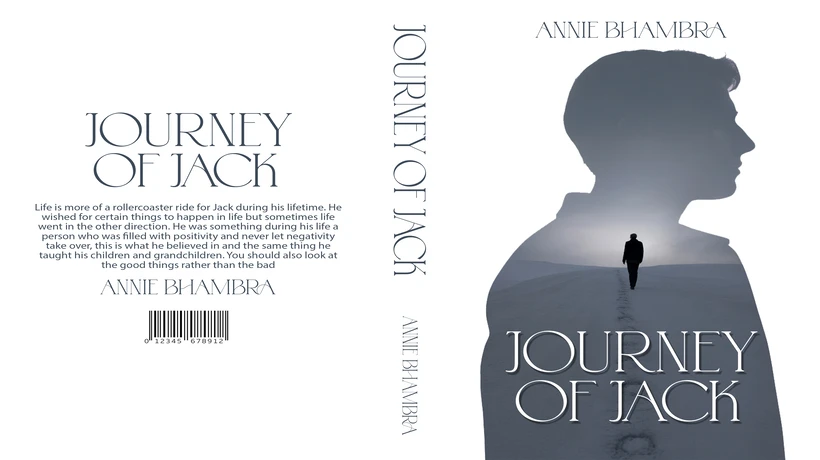
Many people think of education as a stage of life: school, exams, perhaps university, and then work.
But some of the most important learning begins when the timetable ends. Journey of Jack follows a life in which knowledge is never treated as something confined to classrooms. It becomes a way of meeting change, supporting family, recovering from setbacks and staying connected to the world across every stage of life.
Education Is Bigger Than a Qualification
Jack’s early life is closely tied to formal education. From nursery and primary school through GCSEs and A-levels, he is presented as a hardworking student who learns quickly, helps classmates and develops confidence through effort. His academic path matters, but the deeper lesson is not simply that good grades lead to success.
The story shows that education also builds habits: patience, curiosity, problem-solving, responsibility and the ability to keep going when a subject feels difficult. Jack’s experience with French is a useful example. He struggles with grammar and vocabulary, practises, improves and eventually succeeds. The point is not that every obstacle disappears easily; it is that progress often begins with the decision to stay with something long enough to understand it.
That idea becomes more important later, when Jack’s formal academic route changes. The knowledge he gained at school still matters, but so do the habits of learning he carries with him.
When Plans Change, Learning Can Still Continue
After achieving strong A-level results, Jack is unable to attend university because of financial difficulties and family responsibilities. It is a painful change of direction. He has the ability to continue academically, but circumstances require him to work, earn money and help support the household.
This is where Journey of Jack separates education from a single destination. Jack does not stop being intellectually curious because he does not follow the university route he once imagined. He works, tutors students and gradually builds a stable future. His life demonstrates a practical truth: a disrupted plan is not the same as a wasted education.
Qualifications can open doors, but adaptability helps people move when a particular door stays closed. Learning can continue through work, reading, experience, relationships and the willingness to ask new questions.
Sacrifice Can Become Opportunity for the Next Generation
One of the strongest threads in Jack’s story is the way personal sacrifice becomes generational opportunity. As the eldest child, he puts family needs ahead of his own university ambitions. Later, as a father and grandfather, he invests time, guidance and resources in the education of those who come after him.
This changes the meaning of success. Jack’s achievement is not limited to what he earns for himself. It includes what his support makes possible for others. His grandchildren eventually earn university places, with one moving into science and the other into business studies. Their progress fulfils a hope he has carried for years.
For families, this is a powerful reminder that educational influence is often cumulative. One generation may not receive every opportunity it hoped for, yet the encouragement, discipline and values it passes on can expand the possibilities available to the next.
Curiosity Helps Us Stay Connected to Other People
Jack’s approach to his grandchildren’s studies is especially revealing. He does not simply celebrate their choices from a distance. Because biomedical science and business studies extend beyond his own formal background, he researches them. He learns about subjects such as anatomy, genetics, disease processes, management, finance, marketing and entrepreneurship so that he can better understand the paths they have chosen.
That kind of curiosity is more than academic. It is relational. Taking an interest in what matters to another person is a form of support. Parents, grandparents, teachers and mentors do not need to be experts in every subject to be useful. Sometimes the most meaningful gesture is the willingness to learn enough to ask better questions, listen more carefully and show genuine interest.
Lifelong learning can therefore strengthen relationships as well as knowledge. It gives people new ways to connect across generations, professions and experiences.
Resilience Is Built Through Repeated Challenges
Jack’s life is not presented as a straight line of achievement. There are difficult school transitions, academic pressure, financial limitations, family misunderstandings, the end of an important relationship, serious illness and eventually the physical decline that comes with age. Each stage demands a different kind of resilience.
What stands out is that resilience in the story is rarely dramatic. It often appears in ordinary actions: revising again after a difficult test, working while under pressure, helping siblings, accepting an apology, recovering after surgery, taking grandchildren to school and sitting beside them while they work through homework.
This is a useful way to think about perseverance. It does not always mean making one heroic decision. More often, it means returning to useful habits - learning, supporting, forgiving, adapting and trying again - until they become part of a person’s character.
A Legacy Is What Other People Continue to Carry
The later chapters of Journey of Jack shift the focus from achievement to legacy. Jack grows older, sees his grandchildren graduate and eventually dies after a period of declining health. The family is left with grief, but also with a record of the values he modelled over a lifetime.
For Annie, the loss is especially personal. Her bond with her grandfather is described through warmth, guidance and an understanding that remains emotionally significant after his death. This gives the book’s central idea of lifelong learning a final dimension: people continue to teach us through the principles and memories we carry forward.
A legacy does not have to be public or famous to be meaningful. It can live in the way a family values education, the way someone responds to hardship, the willingness to help another person understand something, or the courage to keep learning later in life.
Learning Does Not Have an Expiry Date
The most enduring message in Journey of Jack is simple: education is not limited to age, institutions or certificates. Formal study matters, but learning is broader than formal study. It can help people understand unfamiliar subjects, adapt to new responsibilities, support younger generations and remain open to growth long after school has ended.
Jack’s path does not follow every plan he once had, yet his respect for knowledge survives each change. That respect becomes part of what he gives to his family. His story invites readers to see learning not as a chapter that closes, but as a practice that can continue for as long as life continues.
Whether we are beginning a new course, changing careers, helping a child with homework, researching something outside our experience or simply trying to understand another person better, there is always another opportunity to learn - and another opportunity to pass that learning forward.



Comments
Login to Comment