Kids Room Styling with Rugs — What Actually Works in Indian Homes
18 Sep, 2026
5 Views 0 Like(s)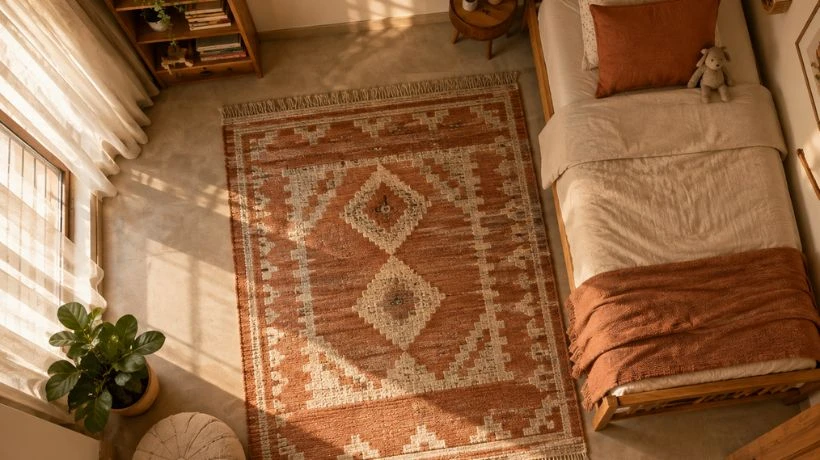
Styling a kids room with a rug in an Indian home is more specific than most décor guides suggest — small rooms, hard marble floors, multi-purpose spaces, and children who outgrow design themes quickly all shape the decision. This guide goes room-by-room through five real Indian kids room scenarios, with practical rug styling guidance for each.
Most kids room styling content comes from two places: Instagram accounts with spacious, well-lit rooms that bear no resemblance to a standard Indian apartment bedroom, and brand websites that show rugs in isolation rather than in actual rooms.
Neither is particularly useful when you are standing in a 10x12 room in Noida or Bengaluru, looking at an existing bed and wardrobe and trying to figure out what kind of rug would actually make the space look and feel better.
This guide takes a different approach. It goes through five real Indian kids room scenarios — small rooms, multi-purpose rooms, toddler spaces, shared rooms, and teenage bedrooms — and gives practical rug styling guidance for each. Not aspirational, not generic. What actually works in these specific contexts.
|
One Styling Principle That Applies to Every Scenario The rug should make the room feel more settled, not more decorated. In a kids room that is already full of visual information — toys, books, bedding, wall art — a rug that steps back and anchors the space is almost always more successful than one that adds to the visual noise. This applies regardless of which scenario below matches your room. |
Before the Styling Decisions — Two Things to Settle First
Styling a kids room with a rug goes wrong most often because of two decisions made before the design choices: size and placement. Getting these right makes the styling straightforward. Getting them wrong means no amount of design thought will make the room look finished.
Size: always larger than you think you need
The most common mistake in Indian kids rooms is buying a rug that is too small. A 3x5 rug in a 10x12 room looks like a bathmat. It occupies floor space without organising it. For most Indian kids rooms, a 4x6 is the workable minimum and a 5x7 or 5x8 is what actually creates the room-defining effect that makes styling work. When in doubt, go one size up.
Placement: relative to the bed, not the room centre
In Indian kids rooms, the most functional rug placement is two-thirds under the bed — the rug extends from beneath the bed frame out into the main floor area, covering the space where the child gets in and out of bed and where floor play happens. This creates more visual coherence than centring the rug in the room, which tends to look disconnected from the furniture.
Five Indian Kids Room Scenarios — Specific Styling Guidance
Find the scenario that most closely matches your room and use that section.
|
The Small Apartment Room (10x10 or smaller) |
|
The styling challenge: The room needs to function as bedroom, play space, and sometimes study area — but there is not enough square footage to define separate zones with furniture. The risk is that a rug makes the room feel smaller rather than more organised. Rug direction: A single rug in a muted, warm palette — no more than two tones. Low contrast geometric or a simple flat-weave. The rug should be sized to cover the main floor area (4x6 minimum) without running into the wardrobe or door swing. A calm, recessive colour — warm ivory, sage, soft terracotta — makes the room feel larger than a dark or bold colour would. Placement: Two-thirds under the bed, extending into the main floor area. Do not centre the rug away from the bed — in a small room, this disconnects the rug from the furniture and makes both look smaller. One rug only — do not layer in a small room. What to avoid: Dark colours (make the room feel smaller). High-pile rugs (reduce the visual floor area). Rugs that are too small (a small rug in a small room compounds the smallness). Busy patterns that add visual noise to an already compact space. |
|
The Multi-Purpose Room (Bedroom + Study + Play) |
|
The styling challenge: The room serves three distinct functions and needs to feel organised despite the competing uses. Without visual definition, the room tends to feel chaotic regardless of how tidy it actually is. Rug direction: A single larger rug — 5x7 or 5x8 — that covers the main floor area and includes both the bed and the primary play zone within its footprint. The rug does the zoning work that furniture cannot do alone. Choose a design with enough visual interest to feel considered, but not so much pattern that it fights the study corner or the bed styling. A soft geometric or a muted two-tone weave works well here. Placement: Two-thirds under the bed, extending far enough into the room to include the main play area within the rug's boundary. If the study desk is against a wall, the rug does not need to reach it — the desk benefits from being on the harder floor for chair movement. The rug covers the bed-to-play-zone corridor. What to avoid: A rug that is too small to bridge the bed and play zones — it creates two separate areas that feel unrelated rather than one cohesive room. Avoid high-pile rugs under or near the study desk — they interfere with chair movement and accumulate eraser dust and pencil shavings. |
|
The Toddler or Baby Room |
|
The styling challenge: The room needs to feel calm and safe, not overstimulating. The floor is used constantly for play — crawling, sitting, building. The styling challenge is creating a room that looks considered while being genuinely practical for daily toddler use. Rug direction: A flat-weave or low-pile rug in a soft, muted palette — warm cream, pale sage, or dusty pink. The design should be minimal rather than elaborate. Educational elements can be woven in (letters, numbers, simple shapes) but should use a calm colour palette rather than primary colours. The room will already have enough visual information from toys and books — the rug should be the quietest element in the room. Placement: Centred in the main floor play area rather than primarily under the bed. At this stage, the floor is used for play as much as sleep-related movement, so the rug should prioritise covering the active floor space. Natural rubber rug pad essential on Indian marble or tile. What to avoid: High-pile rugs (hard to clean, not safe for crawling). Very pale colours that will not survive daily use at this age. Character-licensed designs (they date quickly as the child's interests shift). Any rug without a proper anti-skid solution on Indian hard floors. |
|
The Shared Kids Room |
|
The styling challenge: Two children share the room — often different ages and different design preferences. The challenge is creating a room that feels fair and functional without becoming visually chaotic from trying to serve two different aesthetics. Rug direction: One rug that is large enough to cover the shared floor space between the two beds. The design should be neutral enough to belong to neither child specifically — an earthy geometric, a muted stripe, or a simple textured natural fibre. Avoid choosing a design that clearly belongs to one child's aesthetic — the other will notice. The rug provides a shared visual foundation; the individual beds and their styling carry the personal expression. Placement: Centred between the two beds if the beds are parallel, or at the foot of the beds if they are arranged end-to-end. The rug should be within the shared footprint — not extending under one bed and not the other, which creates an unintentional visual favouritism. What to avoid: Two separate rugs — this typically makes the room feel divided rather than shared and creates a competitive dynamic around whose rug looks better. Very child-specific designs (cartoon characters, sports themes) that one child will grow out of before the other. Any design that clearly represents one child's interests over the other's. |
|
The Teenage Bedroom Redesign |
|
The styling challenge: The room is being updated to reflect that this is no longer a children's space. The rug from the earlier years looks wrong and the teenager has opinions — often strong ones. The styling challenge is creating a room that feels genuinely grown-up without being cold or generic. Rug direction: A rug that leads with texture and material rather than pattern — a handwoven wool rug in an earthy geometric, a flat-weave in warm neutral stripes, or a subtle Mirzapur-style pattern in terracotta and ivory. At this age, a rug that looks made rather than mass-produced reads as genuinely stylish in a way that a machine-printed design does not. Involve the teenager in the selection — within a sensible palette, their preference will lead to a room they actually take care of. Placement: Two-thirds under the bed, extending toward the desk if the room size allows. If the desk chair sits on the rug, choose a flat-weave rather than pile — easier to move the chair and keeps the rug looking cleaner. For a small room, the rug under the bed only, with the desk on hard floor, is the practical arrangement. What to avoid: Anything that reads as a children's rug — bright palettes, cartoon motifs, educational designs. Very high-pile shag rugs that collect dust under a desk. Synthetic rugs that look cheap in a room where the teenager is trying to create something that feels considered and personal. |
Small Styling Details That Make a Difference
Beyond the room-level decisions, a few specific choices affect how the rug reads in the finished room.
Let the rug breathe at the edges
A rug should have at least 45–60 cm of bare floor visible between its edge and the wall or furniture on each side. Less than this and the rug looks like it is trying to cover the floor rather than anchor the room. In a very small room, this sometimes means the rug is smaller than you would ideally choose — which is better than a rug that runs up to the skirting and makes the room feel covered rather than styled.
One rug, not two or three
Layering rugs is a popular styling technique in larger Western rooms. In a standard Indian kids room, it almost always creates visual clutter rather than depth. One well-chosen rug of the right size does more for the room than two smaller rugs placed together. The exception is a very large room where a second smaller accent rug at the foot of the bed can work — but in most Indian kids rooms, this scenario does not apply.
Match the rug's warmth temperature to the room
Indian afternoon light is warm. Warm-toned rugs — ivory, terracotta, sage, ochre — look settled in Indian light. Cool-toned rugs — grey-blue, lavender, cold white — can feel slightly off in the same light that makes warm tones glow. This is not a hard rule, but it explains why certain rug choices that look beautiful in a showroom feel flat in the actual room.
Geometric patterns work longer than figurative ones
A geometric rug — low-contrast, two or three tones — works across a wider age range and a wider set of room styles than a figurative design. It does not reference a specific character, theme, or trend that the child will outgrow. In a kids room where the rug is expected to last 5–8 years, this longevity is a practical consideration, not just an aesthetic one.
For more depth on which design directions are gaining traction in Indian kids rooms specifically — patterns, palettes, and what is working in real homes — the guide to kids rug design trends in India covers that in detail.
Styling Choices That Consistently Do Not Work
Most styling guides focus on what to do. The avoidance list is equally useful.
-
Buying based on the product photograph. Rug product photographs are taken in styled, well-lit spaces designed to make the rug look its best. The test is how the rug looks in your room — which means considering your existing wall colour, furniture, and light before ordering.
-
Choosing design before size. A beautiful rug in the wrong size will not make the room look good. Size first, always. Then material. Then design.
-
Matching too closely. A rug that matches the wall colour exactly or mirrors the bedding pattern tends to make the room feel flat. The rug should connect to the room's palette without duplicating it.
-
Treating the kids room as a separate design brief. A kids room that looks completely different from the rest of the home tends to feel like a themed zone rather than part of the house. The rug is often the element that can bridge the two — a shared palette or material language connects the room to the rest of the home without making it look generic.
For help specifically with coordinating the rug to the existing furniture and wall colours in your child's room — the guide to matching kids rugs with furniture and wall colours in Indian homes walks through the colour coordination decisions in detail.
What Pulls It Together
A well-styled kids room with a rug does not look decorated — it looks settled. The rug is not the focal point; it is the foundation. Everything in the room relates to it rather than competing with it.
In Indian homes specifically — where rooms are compact, floors are hard, and children use the floor as an active living surface — a rug that is the right size, in the right material, placed correctly, and in a palette that works with the existing room is genuinely transformative. Not in an aspirational sense, but in the daily practical sense of a room that functions better and feels easier to be in.
The styling choices above are starting points. The right answer for any specific room depends on what is already in it — which is why the practical questions (size, placement, palette temperature) matter more than the design trends.
|
On Pequra's Kids Rug Collection Pequra's handwoven kids rugs come from Mirzapur artisan families — geometric patterns, earthy palettes, and natural materials suited to the styling directions described in this guide. The full kids rug collection , and the geometric carepts range specifically — well-suited to the room scenarios above. |
Questions That Come Up on Kids Room Styling
How do I make a kids room look aesthetic in India?
Start with the rug — correctly sized, in a warm muted palette, placed two-thirds under the bed. Then work outward: neutral or tonal bedding, one or two plants, minimal wall décor. A calm, consistent palette does more for the room's aesthetic than individual statement pieces.
What rug style is trending for kids rooms in 2026 India?
Low-contrast geometrics, earthy palettes, and handcrafted textures are gaining ground — designs that look considered rather than themed, and that hold up across the child's changing interests. The shift is away from character-specific or brightly coloured novelty rugs toward pieces that work with the room rather than defining it.
How do I style a rug in a small kids room?
Choose a muted, recessive colour in the largest size that fits without touching the walls (leave 45–60 cm on each side). Place it two-thirds under the bed. One rug only — do not layer. A calm, low-contrast design in warm ivory or sage will make the room feel larger, not smaller.
Should the kids rug match the curtains or bedding?
It should connect, not match. Pick up one colour from the curtains or bedding in a quieter or more muted form in the rug. An exact match tends to look over-coordinated; a complete mismatch looks unintentional. The aim is for the rug to feel like it belongs in the room, not like it was chosen to be identical to something already there.
Can I use an adult-style rug in a teenager's room?
Yes — and often it is the better choice. A well-made geometric or textured natural fibre rug designed for adult rooms works well in a teenage bedroom. It looks more considered than a teen-marketed rug, and the teenager tends to appreciate being treated as someone whose room can have adult-quality pieces.


Comments
Login to Comment