Pulmonary Function Tests in Bangalore: What the City's Air Means for Your Lung Health
10 Sep, 2026
5 Views 0 Like(s)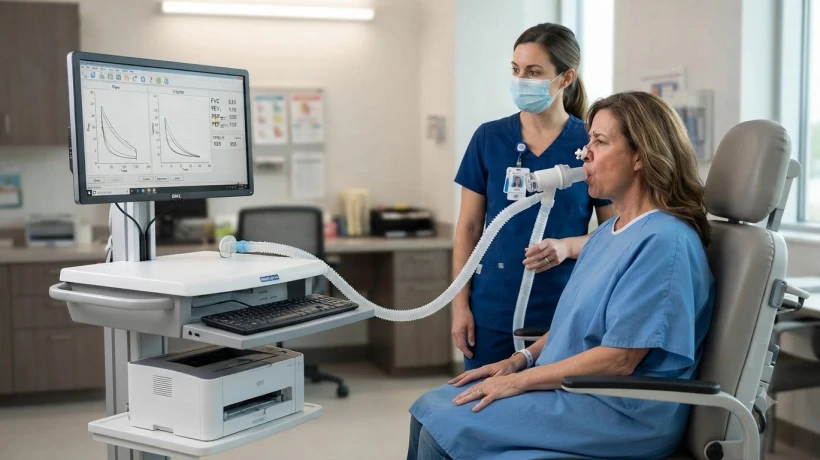
Pulmonary function tests in Bangalore are among the most direct tools available for separating environmental irritation from genuine lung disease.
Lung health has quietly become one of Bangalore's more pressing health concerns. The city's rapid expansion — more vehicles, more construction, more industrial activity — has created an environment where respiratory symptoms are increasingly common across age groups. Many residents develop a chronic cough or notice reduced stamina and assume it is simply the air. Sometimes it is. But sometimes it is a treatable condition that has not yet been diagnosed.
Pulmonary function tests in Bangalore are among the most direct tools available for separating environmental irritation from genuine lung disease. They quantify lung performance with objective numbers, removing the ambiguity that symptom descriptions alone cannot resolve. For those looking to get tested accurately and conveniently, accessing Pulmonary Function Tests in Bangalore at a well-equipped diagnostic centre is a straightforward first step toward getting real answers about respiratory health.
The Respiratory Reality of Living in Bangalore
Bangalore consistently records particulate matter levels — PM2.5 and PM10 — that exceed WHO guidelines during certain seasons, particularly when wind patterns reduce dispersion. Areas with heavy traffic such as Silk Board, Hebbal, and KR Puram corridors see elevated pollutant concentrations throughout the day.
For most people, short-term exposure causes temporary irritation. For those with underlying susceptibility — genetic predisposition, previous respiratory infections, occupational exposures, or existing lung conditions — prolonged exposure can accelerate airway inflammation, reduce lung function over time, and trigger conditions that require medical management.
This is the context in which pulmonary function tests in Bangalore are not simply a clinical formality. They serve as a health baseline, an early warning system, and a monitoring tool for a population that faces real, ongoing respiratory stressors.
Who Benefits Most from Getting Tested in Bangalore
Long-Term Residents with Respiratory Symptoms
If you have lived in Bangalore for several years and have noticed a gradual change in your breathing capacity or exercise tolerance, a PFT establishes whether your lungs are functioning within expected parameters for your age and physique — or whether measurable decline has occurred.
People with Occupational Exposures
Bangalore's manufacturing, pharmaceutical, and IT construction sectors all create occupational exposures that can affect lung health. Employees in environments with chemical fumes, textile dust, or silica-generating activities need periodic pulmonary function monitoring regardless of whether symptoms are present.
Patients Already Under Respiratory Care
For those managing asthma, COPD, or interstitial lung disease in Bangalore, periodic pulmonary function testing is part of evidence-based care. Results from consecutive tests over months or years reveal disease trajectory — invaluable for adjusting treatment before decline becomes severe.
Pre-operative Patients
Many hospitals in Bangalore require PFT results before thoracic or abdominal surgeries. Having a recent baseline from a reliable diagnostic centre streamlines surgical clearance.
The Range of Tests Included Under Pulmonary Function Testing
Spirometry
The foundational test. Measures FEV1, FVC, and the FEV1/FVC ratio. Identifies whether an obstructive or restrictive pattern is present. Typically completed within 15–20 minutes.
Bronchodilator Reversibility
Spirometry is repeated after administering a bronchodilator. The change in FEV1 (significant if ≥12% and ≥200 mL) indicates reversible obstruction — a defining feature of asthma versus fixed obstruction as seen in COPD.
Lung Volume Measurement
Uses body plethysmography or gas dilution techniques to measure total lung capacity (TLC), residual volume (RV), and functional residual capacity (FRC). Critical for diagnosing restrictive lung diseases such as pulmonary fibrosis.
Diffusion Capacity (DLCO)
Measures how efficiently oxygen crosses the alveolar-capillary membrane into the bloodstream. Reduced in conditions affecting the lung parenchyma such as fibrosis, emphysema, and pulmonary hypertension.
Flow-Volume Loop
A graphical representation of airflow plotted against lung volume during forced inhalation and exhalation. Specific loop shapes indicate upper airway obstruction, intrathoracic obstruction, and other patterns not captured by numerical values alone.
How to Identify a Quality Centre Among Many Options
Bangalore has a wide range of diagnostic centres, from large hospital-based respiratory labs to standalone clinics. The difference in quality between them can be substantial.
Accreditation matters. NABL-accredited centres or those aligned with hospital standards are subject to quality checks that smaller, unaccredited clinics may not be.
Equipment generation matters. Older spirometers may not integrate properly with current reference equation sets. Newer equipment offers better flow sensors, automated calibration, and digital reporting.
Staff experience matters. A technician who understands the acceptability and reproducibility criteria for spirometry — and knows when to coach a patient differently — produces more reliable data than one following a script.
Report turnaround matters. Depending on your clinical situation, waiting several days for results may delay treatment decisions. Check expected turnaround times when booking.
Practical Steps Before Your PFT Appointment
A few preparation steps protect the accuracy of your results:
-
No smoking for a minimum of four hours before testing
-
No short-acting bronchodilators for four hours (unless your doctor advises otherwise)
-
No long-acting bronchodilators for 12 hours
-
No vigorous physical activity on the day
-
Arrive well-rested; fatigue affects effort quality
-
Wear comfortable clothing — nothing tight around the chest or abdomen
-
Bring referral, previous PFT reports if available, and your full medication list
What Your Results Will Tell You
After pulmonary function tests in Bangalore, your report will show values compared against age-, gender-, height-, and ethnicity-matched predicted normals.
Values expressed as percentage of predicted allow your doctor to classify results:
-
≥80% predicted for FEV1 and FVC — generally within the normal range
-
70–79% — mildly reduced
-
60–69% — moderately reduced
-
<60% — severely reduced
The FEV1/FVC ratio separates obstructive from restrictive patterns. Obstruction (low ratio) points toward asthma or COPD. Restriction (normal ratio, reduced FVC) points toward fibrotic or structural causes.
These results are a starting point for clinical decision-making, not a standalone diagnosis.
Frequently Asked Questions
Are pulmonary function tests available across Bangalore or only in certain areas?
Well-equipped centres offering pulmonary function tests in Bangalore are available in multiple areas of the city. When searching, check whether the centre offers the specific components your doctor has requested — not all locations within a network may have the full range of equipment.
Do I need to be symptomatic to get a PFT?
No. PFTs are used for symptom investigation, routine monitoring, occupational health screening, and pre-surgical assessment. You do not need to be experiencing symptoms at the time of testing — in fact, for some diagnostic purposes, testing during a symptom-free period followed by a challenge test is part of the protocol.
Will Bangalore's air pollution directly affect my test result?
The test is performed indoors. Acute pollution exposure on the day of testing does not typically affect a spirometry result directly. However, long-term cumulative exposure to urban pollution can affect underlying lung function, which is exactly what the test measures.
Can PFT results change significantly over a short period?
In stable conditions, spirometry results are fairly reproducible over weeks to months. Significant changes — particularly in asthma — may occur with treatment changes or during acute exacerbations. This is why repeat testing at defined intervals is clinically meaningful.
What happens if my results show a problem?
Your referring doctor will review the results alongside your full clinical picture. Depending on findings, next steps may include imaging (chest X-ray or CT), specialist referral, medication initiation, or further testing such as a methacholine challenge or DLCO measurement.
Taking Action on Your Respiratory Health
Respiratory decline is often gradual enough to be dismissed — until it is significant enough to be disabling. Early measurement through pulmonary function tests in Bangalore gives you and your doctor the data needed to intervene before symptoms become limitations. In a city with real air quality pressures, that early data is not just useful — it is protective.
Comments
Login to Comment