Nerve Conduction Velocity Test in Bangalore: What Every Patient Should Know Before the Appointment
10 Sep, 2026
523 Views 0 Like(s)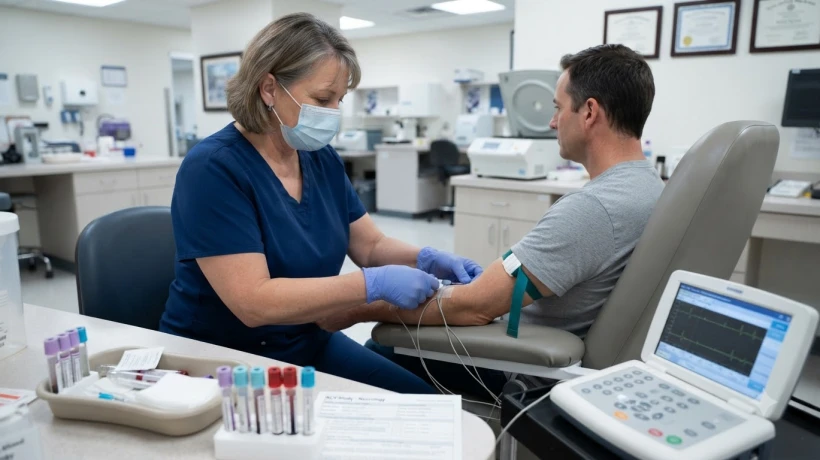
This article explains the science behind the test in understandable terms, what conditions it helps identify, what the appointment involves, and how to interpret the experience if you have never had it done before.
The word “velocity” on a medical referral form catches most people off guard. It is not a phrase you hear in everyday conversations about health. But when a doctor wants to understand why your foot drags, why your fingers feel like they are wrapped in cotton, or why one arm weakens after repetitive work, velocity becomes very relevant.
A nerve conduction velocity test in bangalore is, at its core, a measurement. It measures how quickly electrical impulses travel along your nerves. The brain and body communicate through these impulses, and when the pathway is damaged, the signal slows down, weakens, or fails altogether.
This article explains the science behind the test in understandable terms, what conditions it helps identify, what the appointment involves, and how to interpret the experience if you have never had it done before.
What Does “Conduction Velocity” Actually Mean?
Nerves transmit signals much like electrical cables transmit current. The speed of that transmission is called conduction velocity.
Several factors influence this speed:
-
The thickness of the nerve fibre. Thicker fibres conduct faster.
-
The condition of the myelin sheath. This fatty layer wraps many nerves like insulation around a wire. When it is damaged, signals slow down.
-
The health of the nerve fibre itself. If the inner part of the nerve, called the axon, is degraded, the signal may become weaker even if it still moves at normal speed.
The test measures these factors by stimulating a nerve at one point and recording the response at another point further along the nerve. The machine calculates the time taken and divides it by the distance between the two electrodes. The resulting value is your nerve conduction velocity.
Why Your Doctor Has Referred You for This Test
Doctors request this test when the physical examination suggests a nerve problem but does not reveal its exact location or severity. Common situations include:
-
Carpal tunnel syndrome. Median nerve compression in the wrist causes tingling in the thumb, index, and middle fingers.
-
Cubital tunnel syndrome. Ulnar nerve compression near the elbow causes tingling in the ring and little fingers.
-
Peripheral neuropathy. This often affects both feet or both hands and is commonly linked to diabetes, kidney disease, vitamin deficiencies, or alcohol use.
-
Nerve root compression. A herniated disc in the spine can affect nerves that travel down the arm or leg.
-
Nerve injuries. After trauma, the doctor needs to know whether the nerve is still sending signals and whether it is regenerating.
Sometimes the test is used to monitor a known condition over time. For example, a patient with carpal tunnel syndrome may have an NCV before and after treatment to measure improvement.
What the Test Measures: Three Key Numbers
Your report will contain several values, but most patients only need a basic understanding of three of them:
-
Conduction velocity. This tells you how fast the signal moves. It is measured in metres per second. Slower conduction often points to myelin damage.
-
Amplitude. This tells you how strong the signal is when it arrives. Reduced amplitude suggests damage to the nerve fibres themselves.
-
Latency. This is the time between stimulation and the first response. Prolonged latency can indicate a problem at the point of compression, such as the wrist or elbow.
A normal result does not completely rule out nerve disease. That is why the report is always read together with your clinical symptoms, and frequently alongside an EMG.
How to Prepare for a Nerve Conduction Study
Although the test is non-invasive, your body’s condition at the time of the test can affect the readings.
-
Do not put lotion or oil on your skin on the day of the test. Electrodes need direct contact with clean, dry skin.
-
Keep the limb warm. Cold slows nerve conduction. If the room is cool, tell the technician rather than silently tolerating it.
-
Wear clothing that allows easy access to your limbs. For example, if the lower leg is being tested, shorts or loose trousers are helpful.
-
Inform the technician of any cardiac devices, neurostimulators, or recent surgery. The stimulation used in NCV is generally safe, but the clinician should always be aware.
-
Do not assume you need to fast. You can eat and drink normally unless your doctor has given different instructions.
No needles are involved in a pure nerve conduction study. The EMG part, if ordered separately, does involve a very thin needle, and in that case you should mention blood-thinning medication.
What Happens During the Appointment?
You will be seated or lying down, depending on which nerves are being tested.
The technician will locate the nerve using anatomical landmarks and sometimes a small device to confirm the correct spot. After cleaning the skin, two types of electrodes are placed: one delivers a brief electrical pulse, and the other records the signal further along the nerve.
You will feel a quick twitch in the muscle supplied by that nerve. This is normal. The machine will display the response as a waveform on a screen. Several stimuli are usually delivered at different points along the nerve so that the technician can calculate how the signal behaves across different segments.
For example, in carpal tunnel syndrome, the technician may stimulate the median nerve at the wrist and at the elbow. Comparing the two responses can show whether the signal slows specifically where the nerve passes under the wrist ligament.
The procedure typically lasts between 30 and 60 minutes. You can resume normal activities immediately afterward.
Finding a Reliable Centre for the Test
A nerve conduction velocity test in bangalore is offered in hospitals, neurology clinics, and some diagnostic centres. Before choosing one, verify:
-
The centre uses a dedicated neurophysiology machine.
-
The test is performed or supervised by a trained specialist.
-
The centre has a process for correlating findings with your symptoms.
-
Reports are reviewed by a doctor before final release.
-
The facility follows proper cleaning protocols for electrodes and needles.
Accreditation is a useful indicator. A centre that follows NABL standards is more likely to maintain consistent quality in how tests are performed and reported.
What Happens After the Report?
If your results are clearly normal, the doctor may move on to other diagnostic possibilities. If they are abnormal, treatment depends on the underlying cause.
Carpal tunnel syndrome may respond to wrist splints, physiotherapy, or activity modification. Diabetic neuropathy requires blood sugar control and sometimes medications for nerve pain. A compressed nerve root may need imaging to guide treatment.
The important point is that NCV gives information; it does not replace clinical judgement. Always take your report back to the doctor who referred you rather than relying on an internet search for every value.
Frequently Asked Questions
Is a nerve conduction velocity test in bangalore painful?
Most patients find it uncomfortable but tolerable. The electrical pulses feel like quick, brief twitches. If the stimulus is increased, it can feel sharper, but each pulse lasts only a moment. Communicate with the technician if it becomes too much.
How long will I wait for the report?
Most diagnostic centres provide reports within 24 hours. If the test is performed in a hospital, results may be available the same evening or the next morning.
Do both arms or legs always need to be tested?
Not always. The technician will test the nerves that correspond to your symptoms and may compare one side with the other. If one arm is affected, the other arm is often tested for comparison because a difference between sides can be diagnostically useful.


Comments
Login to Comment