Getting a CT Scan in Bangalore: What No One Tells You Before You Book
10 Sep, 2026
3 Views 0 Like(s)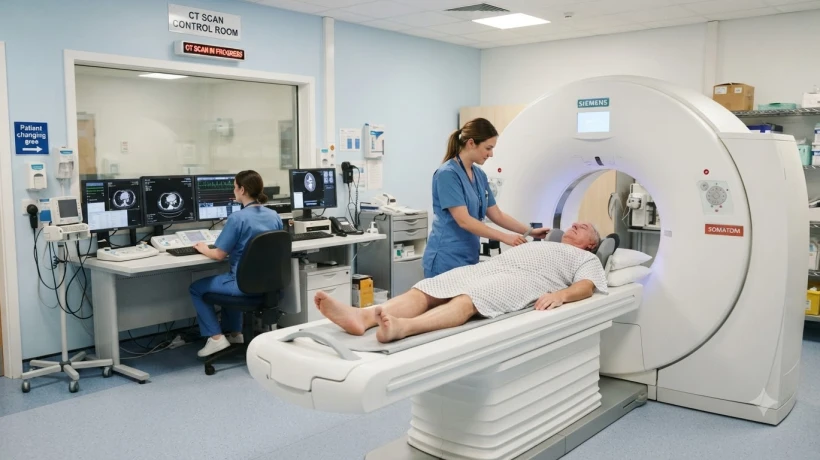
For patients across Bangalore, getting a CT scan in Bangalore at an accredited centre with experienced radiologists makes a measurable difference to the diagnostic outcome.
A doctor's referral for a CT scan triggers a very specific kind of stress — not just about what the scan might reveal, but about the practical logistics of where to go, how to prepare, what to expect, and how much it will cost. Most patients figure this out through trial and error, which is both avoidable and frustrating.
This article addresses the gaps that most generic content on CT scan in Bangalore skips over — the preparation details, the practical decisions, the quality questions, and the things that genuinely help you walk into the appointment feeling informed rather than anxious. For patients across Bangalore, getting a CT scan in Bangalore at an accredited centre with experienced radiologists makes a measurable difference to the diagnostic outcome.
Why a CT Scan Is Ordered — And Why That Affects Your Preparation
A CT scan is not a one-size-fits-all test. It is ordered for a wide range of clinical situations, and the reason behind the referral directly affects how the scan is performed.
Common reasons doctors in Bangalore order CT scans:
-
Persistent or unexplained headaches or dizziness
-
Chest pain or breathing difficulty
-
Abdominal pain, organ enlargement, or suspected mass
-
Trauma or injury assessment
-
Monitoring of a known tumour or cyst
-
Pre-surgical planning
-
Investigation of stroke or neurological symptoms
-
Evaluation of spinal disc problems or nerve compression
Each scan type has its own preparation requirements, image protocol, and report focus. Understanding the purpose of your specific referral helps you prepare more accurately and ask more relevant questions when you book.
Preparation: The Part Patients Most Often Get Wrong
Walking into a CT appointment unprepared is one of the most common causes of rescheduled scans. Different scan types have very different requirements.
Fasting
For abdominal and pelvic CT scans — particularly contrast-enhanced ones — fasting for four to six hours prior to the scan is typically required. Eating before these scans can interfere with image quality, especially when contrast material is administered.
For CT scans of the brain, spine, or chest without contrast, there is generally no fasting requirement. Confirm with the centre at the time of booking.
Contrast Preparation
If your scan involves intravenous contrast dye, the centre will typically ask about:
-
Any history of allergic reactions to contrast or iodine
-
Current kidney function (a recent creatinine or eGFR blood test may be required)
-
Medications such as metformin, which may need to be paused before contrast administration
-
Any history of asthma, which can increase sensitivity to contrast reactions
Bring your current medication list to the appointment.
Hydration
For scans that do not require fasting, staying well-hydrated — especially if contrast is involved — supports kidney clearance of the dye after the scan. Unless specifically told otherwise, drink water normally before your appointment.
What to Wear
Wear comfortable clothing with no metal fasteners if possible. You may be asked to change into a gown depending on the area being scanned. Remove all jewellery, piercings, and accessories before arriving, or plan to remove them at the centre.
What the Scanner Actually Does — In Plain Terms
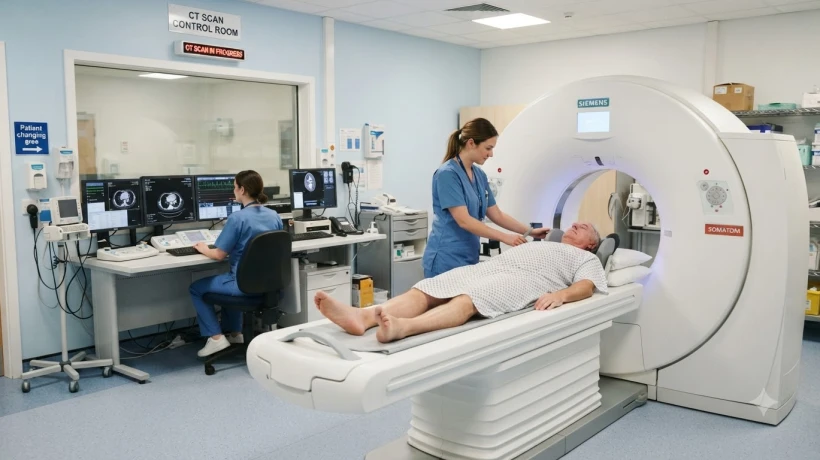
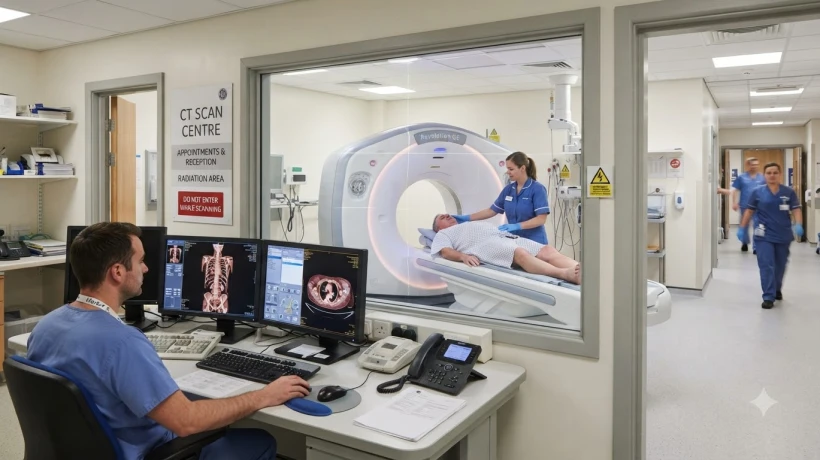
A CT scanner is a large circular machine with a motorised table. You lie on the table, and it moves through the opening of the ring. X-rays rotate around you in a spiral pattern, capturing thousands of cross-sectional images. A computer then reconstructs these into detailed three-dimensional slices of the body area being examined.
The scan is completely painless. The machine makes a low humming or clicking sound. You may be asked to hold your breath briefly — typically for around five to fifteen seconds — at certain points to prevent motion blur in the images.
If contrast is used, it is administered through a small intravenous line in your arm. Most patients feel a brief warm flush or mild metallic taste in the mouth — this is normal and passes quickly.
The entire appointment, from arrival to leaving, typically takes between thirty minutes and one hour depending on the scan type and whether contrast is involved.
Getting Your CT Scan in Bangalore: Evaluating Your Options
Bangalore has many diagnostic facilities, but not all deliver the same diagnostic quality. When looking for a place to get a CT scan in Bangalore, consider the following.
Scanner Generation
Multi-detector CT (MDCT) scanners with higher slice counts — 64-slice, 128-slice, or dual-source — provide faster acquisition, sharper resolution, and lower radiation doses compared to older equipment. Higher-slice scanners are particularly important for cardiac CT, vascular studies, and paediatric imaging.
Radiologist Credentials
The images are only as useful as the report interpreting them. A qualified radiologist — ideally one with subspecialty training relevant to the body area in question — should review your scan and produce the report.
Report Turnaround
For urgent clinical situations, same-day or next-day reporting matters. Ask about standard turnaround times and whether expedited reporting is available for your situation.
NABL Accreditation
Centres with NABL accreditation have demonstrated compliance with nationally recognised quality standards for equipment, processes, and reporting.
Radiation — Putting It in Context
CT scans use ionising radiation, and patients sometimes worry about whether the exposure is harmful. This is a fair concern.
Modern CT equipment uses dose-modulation technology, which automatically adjusts radiation output based on the area being scanned and the patient's body composition. Well-run centres follow radiation protection principles that minimise exposure without compromising image quality.
For most patients, a single medically indicated CT scan carries a very low risk relative to the clinical benefit. However, CT scans should not be performed without a clear clinical reason. If your doctor has recommended one, the reasoning is typically well-founded. If you have doubts, discuss them before booking rather than after.
After the Scan: Collecting and Using Your Report
Once your scan is complete:
-
Collect your report and images. Reports may be printed, provided digitally, or both. Always take a copy of the imaging data — usually on a CD or via a digital link — in addition to the written report.
-
Read the report before your follow-up. You do not need to understand every term, but familiarising yourself with the main findings and any flagged abnormalities means you can have a more focused conversation with your doctor.
-
Bring everything to your doctor. Images and reports together give your doctor the complete picture. Do not leave the images at home.
-
Ask questions. If the report is unclear or your doctor's explanation raises new questions, you have every right to seek clarification — from your doctor and, if needed, from the radiologist at the diagnostic centre.
Frequently Asked Questions
Can I drive myself to a CT scan appointment in Bangalore?
For non-contrast scans, yes — there is no sedation involved, and driving afterwards is perfectly safe. If you are receiving contrast dye and have any concerns about potential reactions, it may be worth arranging transport. This is worth discussing with the centre when you book.
What if I am claustrophobic?
CT scanners have a much wider, shorter opening than MRI machines. Most patients with mild claustrophobia find CT scans manageable. If you have significant anxiety, inform the centre in advance so they can ensure a smooth experience and position you with minimal time inside the bore.
How long do I need to wait for my CT scan report?
Standard reports from reputable centres are typically ready within a few hours to one business day. If your doctor needs urgent results, ask about same-day reporting options when booking your CT scan in Bangalore.
Can children get CT scans?
Yes, but paediatric CT scans require adjusted protocols to reduce radiation dose, as children are more sensitive to radiation. Ensure the centre has experience with paediatric imaging and uses dose-appropriate settings.
Will the scan detect every possible condition?
CT scans are powerful but not infallible. They are highly effective for specific diagnostic purposes outlined in your referral. Some conditions are better assessed with MRI, ultrasound, or other modalities. Your doctor selects the most appropriate test for your clinical situation.
Getting a CT scan in Bangalore is a straightforward process when you understand what to expect and how to choose the right facility. Preparation, equipment quality, and radiologist expertise are the three pillars of a scan that actually serves its diagnostic purpose. Going in informed makes the entire experience smoother — and gives you and your doctor the clearest possible results to work with.
Comments
Login to Comment