MRI in Bengaluru: Choosing Correctly When Every Detail in the Report Counts
10 Sep, 2026
5 Views 0 Like(s)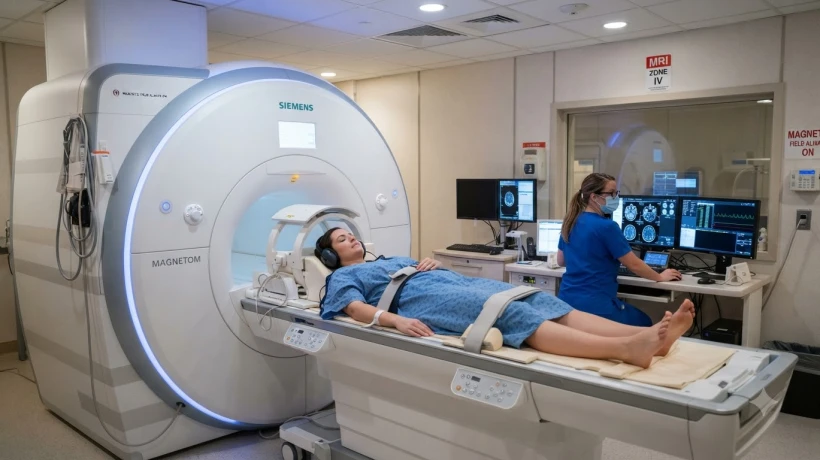
For patients planning an MRI scan in Bengaluru, understanding what makes a diagnostic experience genuinely useful, rather than just technically completed, is worth a few minutes of your time. Facilities like Ecotown Diagnostics offering a trusted MRI scan in Bengaluru combine modern equipment with qualified radiological expertise for exactly this reason.
Most people who need an MRI scan in Bengaluru spend more time comparing prices on aggregator websites than actually evaluating what separates a diagnostic centre worth trusting from one that merely has a machine in the room. That's understandable — price is visible and easy to compare. Radiologist expertise, machine calibration, and report accuracy are not.
But when you're getting an MRI because something is clinically uncertain — a neurological symptom that hasn't resolved, a soft tissue injury under investigation, or a follow-up after treatment — the quality of what happens after you lie down in that bore matters enormously. For patients planning an MRI scan in Bengaluru, understanding what makes a diagnostic experience genuinely useful, rather than just technically completed, is worth a few minutes of your time. Facilities like Ecotown Diagnostics offering a trusted MRI scan in Bengaluru combine modern equipment with qualified radiological expertise for exactly this reason.
Bengaluru's Diagnostic Landscape — What You're Actually Choosing Between
The city has a substantial number of diagnostic centres, standalone radiology clinics, and hospital-integrated imaging departments. The range is wide, and so is the variance in quality.
At one end, you have large hospital radiology departments with 3T scanners, sub-specialist radiologists, and integrated clinical workflows. At the other, smaller standalone centres with older equipment and off-site reporting. In the middle sits the majority of private diagnostic centres — variable in quality, competitive in pricing, and inconsistent in how well they communicate findings to patients.
Knowing which category a centre falls into before you book is the challenge.
The Clinical Situations That Demand Higher MRI Quality
Not all MRI referrals carry equal clinical urgency. But in these specific situations, the quality of your MRI scan in Bengaluru matters more than usual:
Neurological evaluations: When investigating suspected MS, stroke, tumours, or unexplained cognitive changes, image resolution directly affects what is detectable. Small white matter lesions or early demyelination can be missed on a poorly calibrated or low-field machine.
Pre-surgical planning: Orthopaedic surgeons and neurosurgeons rely on MRI findings to determine surgical approach, margins, and risks. A low-quality scan can lead to incorrect operative planning.
Oncology follow-up: Monitoring tumour response to treatment requires accurate measurement across serial scans. Consistency in scanner quality and protocol is critical.
Paediatric imaging: Children require shorter scan times, appropriate positioning aids, and sometimes sedation. Not every centre in Bengaluru has paediatric protocols in place.
Cardiac MRI: This is a highly specialised scan that many standard diagnostic centres do not offer. Confirm availability before assuming it is included.
Understanding How MRI Reports Are Written — and Why It Matters
Most patients focus on getting the scan done. Few think about what a good radiology report actually looks like — until they receive one that leaves them more confused than before.
A Complete MRI Report Should Contain
-
Clinical indication: What the referring doctor ordered the scan for
-
Technique: The sequences used and whether contrast was administered
-
Findings: A systematic description of what was observed in the images
-
Impression: A concise summary of clinically significant findings and their likely significance
-
Radiologist signature: The name and qualifications of the interpreting radiologist
Reports that simply list observations without an impression, or that contain vague language without clinical correlation, are of limited use to your treating doctor and to you.
What to Ask Before You Book an MRI in Bengaluru
These five questions will help you evaluate any diagnostic centre quickly:
-
What is the field strength of your MRI scanner? (1.5T minimum for most clinical needs; 3T preferred for neurological or cardiac studies)
-
Is the radiologist based on-site? (On-site radiologists can review images in real time and order additional sequences if needed)
-
Do you have sub-specialist radiologists for specific scan types? (Neuroradiology, musculoskeletal, body imaging — each benefits from subspecialty expertise)
-
What is your report delivery timeline? (Routine: 24–48 hours; urgent: same day or within hours)
-
Do you provide hard copy films and digital DICOM images? (DICOM files allow other radiologists or specialists to view images digitally — useful for second opinions)
Preparing for Your MRI Scan in Bengaluru — A Practical Checklist
Day Before
-
Confirm the appointment time and exact location
-
Check whether fasting is required for your specific scan type
-
Inform the centre if you are pregnant, have implants, or have a history of kidney disease (relevant for contrast scans)
On the Day
-
Wear metal-free, comfortable clothing — or be prepared to change into a gown
-
Leave jewellery, watches, and accessories at home
-
Carry your referral letter, previous imaging (X-rays, CT, prior MRI), and photo ID
-
Arrive 15 minutes before your scheduled scan time
What to Expect
-
You will be positioned on a sliding table and moved into the bore of the MRI machine
-
The scan itself is painless, though the machine produces considerable noise
-
For contrast scans, a small IV cannula will be inserted in your arm
-
Duration varies: 20 minutes for a simple joint scan to over an hour for complex multi-region studies
MRI Pricing in Bengaluru — A Transparent Look
Here is a general guide to what MRI scans cost in Bengaluru at private diagnostic centres. These are approximate ranges and will vary:
|
Scan |
Typical Price Range |
|
MRI Brain (plain) |
₹3,000 – ₹5,500 |
|
MRI Spine (per segment) |
₹3,500 – ₹6,500 |
|
MRI Knee (plain) |
₹3,000 – ₹5,500 |
|
MRI Abdomen / Pelvis |
₹5,000 – ₹9,000 |
|
MRI with Contrast (additional) |
₹1,500 – ₹2,500 |
|
Whole Body MRI |
₹15,000 – ₹30,000+ |
Confirm current pricing directly with the centre. Hospital-based MRI units may charge differently from standalone diagnostic centres.
After the Report — What Next?
Receiving your MRI report is not the end of the process. Here's how to handle what comes next:
-
Take the report to your referring doctor — do not self-interpret, even if you've read extensively about your condition online. Context matters.
-
Ask if a second radiologist opinion is needed — for complex or unexpected findings, a second read from a sub-specialist can add significant clarity.
-
Keep all images and reports — DICOM files and printed films should be stored safely, as future doctors will need these for comparison.
-
Follow up promptly — if the report recommends follow-up imaging or further investigation, do not delay.
Frequently Asked Questions
Is an MRI scan safe during pregnancy?
MRI is generally considered safe during pregnancy, but it is typically avoided in the first trimester unless clinically necessary. Gadolinium contrast is usually avoided throughout pregnancy. Always inform the centre that you are pregnant before the scan.
What makes Bengaluru different from smaller cities for MRI access?
Bengaluru has a significantly larger number of accredited diagnostic centres compared to smaller Indian cities, with greater access to 1.5T and 3T scanners, sub-specialist radiologists, and NABL-accredited facilities. The challenge is not availability but knowing how to evaluate quality among many options.
Can I get a second opinion on my MRI report?
Absolutely. If your treating doctor or you have concerns about a report, you are entitled to request a second radiological read, either at the same centre or at a different facility. Many people seek second opinions before major surgical decisions.
How long does an MRI scan appointment typically last?
Accounting for registration, preparation, the actual scan, and post-scan procedures, allow 60 to 90 minutes for a standard single-region MRI. Multi-region or contrast-enhanced studies may take longer.
What happens if I move during the scan?
Movement causes motion artefacts in MRI images, which can reduce image quality significantly. In some cases, portions of the scan may need to be repeated. Lying still throughout the scan — even during the loud noise — is important for image accuracy.
Getting an MRI scan in Bengaluru is rarely difficult. Getting one at a centre that pairs modern equipment with skilled radiological interpretation and delivers a report your doctor can actually act on — that requires a little more thought. The few minutes you spend evaluating your options before booking are a worthwhile investment in the accuracy of everything that follows.
Comments
Login to Comment