From Crash Game Idea to Launch: A Complete Development Roadmap
22 Oct, 2026
8 Views 0 Like(s)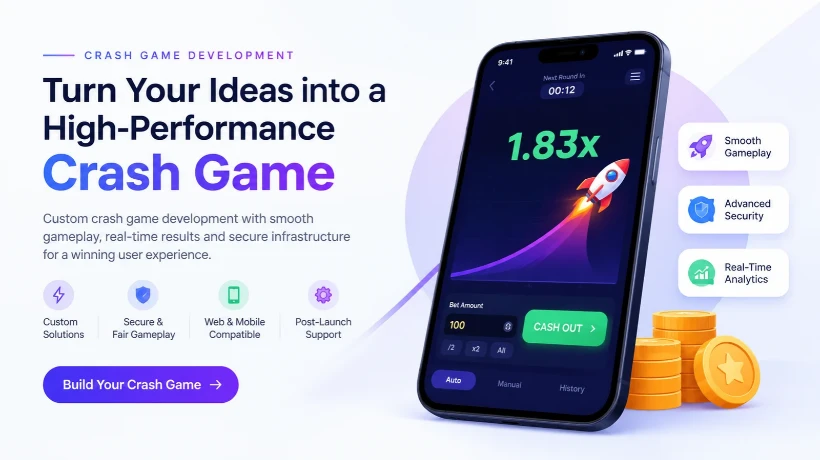
Explore the complete crash game development journey, from defining your game concept and choosing the right technology stack to building core mechanics, implementing security, testing performance, and preparing for launch. Learn the essential steps, technical considerations, and best practices to turn your crash game idea into a reliable, production-ready platform.
Ever wondered what it takes to turn a crash game idea into a fully functional platform? You might have a concept in mind, but questions about development costs, technology, game mechanics, security, and launch requirements can quickly make the process feel complicated. And the truth is, building a reliable crash game involves much more than creating a rising multiplier and a cash-out button.
As demand for interactive gaming experiences continues to evolve, businesses exploring crash game development need to think beyond design and focus on the technology that powers the entire experience. From real-time game engines and provably fair algorithms to backend architecture and transaction management, every component plays a role in building a stable and trustworthy platform.
However, launching a crash game shouldn't start with coding alone. In this guide, we'll walk you through the complete crash game development roadmap, covering the essential stages from validating your initial idea and choosing the right technology stack to testing, security, and preparing your platform for launch.
1. Define Your Game Concept and Requirements
Before writing code, decide what kind of game you want to build.
Will it be a simple browser-based game, a mobile-first experience, or a multiplayer platform? Will it use virtual credits or real money? These decisions influence your architecture, budget, development timeline, and compliance requirements.
Start by finalizing the essential features you want to include in your platform:
- A real-time multiplier and crash animation
- Bet placement and cash-out mechanics
- Round history and player statistics
- User accounts and wallet management, if required
- An administrative dashboard
- Responsive design for mobile and desktop
Consultant tip: Separate essential launch features from future enhancements. Building a focused minimum viable product (MVP) helps you validate the experience before investing in a larger platform.
2. Choose the Right Technology Stack
Your technology stack should support smooth gameplay, reliable calculations, and real-time updates.
For example, JavaScript or TypeScript can power the frontend, while Node.js can handle backend services. WebSockets are useful for broadcasting round events and multiplier updates to connected players. A database such as PostgreSQL can store accounts, transactions, and round records.
Your final stack depends on expected traffic, integrations, team expertise, and security requirements.
One important consideration: the frontend should display game state, not determine authoritative outcomes. The backend must control round timing, validate actions, and settle transactions.
3. Build the Game Engine and Fairness System
The game engine is the core of your gaming platform. It manages round states, generates outcomes, controls the multiplier, and determines when a round ends.
A typical round follows this sequence:
- Betting opens.
- Bets are accepted and validated.
- The round starts, and the multiplier increases.
- Players can cash out before the crash.
- The system settles valid results and records the round.
If fairness is important to your product, design a verifiable outcome-generation mechanism. A provably fair system commonly uses cryptographic commitments and seeds so users can independently verify results.
Avoid relying on client-side randomness or trusting the browser to report the final outcome.
4. Develop the Backend, Wallet, and Admin Panel
For multiplayer or real-money games, backend reliability is essential.
Your server must handle simultaneous player actions, prevent duplicate transactions, maintain consistent balances, and recover safely from network interruptions.
Use atomic transaction processing and idempotency controls to prevent a repeated request from crediting or debiting an account twice. Keep an auditable record of bets, cash-outs, settlements, and balance changes.
An admin panel should provide operational visibility into rounds, transactions, errors, and system performance. Access should be restricted and protected with appropriate authentication and permissions.
5. Test Before Going Live
A game that works in a development environment isn't necessarily ready for production.
Test the following before launch:
Gameplay: Round transitions, cash-out timing, and crash events.
Concurrency: Multiple players submitting actions simultaneously.
Security: Unauthorized requests, duplicate submissions, and attempts to manipulate outcomes.
Recovery: Disconnections, server restarts, and interrupted transactions.
Performance: Latency and stability under expected peak traffic.
Fairness: Verify outcomes and maintain accurate settlement records.
Load testing and independent security reviews are particularly valuable when real money is involved.
6. Prepare for Launch and Ongoing Maintenance
Before release, finalize hosting, monitoring, backups, incident-response procedures, and support workflows. Confirm that applicable gambling laws, licensing requirements, age restrictions, privacy obligations, and payment-provider rules are addressed for every target market.
After launch, monitor error rates, round-processing latency, transaction failures, and player-reported issues. Use these insights to prioritize improvements rather than adding features without evidence.
Popular Types of Crash Games to Consider for Development
When planning a crash game project, looking at popular titles can help you understand different gameplay styles, visual designs, and player experiences. Each game offers a different reference point for businesses planning to develop their own crash game platform.
1. Aviator-Style Crash Game
Inspired by Aviator, this format features a plane that takes off while the multiplier increases until the round crashes. Its simple gameplay loop, recognizable visuals, and multiplayer presentation make it a common reference for crash game projects.
2. JetX-Style Crash Game
JetX uses a rocket-themed presentation in which the multiplier rises until the round ends. Businesses exploring this style can focus on animated gameplay, clear multiplier displays, responsive controls, and synchronized multiplayer rounds.
3. Spaceman-Style Crash Game
Inspired by Spaceman, this format uses a space-themed character and visual effects to create a distinctive gameplay experience. It can serve as a reference for developers who want more character-driven animations and a visually engaging interface.
4. Balloon-Style Crash Game
This format uses a balloon that expands or rises as the multiplier increases, eventually bursting to end the round. Its straightforward visual concept makes it suitable for developers exploring alternative themes and lightweight game interfaces.
5. Rocket-Style Crash Game
Rocket-themed crash games use an ascending rocket, a rising multiplier, and a sudden crash event. Developers can customize the rocket animation, background environment, sound effects, and interface to create a distinctive product.
6. Custom-Themed Crash Game
Rather than following an existing title's visual identity, businesses can develop an original concept around cars, aircraft, futuristic spacecraft, or other themes. This approach allows greater control over branding, gameplay presentation, and user experience.
Final Thoughts
Ultimately, building a successful crash game requires a clear vision, a reliable technical foundation, transparent game mechanics, and thorough testing at every stage. From choosing the right technology stack to preparing for launch, each decision contributes to the platform's stability, security, and long-term maintainability.
As the industry evolves, development teams and technology providers, including KIR Chain Labs, are part of the broader ecosystem shaping how modern gaming platforms are designed and developed. A well-planned approach helps turn an initial crash game concept into a technically sound, launch-ready product.
URL: https://www.kirchainlabs.com/blog/crash-game-development/
WhatsApp: +91 8838014467
Email: support@kirchainlabs.com


Comments
Login to Comment