Medication Non-Adherence and Chronic Disease Management
05 Nov, 2026
12 Views 0 Like(s)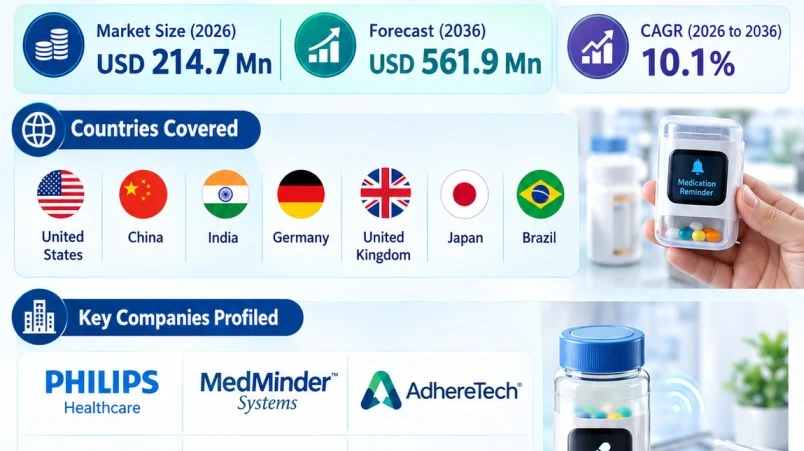
Smart Pill Boxes and Bottles Market to Reach USD 561.9 Million by 2036 as Demand for Connected Medication Management Accelerates
According to the latest market intelligence report published by Future Market Insights (FMI), the global smart pill boxes and bottles market is projected to grow from USD 195 million in 2025 to USD 214.7 million in 2026, reaching USD 561.9 million by 2036. The market is expected to register a compound annual growth rate (CAGR) of 10.1% between 2026 and 2036, driven by increasing demand for medication adherence support, expanding home healthcare services, and the adoption of connected health technologies.
Smart pill boxes and bottles combine medication organization with reminders, alerts, and, in connected models, information that can be shared with caregivers or healthcare support teams. These devices are becoming relevant to medication-management routines for people living with chronic conditions, older adults, and individuals who need assistance coordinating multiple medicines.
👉 Get Detailed Market Forecasts, Competitive Benchmarking, and Pricing Trends:
https://www.futuremarketinsights.com/reports/sample/rep-gb-1710
FMI identifies smart pill boxes as the leading product segment, accounting for 58.0% of product-type demand in 2026. The diabetes care segment represents 22.0% of indication demand, reflecting the ongoing need to manage medication routines associated with chronic conditions.
Market Size and Growth Forecasts
· 2025 Baseline Market Value: USD 195 million
· 2026 Estimated Market Size: USD 214.7 million
· 2036 Projected Market Value: USD 561.9 million
· Forecast CAGR: 10.1% (2026–2036)
· Incremental Growth Opportunity: USD 347.2 million
· Market Expansion: Approximately 2.62 times the 2026 market value
· Leading Product Segment: Smart pill boxes, with a 58.0% share in 2026
· Leading Indication Segment: Diabetes care, with a 22.0% share in 2026
The projected growth reflects demand for practical medication-management tools that fit daily routines and support care beyond traditional clinical settings. Adoption will depend on device usability, affordability, reliable reminders, and the availability of assistance when patients or caregivers need it.
Key Market Segments
By Product Type
Smart pill boxes are projected to account for 58.0% of product-type demand in 2026. Compartment-based designs organize medicines according to prescribed schedules and can help users manage multiple tablets across the day. Connected models may add reminders, dispensing functions, and caregiver notifications.
Smart pill bottles account for the remaining 42.0% of product-type demand. These devices focus on individual medication containers and may use connected features to support reminders and information sharing. The choice between a box and a bottle depends on the medication regimen, patient preferences, and the level of assistance required.
By Indication
Diabetes care is projected to represent 22.0% of indication demand in 2026. For patients prescribed recurring oral medicines, connected medication devices may help organize doses and provide prompts that support daily routines.
Other applications include cardiovascular disease, oncology, mental health, respiratory conditions, chronic pain management, and additional indications. Device selection should reflect the actual medication-management challenge and the user's needs; an alert or container-opening event does not, by itself, confirm that a medicine has been taken.
By End User and Connectivity
Home care settings represent an important use environment for smart medication devices, where patients and caregivers coordinate daily medication routines. Hospitals and pharmacies provide additional opportunities for medication-management support.
Connectivity options include Bluetooth-enabled devices, Wi-Fi-enabled devices, and cellular-connected devices. These technologies differ in setup requirements, communication range, and integration with mobile applications or support services.
Country and Regional Growth Outlook
FMI projects the following country-level CAGRs through 2036:
· India: 13.6%, supported by expanding home healthcare needs and growing adoption of digital health solutions.
· China: 13.1%, reflecting healthcare digitalization and demand for connected medication-management tools.
· United States: 9.4%, supported by established digital health services and demand for caregiver-enabled medication support.
· United Kingdom: 8.5%, reflecting interest in patient-centered adherence support and home-based care.
· Germany: 8.5%, supported by healthcare technology adoption and the need for medication assistance in home-care settings.
The report covers North America, Latin America, Western Europe, Eastern Europe, East Asia, South Asia and Pacific, and the Middle East and Africa.
Major Market Trends and Growth Drivers
1. Growing need for medication adherence support: Recurring medication schedules create demand for practical tools that help users organize medicines and manage daily routines.
2. Expansion of home healthcare: Connected medication devices can support care outside hospitals when patients, caregivers, and service providers have clear responsibilities for medication preparation and follow-up.
3. Connected-device innovation: Bluetooth, Wi-Fi, cellular connectivity, and mobile applications are expanding the ways devices can deliver reminders and share relevant information.
4. Patient-centered device selection: Ease of setup, accessibility, refill management, and compatibility with individual routines are important factors in sustained use. Connected features are most useful when they address a specific need and fit the assistance available to the patient.
Access Full Report: https://www.futuremarketinsights.com/reports/smart-pill-boxes-bottles-market
Competitive Landscape
The market includes connected dispensing systems, smart medication bottles, home medication-management platforms, and reminder devices. Companies differentiate themselves through product design, connectivity, medication preparation services, caregiver support, and ease of use.
Key companies profiled by FMI include:
· MedMinder
· AdhereTech
· Spencer Health Solutions
· Hero Health
· e-Pill Medication Reminders
MedMinder combines connected dispensing with pharmacy and caregiver-support services. AdhereTech focuses on smart-bottle technology, while Spencer Health Solutions offers an in-home medication platform. Hero Health and e-Pill provide additional medication-management and reminder solutions.
As the market develops, providers that align device functionality with practical medication routines and reliable follow-up may be better positioned to meet the needs of patients and caregivers.
Analyst Perspective
“Smart pill box and bottle procurement is shaped by medication adherence improvement priorities, chronic disease management programs, and connected health technology adoption.”
— Anurag Sharma, Principal Consultant at Future Market Insights
Related Reports:
· Intraosseous Infusion Kits Market - https://www.futuremarketinsights.com/reports/intraosseous-infusion-kits-market
· Emesis Bags Market - https://www.futuremarketinsights.com/reports/emesis-bags-market
· Infusion fluid holder Market - https://www.futuremarketinsights.com/reports/infusion-fluid-holder-market
About Future Market Insights (FMI)
Future Market Insights (FMI) is a global market intelligence and consulting firm providing comprehensive market research, competitive intelligence, and strategic business insights across industries. The firm delivers detailed forecasts, technology analysis, and data-driven recommendations that support informed decision-making for manufacturers, investors, distributors, and policymakers worldwide.
For Press & Corporate Inquiries
Rahul Singh
AVP – Marketing and Growth Strategy
Future Market Insights, Inc.
+91 8600020075
For Sales – sales@futuremarketinsights.com

Comments
Login to Comment