The Importance of Fine Particle Separation in Industrial Pro
04 Nov, 2026
19 Views 0 Like(s)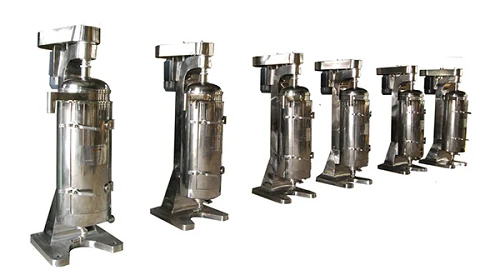
By selecting suitable separation equipment and optimizing operating conditions, industries can achieve better separation efficiency, improve final product
Fine particle separation plays a vital role in modern industrial processes, as it helps improve product quality, process efficiency, and overall production performance. Many industries, including food processing, pharmaceuticals, chemicals, biotechnology, and wastewater treatment, require the effective separation of fine particles from liquids to achieve the desired product characteristics. These particles may include suspended solids, impurities, microorganisms, and other unwanted materials that can affect the quality and purity of the final product. One of the most effective technologies used for this purpose is the tubular centrifuge, which operates on the principle of centrifugal force to separate fine particles from liquid mixtures. Unlike conventional filtration and sedimentation methods, a tubular centrifuge provides high-speed rotation, generating strong centrifugal forces that enable the efficient separation of very small particles with different densities. Fine particle separation is particularly important because even a small quantity of unwanted solids can negatively influence product stability, appearance, performance, and shelf life. In pharmaceutical manufacturing, for example, the removal of fine impurities is essential to maintain product purity and meet strict quality standards. Similarly, in the food and beverage industry, separation techniques are used to clarify juices, oils, dairy products, and other liquid products while maintaining their quality and nutritional value. In chemical industries, efficient particle separation helps recover valuable materials, improve reaction efficiency, and reduce contamination. Furthermore, effective separation minimizes equipment wear, prevents blockages in pipelines, and reduces the maintenance requirements of industrial machinery. The use of advanced separation equipment also supports sustainable manufacturing by reducing product losses, minimizing waste generation, and improving resource utilization. Among the available separation technologies, tubular centrifuges are especially suitable for applications involving low solid concentrations and extremely fine particles because of their high centrifugal acceleration and continuous or semi-continuous operation, depending on the design. Their compact construction, high separation efficiency, and ability to process delicate liquid mixtures make them valuable in industries where precise separation is required. Therefore, fine particle separation is not merely an additional processing step but an essential operation that directly influences industrial productivity, product consistency, operational reliability, and economic performance. By selecting suitable separation equipment and optimizing operating conditions, industries can achieve better separation efficiency, improve final product quality, reduce operational costs, and meet increasingly demanding industrial and environmental standards.



Comments
Login to Comment