The Smallest Component Could Be the Biggest Weakness in High
04 Nov, 2026
20 Views 0 Like(s)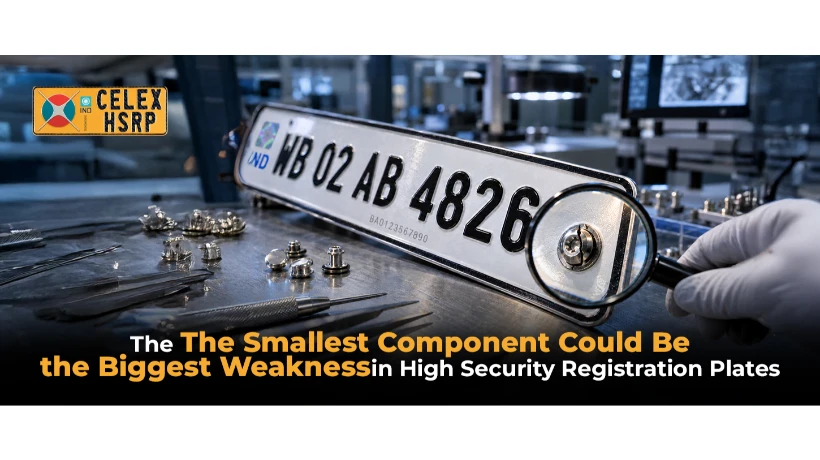
Learn why one tiny snap lock can make or break high security registration plates and vehicle safety.
Most people look at a number plate and see aluminium, letters, and a shiny hologram. Almost nobody looks at the tiny fastener holding it all in place. That is a costly habit. High security registration plates exist to stop theft, cloning and misuse, yet the whole system can fail at two small mounting points.
A plate that anyone can unscrew in thirty seconds is just a standard plate wearing a costume. Reports from 2026 show that the gap is real. Some fitments still use ordinary screws instead of proper locks, and counterfeit plates now copy the look of the lock itself.
This guide explains the mechanical engineering behind HSRP fastening. You will learn how a non-reusable snap lock works, why material deformation matters, how mounting tolerances and vibration affect security, and why installation quality decides tamper resistance. You will also see how the complete assembly is judged under India's framework. Keep reading, and you will never glance at a number plate the same way again.
Why the Fastener Decides Whether a Plate Is Secure
A plate has four jobs. It must show the registration number, reflect light at night, prove its authenticity and resist removal. The aluminium blank, the retro-reflective sheeting, the chromium-based hologram, and the laser-etched permanent identification number handle the first three jobs. The fastener handles the fourth. A thief does not need to beat a hologram if he can lift the whole plate off one vehicle and bolt it onto another. That is how number plate cloning often begins.
What Is the Role of a Snap Lock in High Security Registration Plates?
Under Rule 50 of the Central Motor Vehicles Rules, the rear plate must carry a non-reusable snap lock that makes it tamper-proof. Think of it as a one-way door. It goes in easily, locks firmly and refuses to come out intact. Any attempt at removal should damage the plate or the lock, and that damage warns every inspector that something is wrong.
The rule focuses on the rear plate because the rear is where most camera capture, toll reading, and roadside checks happen. Without this single part, every other security feature turns into decoration. A hologram on a swappable plate is like a padlock on a tent.
Inside the Mechanical Engineering of a Non-Reusable Snap Lock
How does a snap lock actually resist removal? The answer sits in simple mechanics. A typical lock has a pin and a locking element that passes through the mounting holes of the plate and the vehicle bracket. Once the pin seats, the locking element expands or engages a retaining feature. The joint then resists pulling, twisting, and prying at the same time.
Material Deformation and the One-Way Principle
Engineers design the lock so that material deformation happens on purpose. The locking element bends, bites, or fractures when someone forces it out. That change is permanent. A fastener that returned to its original shape would be reusable, and a reusable fastener cannot prove tampering. The best designs balance two opposite needs. The part must stay strong enough to survive years of road use. It must also fail visibly under abuse.
Mounting Tolerances Matter More Than They Look
Mounting tolerances describe how closely the hole, the pin and the bracket match. A hole that is too large lets the lock sit loose and rattle. A hole that is too tight forces the installer to hammer the part and crack it. Either mistake weakens the joint before the vehicle even leaves the fitment bay. Precise punching of the aluminium blank therefore matters as much as the lock itself.
Vibration, Fatigue and the Reality of Indian Roads
A number plate does not live in a laboratory. It rides on a vehicle that faces potholes, speed breakers, monsoon water, summer heat, and highway shaking. Every bump sends small stress cycles through the lock. Engineers call the slow damage from repeated stress fatigue. A fastener with weak design or poor fitting can loosen, crack or let the plate flutter long before its lifespan ends.
Why does vibration resistance affect security and not just durability? A loose plate gives a thief an easy start. It also hides evidence, because a plate that falls off in transit leaves no mark of forced removal. Vehicle makers also care about noise. A rattling plate irritates owners and invites them to replace the fastener with whatever screw is lying around, which destroys the tamper protection.
Several factors control how well a plate handles vibration.
- Plate thickness and stiffness, which limit flutter between the mounting points.
- Lock seating depth, which decides how firmly the locking element grips.
- Bracket quality, since a weak bracket flexes and loosens the joint.
- Surface contact, which spreads load evenly instead of concentrating it at one hole.
Installation Quality and Tamper Resistance Go Hand in Hand
A perfectly designed lock can still fail in untrained hands. Installation quality decides whether the lock reaches its rated performance. An installer who leaves a gap, skips the alignment check or uses a damaged lock produces a plate that looks secure and behaves like a cheap one.
Recent reporting from 2026 supports this concern. A May 2026 report from Maharashtra said nearly half of eligible vehicles in the state still ran without HSRP, and it noted allegations that ordinary screws replaced tamper-proof snap locks in some fitments. That practice defeats the main security purpose of the plate.
The table below shows why fastening methods change everything.
|
Fastening Method |
Removal Evidence |
Reusable |
Cloning Risk |
|
Ordinary screws and nuts |
None |
Yes |
High |
|
Standard rivets |
Partial |
Partly |
Medium |
|
Non reusable snap lock |
Visible damage |
No |
Low when fitted correctly |
A trained fitment team follows a clear routine. It checks hole alignment, seats each lock fully, confirms the plate sits flat and inspects the lock for cracks. Skipping any step trades long-term security for a few saved minutes.
How Mounting Systems Are Judged Under India's HSRP Framework
India handles HSRP through a type approval system. A manufacturer must get its design approved by an authorized testing agency before supplying plates. The approval covers the plate, the reflective film, the hologram, the laser coding and the snap lock. Rule 50 sets the broad requirements, and the standards behind it describe how designs get tested.
Since April 2019, vehicle makers must supply HSRP with new vehicles, a step that moved OEM fitment into the factory and raised accountability. States still manage fitment for older vehicles through authorised vendors. Maharashtra, for example, extended its deadline for pre-2019 vehicles to 30 June 2026 and planned enforcement drives from 1 July 2026.
How do authorities check whether a mounting system is genuine? Inspectors look for the full set of features together. They check the hologram, the laser code, the reflective film marking and the lock. They also match the plate against the Vahan database record. A plate that looks right but carries a mismatched code, or one fixed with a common screw, fails the check.
This is why compliance is never just a paper exercise. A design passes testing once, but every fitted plate needs the same discipline in the field.
Why Security Depends on the Complete Assembly
Think of an HSRP as a chain. The hologram is one link, the laser code is another, and the lock is another. A chain breaks at its weakest link, and the lock is often the cheapest and smallest link in the set. That makes it the easiest target.
Counterfeits Now Copy the Lock Too
Criminals understand this logic. In May 2026, police in Srinagar registered a case against a group allegedly producing counterfeit HSRPs that mimic the hologram, the laser code and the snap lock fitting. In August 2026, Hyderabad traffic police booked six criminal cases in one week during a crackdown on fake and tampered plates. These events show that the fake number plates market now targets every visible security feature, including the fastener.
A counterfeit lock may look right and still behave wrongly. It might release under force, leave no damage or loosen with vibration. Inspectors and owners can learn simple checks. Look for even seating, a clean finish and a lock that shows no signs of prior tampering. Also confirm that the plate's code matches the vehicle record.
The Role of a Commercial HSRP Manufacturer in India
A commercial HSRP manufacturer in India works in a security-critical field. The product looks simple, yet it carries legal weight, and one failed fastener can enable vehicle theft, toll evasion or criminal misuse. Strong manufacturers treat the lock as an engineered safety component and not as an accessory.
Celex Technologies Pvt. Ltd. operates in this environment. Responsible makers in this space focus on dependable material selection, tight dimensional control, batch inspection and trained fitment practices. They also support traceability, since each plate links to a registration record that helps with vehicle tracking.
Buyers and fleet owners can ask sensible questions before choosing a supplier.
- Does the supplier hold the required type approval?
- Does the team fit locks using a defined process?
- Does the plate arrive with the correct codes and sticker set?
- Does the supplier offer clear support if a lock fails?
Good answers to these questions protect the owner as much as the regulator.
Conclusion
The smallest part of a number plate carries the biggest responsibility. The hologram proves authenticity, the laser code ties the plate to a record, and the reflective film helps cameras and drivers read it. None of them can stop a plate swap if the fastener fails. A non-reusable snap lock gives the assembly its tamper evidence, and its performance depends on material deformation, mounting tolerances, vibration resistance and careful installation quality.
India's framework tests the design, and the fitment team proves the result. The 2026 reports of ordinary screws, counterfeit locks and incomplete coverage show that the weak spot sits exactly where this guide pointed. Owners, dealers and fleet managers can close that gap by insisting on proper locks, trained installers and full documentation. Security lives in the entire assembly, and the assembly is only as strong as its smallest part.
Choose Security That Holds Together with Celex Technologies Pvt. Ltd.
Your number plate protects your vehicle, your business and your legal standing. Do not leave that protection to a cheap screw. Celex Technologies Pvt. Ltd. is a commercial HSRP manufacturer in India that treats every component as part of one security system, from the plate to the lock. Fleet owners, dealers and vehicle makers can rely on a partner who values precise engineering, careful fitment and clear documentation. Reach out to the Celex team today to discuss your HSRP requirements, ask about fitment standards and get guidance that keeps your vehicles compliant. Secure the small part, and the whole plate stays strong.
Frequently Asked Questions
1. What is a snap lock in an HSRP?
A snap lock is a single-use fastener that secures the rear plate to the vehicle. It locks permanently once fitted, and forced removal damages the lock or the plate, which exposes tampering.
2. Can a snap lock be reused after removal?
No. The lock deforms or breaks during removal by design. Reuse would let thieves swap plates without leaving evidence, so a damaged lock always needs replacement with a new one.
3. Why do some HSRP fitments use ordinary screws?
Poor installation practices cause this. Some fitters use screws for speed or convenience. Screws remove the tamper evidence and the cloning protection, so owners should reject such fitments.
4. How can I spot a fake HSRP?
Check the hologram, the laser etched code, the reflective film marking and the lock finish. Confirm that the plate code matches your registration record on the official vehicle database.
5. Does vibration affect HSRP security?
Yes. Repeated vibration can loosen poorly seated locks and cause fatigue cracks. A loose plate is easier to remove and may fall off without showing signs of tampering.



Comments
Login to Comment