How Oxygen Analyzers Improve Combustion Efficiency and Reduce Fuel Costs
30 Oct, 2026
8 Views 0 Like(s)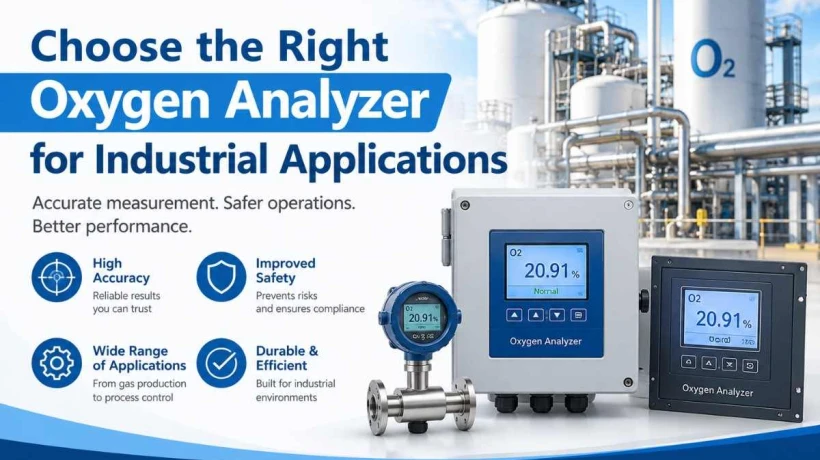
The oxygen analyser is used to determine the amount of oxygen in flue gases after combustion.
The oxygen analyser is used to determine the amount of oxygen in flue gases after combustion. Typical ranges of oxygen levels in industrial boilers are 2-4%, which can be maintained at the site to ensure complete fuel burn, minimize excess air, lower fuel consumption by up to 10-15%, and reduce harmful emissions. In order to control combustion properly, oxygen needs to be measured precisely.
Why Combustion Efficiency Starts with Oxygen Measurement
Most combustion inefficiencies are invisible. You cannot see excess air. You cannot feel incomplete fuel burn. But you absolutely feel it in your fuel bills and maintenance costs.
If combustion goes too far from the correct fuel to air ratio, unburned hydrocarbons are produced, which leads to fouling of heat exchangers, particulate emissions and increased emissions. It can be caused by running lean due to either an excess of air or a lack of fuel, which wastes heat and energy from your system. Both are on the expensive side.
At the core of combustion control is an oxygen analyzer which can measure the composition of flue gas in real time. This information enables the operator to make continuous adjustments to the A/F ratio and maintain the combustion process within its optimum range.
The Real Cost of Poor Combustion Control in Industrial Facilities
Fuel cost is one of the biggest operating costs for power plants or manufacturing plants in Malaysia. When natural gas or heavy fuel oil is used year-round, even a 1% increase in boiler efficiency can lead to substantial boiler savings.
Let's take a medium size boiler, which produces 10 tonnes of steam per hour. When there is only 2% excess oxygen, above the optimum, the burner has to work harder and blow away 'recoverable heat' through the flue. The waste adds up over a year of continuous operation, which can amount to tens of thousands of ringgit a year.
Optimizing combustion is one of the fastest payback energy efficiency options for Malaysian manufacturers, and is one of the most popular measures in industry, according to Sustainable Energy Development Authority (SEDA) Malaysia and industry guidelines from SIRIM.
How an Oxygen Analyzer Works in a Combustion System
Zirconia vs. Electrochemical Sensors: Which One Fits Your Process?
Not all oxygen analyzers use the same measurement technology. The two most common types in industrial combustion applications are zirconia-based sensors and electrochemical sensors.
-
Zirconia sensors are inserted directly into the flue gas stream. They operate at high temperatures and provide fast, continuous in-situ readings without extracting a gas sample. Ideal for boilers, furnaces, and kilns where flue gas temperatures are elevated.
-
Electrochemical sensors work on an extracted gas sample. They offer high accuracy at lower temperatures and are well-suited for processes requiring more controlled sampling conditions.
For most power plant and manufacturing applications, zirconia-type analyzers dominate because of their durability, speed, and ability to handle harsh flue gas environments without extensive sample conditioning.
Where to Install the Analyzer for Best Results
Placement matters significantly. The sensor should be installed downstream of the combustion zone but upstream of any air dilution points. A poorly positioned probe can return readings that misrepresent actual combustion conditions, leading operators to make incorrect adjustments.
Most manufacturers recommend installing the probe in a straight section of the flue duct, away from bends, dampers, or air infiltration points, to ensure a representative sample.
Key Benefits of Using an Oxygen Analyzer for Boiler Efficiency
The case for continuous oxygen monitoring in industrial combustion is well-established. Here is what facilities consistently report after implementation:
-
Fuel savings of 5–15%: Tightening the air-to-fuel ratio within the optimal band directly reduces fuel consumption. This is the most immediate and measurable benefit.
-
Reduced CO and NOx emissions: Optimal combustion minimizes both carbon monoxide from incomplete burn and nitrogen oxides from excess heat. This helps facilities meet Malaysia's Environmental Quality (Clean Air) Regulations.
-
Extended equipment life: Running a boiler in trim — at its designed operating point — reduces thermal stress on heat exchangers, refractory materials, and burner components.
-
Faster response to process changes: Real-time data allows the control system or operator to respond within seconds to load changes, fuel quality variations, or air supply fluctuations.
-
Compliance documentation: A continuous flue gas analyzer provides a data trail for environmental audits, which is increasingly required under Malaysia's industrial licensing and EIA frameworks.
Oxygen Analyzers in the Context of a Broader Flue Gas Strategy
Oxygen measurement alone is powerful, but the strongest combustion optimization programs combine it with a complete flue gas analyzer setup that monitors CO, CO₂, and temperature simultaneously.
Here is how those parameters interact:
|
Parameter |
What It Tells You |
Action Triggered
|
|---|---|---|
|
O₂ (Oxygen) |
Excess air level in flue gas |
Adjust air-to-fuel ratio |
|
CO (Carbon Monoxide) |
Incomplete combustion indicator |
Increase air supply or check burner |
|
Flue Gas Temperature |
Stack heat loss indicator |
Inspect heat exchanger fouling |
|
CO₂ |
Combustion completeness |
Fine-tune stoichiometric ratio |
When these readings are integrated into a distributed control system (DCS) or programmable logic controller (PLC), combustion trim control becomes automated — removing human delay and operator variability from the equation entirely.
Practical Steps to Implement Oxygen-Based Combustion Control
If your facility is evaluating an upgrade to continuous oxygen monitoring, here is a practical implementation path:
-
Baseline your current performance. Conduct a combustion audit using a portable flue gas analyzer. Document your current oxygen levels, flue gas temperatures, and fuel consumption rates. This establishes the ROI baseline.
-
Select the right analyzer type. Match sensor technology to your flue gas temperature, duct geometry, and required response time. Consult your supplier about ATEX or local certification requirements where applicable.
-
Define your target oxygen setpoint. For natural gas boilers, a typical target is 2–3% residual oxygen. For heavy fuel oil, slightly higher margins may apply due to fuel variability. Your burner manufacturer can provide specific guidance.
-
Integrate with your control system. A 4–20 mA output from the analyzer feeds directly into most modern DCS and PLC platforms, enabling automated trim control without operator intervention.
-
Establish a calibration and maintenance schedule. Zirconia sensors drift over time. A quarterly calibration check using certified reference gases keeps readings accurate and defensible for regulatory purposes.
Common Mistakes That Undermine Analyzer Performance
Even a well-specified analyzer can underperform if installation or maintenance is overlooked. These are the most frequent issues facilities encounter:
-
Installing the probe near an air infiltration leak, which dilutes the flue gas sample and gives falsely low oxygen readings
-
Skipping calibration after sensor replacement, leading to drift that is not caught until a major discrepancy appears
-
Using the wrong analyzer type for the flue gas temperature range, shortening sensor life dramatically
-
Treating oxygen measurement as a standalone metric rather than integrating it with CO and temperature data
Training operators to interpret analyzer data — not just read numbers — is what separates facilities that achieve sustained efficiency gains from those that see initial improvement followed by gradual regression.
Why Malaysian Industrial Facilities Are Prioritising This Technology Now
Energy costs in Malaysia have remained under pressure, particularly as industrial electricity tariffs and natural gas pricing have seen upward revisions in recent years. At the same time, the Department of Environment (DOE) Malaysia has tightened enforcement of the Environmental Quality (Clean Air) Regulations 2014, placing greater scrutiny on industrial stack emissions.
For facilities already running energy management systems under MS ISO 50001, oxygen-based combustion control is a natural and often necessary component of the energy review and monitoring plan. It is both a cost-reduction tool and a compliance asset — a combination that makes the business case straightforward.
For facilities exploring the right instrumentation partner, Chang Ai Technology offers a range of industrial measurement solutions including oxygen analyzers suited for boiler, furnace, and process combustion applications in Malaysia.
Frequently Asked Questions
What is the ideal oxygen level in flue gas for industrial boilers?
For natural gas-fired boilers, the optimal residual oxygen level in flue gas is typically 2–3%. For heavy fuel oil, the target is slightly higher at 3–4% to account for fuel variability. Staying within this range balances complete combustion with minimal excess air heat loss.
How much fuel can an oxygen analyzer help me save?
Facilities that implement continuous oxygen-based combustion control typically report fuel savings of 5–15%. The exact figure depends on how far off-target the current air-to-fuel ratio is.
What is the difference between an oxygen analyzer and a flue gas analyzer?
An oxygen analyzer measures only residual O₂ in flue gas. A flue gas analyzer measures multiple parameters simultaneously — including O₂, CO, CO₂, and stack temperature.
How often should an oxygen analyzer be calibrated?
Zirconia-based oxygen analyzers should be calibrated at least quarterly using certified reference gases. Electrochemical sensors may require more frequent calibration depending on the flue gas environment. Regular calibration ensures accuracy, extends sensor life, and keeps your emissions data defensible during regulatory inspections.



Comments
Login to Comment