How Do Round Knitting Needles Compare With Straight Needles?
16 Oct, 2026
10 Views 0 Like(s)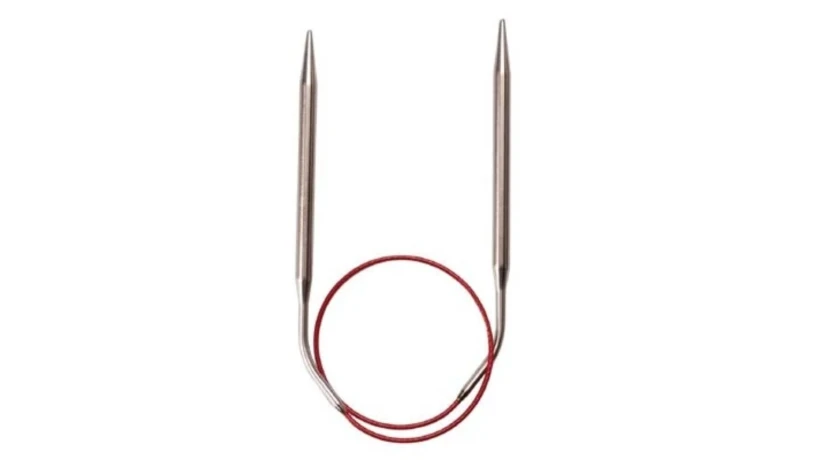
round knitting needles
Round and straight knitting needles can both be useful, but they suit different knitting styles and project needs. Round knitting needles have two needle tips connected by a flexible cable, while straight needles have two separate pointed ends. The main difference is how the stitches are held and moved while knitting.
Choosing between them often depends on the project size, knitting method, and personal comfort. Understanding these differences can help beginners and experienced knitters select the right tool for their next project.
Understanding the Basic Difference
Straight needles are simple and familiar to many new knitters. They have a pointed end on each needle and a stopper at the other end to keep stitches from sliding off. The knitter works back and forth across the needles, turning the project at the end of each row.
Round needles have a different design. Their two tips are joined by a flexible cable that holds the stitches. They can be used for knitting in the round, but they can also be used to knit flat pieces by turning the work after each row.
This makes round needles useful for projects that require many stitches. The cable can hold the weight of the work instead of making the knitter balance all the stitches on the needle tips.
Project Size and Stitch Capacity
The size of a project can influence which needle feels more practical. Straight needles have a fixed length, so the number of stitches they can comfortably hold is limited. They can work well for smaller flat projects such as scarves, dishcloths, and simple panels.
Round needles offer more flexibility because the cable provides additional space for stitches. They are often useful for larger pieces such as sweaters, blankets, shawls, and other projects with many stitches.
|
Feature |
Straight Needles |
Round Knitting Needles |
|---|---|---|
|
Design |
Two separate needles |
Two tips joined by a flexible cable |
|
Best suited for |
Flat knitting |
Circular and flat knitting |
|
Large projects |
Can become harder to manage |
Cable can hold more stitches |
|
Circular projects |
Not designed for circular knitting |
Suitable for seamless circular projects |
|
Portability |
Simple but can be longer |
Flexible and often easier to pack |
|
Beginner use |
Easy to understand for basic flat knitting |
Useful for learning different techniques |
The choice does not always have to be one or the other. Many knitters keep both types available and select them based on the project.
Comfort and Weight Distribution
Comfort is another important difference. With straight needles, the weight of the knitted fabric rests mainly on the needle tips and the knitter's hands. As a project becomes larger, this can make the needles feel heavier or more difficult to control.
Round needles can spread some of the weight along the cable. This can be helpful when working on large garments or projects with many stitches. The shorter needle tips may also feel easier to handle for some knitters.
However, comfort is personal. Some knitters prefer the familiar feel and simple design of straight needles, while others enjoy the flexibility of round needles. Trying both styles can help determine which feels more natural.
Choosing the Right Needle for Your Project
The best needle depends on the pattern rather than simply choosing the style that looks easiest. A pattern will usually provide the recommended needle size, and sometimes it will also suggest a particular needle type.
When selecting needles, consider the type of fabric you want to create, the number of stitches involved, and whether the project is worked flat or in the round.
For beginners building their supplies, knitting kits in Canada can provide a practical way to explore different knitting projects and tools. A useful kit may introduce knitters to different yarns, patterns, and needle sizes, helping them learn which tools work best for different types of projects.
When Each Needle Style Works Best
Neither needle style is automatically better. Each has situations where it can be particularly useful.
-
Straight needles: A good choice for beginners who want to learn basic back-and-forth knitting and for smaller flat projects.
-
Round needles: Useful for circular projects and larger pieces with many stitches.
-
Straight needles: Can feel familiar and easy to control when working on narrow, flat pieces.
-
Round needles: Offer flexibility for sweaters, hats, cowls, and other projects that may be worked in the round.
-
Either style: Round needles can also knit flat, so they can sometimes replace straight needles for flat projects.
Understanding these differences can help knitters avoid choosing a tool simply because it is popular. The best choice is the one that fits the pattern and feels comfortable during use.
Building a Flexible Knitting Collection
As knitters gain experience, having several needle types can make it easier to take on different projects. A collection does not need to be built all at once. Knitters can add sizes
and styles as their interests grow.
For someone who mainly makes scarves and small flat projects, straight needles may cover many needs. Someone interested in sweaters, socks, hats, or seamless garments may find round needles more useful.
It is also important to store needles carefully. Keeping them organized by size can save time when starting a new project. For round needles, storing cables without sharp bends can help keep them ready for use.
Finding the Right Fit for Your Knitting Style
The comparison between round and straight needles is less about finding a single winner and more about understanding what each tool offers. Straight needles provide a simple approach to flat knitting, while round needles offer flexibility for both circular and flat projects.
For beginners, learning how both styles work can open the door to more project choices. For experienced knitters, having both available makes it easier to select the most comfortable option for each pattern. As projects become more varied, choosing the right needle can make knitting more enjoyable and manageable.
Final Thought
The right knitting needle depends on the project, technique, and comfort of the person using it. While straight needles remain useful for simple flat projects, round knitting needles offer greater flexibility for larger and circular designs. Learning how both styles work allows knitters to choose with confidence and explore more patterns, whether they are building their first collection or adding new tools to their existing supplies.



Comments
Login to Comment