How Audio Annotation Supports AI-Powered Contact Center Analytics
08 Jul, 2026
1048 Views 0 Like(s)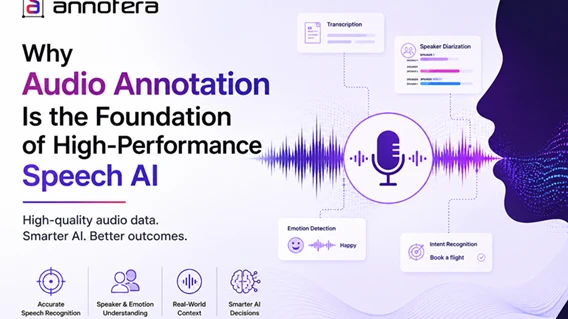
High-quality audio annotation enables AI-powered contact center analytics by improving speech recognition, sentiment analysis, intent detection, and agent performance monitoring, helping businesses enhance customer experiences and operational efficiency through accurate labeled data.
Modern contact centers generate thousands of customer conversations every day through phone calls, voice chats, and virtual assistants. Hidden within these interactions are valuable insights about customer sentiment, agent performance, recurring issues, compliance risks, and purchasing intent. However, raw audio alone cannot deliver these insights. Artificial intelligence needs accurately labeled training data to understand spoken conversations, identify context, and make meaningful predictions.
This is where audio annotation becomes indispensable. High-quality audio labeling transforms unstructured voice recordings into structured datasets that AI models can learn from, enabling businesses to build intelligent contact center analytics platforms.
At Annotera, we provide scalable audio annotation services that help organizations develop highly accurate speech recognition, speaker identification, sentiment analysis, and conversational AI solutions. As an experienced data annotation company, we support enterprises with high-quality datasets tailored for real-world AI applications.
Why Contact Center Analytics Depends on Quality Audio Data
AI-powered contact center analytics combines several technologies, including Automatic Speech Recognition (ASR), Natural Language Processing (NLP), sentiment analysis, speaker diarization, and predictive analytics.
These systems help organizations:
-
Analyze customer satisfaction
-
Measure agent performance
-
Detect customer frustration
-
Identify compliance violations
-
Monitor quality assurance
-
Discover recurring customer issues
-
Improve customer experience
None of these capabilities are possible without well-annotated audio data. AI models require thousands—or even millions—of accurately labeled conversations before they can recognize speech patterns and understand customer interactions reliably.
What Is Audio Annotation?
Audio annotation is the process of labeling audio recordings with meaningful information that AI systems can interpret during training.
Depending on the business objective, annotation may include:
-
Speech transcription
-
Speaker identification
-
Speaker segmentation
-
Emotion tagging
-
Intent classification
-
Silence detection
-
Keyword labeling
-
Background noise identification
-
Call outcome categorization
-
Language identification
These annotations enable machine learning models to interpret conversations similarly to how humans understand them.
Types of Audio Annotation Used in Contact Center AI
Speech Transcription
Speech-to-text models require accurately transcribed conversations for training.
Human annotators convert spoken conversations into text while preserving punctuation, timestamps, pauses, and conversational context. These transcripts become the foundation for AI-powered analytics.
Speaker Diarization
Contact center calls involve at least two participants—the customer and the agent.
Speaker diarization identifies who is speaking and when, allowing AI systems to evaluate agent performance separately from customer behavior.
This enables businesses to generate more meaningful analytics.
Sentiment Annotation
Customer satisfaction often depends on emotional context rather than words alone.
Annotators classify speech into categories such as:
-
Positive
-
Neutral
-
Negative
-
Frustrated
-
Angry
-
Happy
-
Confused
-
Satisfied
These labels train sentiment analysis models that automatically evaluate customer experience.
Intent Annotation
Customers contact support for various reasons:
-
Billing issues
-
Product inquiries
-
Technical support
-
Refund requests
-
Account management
-
Complaints
Intent annotation helps AI understand why customers are calling, enabling automated routing and conversational intelligence.
Acoustic Event Annotation
Real-world customer calls often include:
-
Background conversations
-
Traffic noise
-
Keyboard typing
-
Hold music
-
Echo
-
Interruptions
Labeling these events improves AI robustness under noisy conditions.
How Audio Annotation Improves Contact Center Analytics
Higher Speech Recognition Accuracy
Speech recognition models struggle with accents, industry terminology, varying speaking speeds, and poor audio quality.
Accurate annotations expose AI systems to diverse speech patterns, significantly improving transcription accuracy across different customer demographics.
Better Customer Sentiment Analysis
Customers rarely express emotions explicitly.
A simple statement like "That's fine" may indicate satisfaction, disappointment, or frustration depending on tone and context.
Human annotators capture these nuances, allowing AI models to recognize emotional intent more accurately.
Improved Agent Performance Monitoring
Organizations evaluate agents using multiple performance metrics, including:
-
Professionalism
-
Resolution quality
-
Empathy
-
Script adherence
-
Compliance
-
Customer engagement
Annotated conversations help AI automatically score calls, reducing manual quality assurance efforts while improving consistency.
Faster Root Cause Identification
Thousands of customer conversations contain valuable information about product defects, service issues, billing problems, and operational inefficiencies.
Audio annotation enables AI to categorize conversations automatically, helping businesses identify recurring issues before they become widespread.
Intelligent Call Routing
Intent recognition models trained using annotated audio can automatically direct customers to the appropriate department, reducing wait times and improving first-call resolution.
Compliance Monitoring
Many industries—including banking, insurance, healthcare, and telecommunications—must comply with strict regulatory standards.
Annotated datasets train AI systems to detect:
-
Missing compliance disclosures
-
Unauthorized statements
-
Sensitive customer information
-
Policy violations
This reduces regulatory risk while improving operational efficiency.
Challenges in Contact Center Audio Annotation
Although audio annotation is highly valuable, creating enterprise-grade datasets presents several challenges.
Multiple Speakers
Customers often interrupt agents or speak simultaneously.
Accurately separating overlapping speech requires experienced human annotators.
Diverse Accents and Languages
Global contact centers serve customers speaking different languages and regional dialects.
Annotation teams must understand linguistic variations to produce reliable datasets.
Poor Audio Quality
Call recordings may include:
-
Packet loss
-
Static
-
Background noise
-
Low-volume speech
-
Distorted audio
Experienced annotators can interpret difficult recordings far more effectively than automated tools alone.
Domain-Specific Terminology
Industries such as healthcare, finance, telecommunications, and technology frequently use specialized vocabulary.
Subject matter expertise improves annotation consistency and reduces labeling errors.
Best Practices for Audio Annotation Projects
Organizations building AI-powered contact center analytics should follow several best practices:
-
Develop comprehensive annotation guidelines.
-
Maintain standardized labeling conventions.
-
Use experienced multilingual annotators.
-
Perform continuous quality assurance reviews.
-
Combine human expertise with AI-assisted workflows.
-
Regularly validate annotation consistency.
-
Include diverse accents, demographics, and speaking styles.
-
Protect sensitive customer information through secure annotation workflows.
These practices help produce datasets that support reliable AI model performance.
Why Businesses Choose Audio Annotation Outsourcing
Building an in-house annotation team requires significant investment in hiring, training, quality control, and infrastructure.
Many organizations therefore prefer audio annotation outsourcing to experienced service providers who already have trained teams, scalable workflows, and rigorous quality assurance processes.
Benefits of audio annotation outsourcing include:
-
Faster project turnaround
-
Lower operational costs
-
Access to experienced annotators
-
Scalable workforce
-
Consistent annotation quality
-
Multilingual capabilities
-
Enterprise-grade security
-
Flexible project management
Similarly, data annotation outsourcing allows AI companies to focus on model development while trusted annotation specialists handle complex data preparation at scale.
Why Partner with Annotera?
At Annotera, we help organizations transform customer conversations into high-quality AI training datasets that power intelligent contact center analytics.
As a trusted data annotation company, we combine experienced human annotators, AI-assisted workflows, robust quality assurance, and secure data handling to deliver reliable annotation services for enterprise AI initiatives.
Our capabilities include:
-
Speech transcription
-
Speaker diarization
-
Intent labeling
-
Sentiment annotation
-
Acoustic event detection
-
Multilingual audio annotation
-
Conversation tagging
-
Quality assurance and validation
Whether you're developing conversational AI, speech recognition systems, quality monitoring platforms, or customer experience analytics, Annotera provides scalable annotation solutions tailored to your business goals.
Conclusion
AI-powered contact center analytics relies on more than sophisticated algorithms—it depends on high-quality labeled audio data. Accurate audio annotation enables speech recognition, sentiment analysis, intent detection, compliance monitoring, and customer intelligence systems to perform with greater precision.
Organizations investing in well-annotated datasets gain deeper insights into customer behavior, improve operational efficiency, and deliver more personalized customer experiences. By partnering with an experienced data annotation company offering reliable data annotation outsourcing and audio annotation outsourcing services, businesses can accelerate AI development while ensuring consistent, high-quality training data.
As customer interactions continue to shape business success, audio annotation will remain a foundational component of next-generation contact center intelligence.


Comments
Login to Comment