Frontend Development Agency: What Businesses Should Consider
19 Sep, 2026
7 Views 0 Like(s)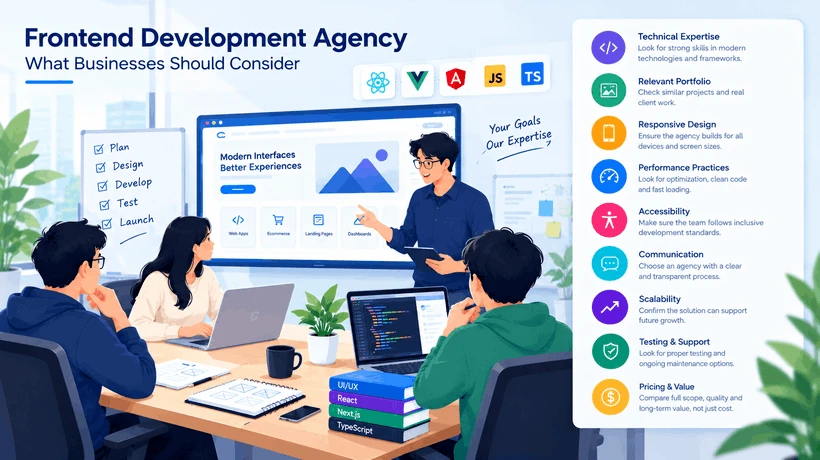
A frontend development agency can help businesses create modern websites and web applications with responsive layouts, interactive interfaces, and optimized performance. Before hiring an agency, businesses should review its portfolio, technical expertise, communication process, testing methods, scalability, pricing, and maintenance options to ensure the partnership matches current and future project requirements.
The frontend is the part of a website that visitors interact with directly. From navigation menus and buttons to forms, product pages, dashboards, and interactive tools, frontend elements shape the overall digital experience.
As users become more accustomed to fast and convenient online experiences, businesses need websites that work smoothly across different devices and environments.
Working with a professional frontend development agency can help businesses turn design concepts and technical requirements into functional websites and applications. However, choosing an agency requires careful consideration.
Define the Website's Purpose
The first step is understanding why the website is being developed.
A business may need a website to generate leads, sell products, publish information, provide customer services, or support an online application.
Different objectives require different frontend solutions.
For example, an ecommerce website may need product filters, shopping carts, and checkout interfaces. A SaaS platform may require dashboards, user accounts, subscription pages, and interactive data.
Clearly identifying the purpose makes the development process more focused.
Review Relevant Experience
Experience should be evaluated based on relevance rather than numbers alone.
Look at the agency's previous projects and identify whether they have built websites or applications similar to yours.
Consider whether they have experience with:
-
Business websites
-
Ecommerce platforms
-
SaaS applications
-
Landing pages
-
Customer portals
-
Dashboards
-
Web applications
Relevant experience can help reduce development challenges and improve project planning.
Evaluate Technical Skills
A frontend development agency should understand modern frontend technologies and development practices.
Depending on the project, developers may use HTML, CSS, JavaScript, TypeScript, React, Angular, Vue.js, Next.js, or other tools.
Businesses should ask how technology decisions are made.
The selected technology should be based on project requirements, performance, maintainability, scalability, and functionality rather than popularity alone.
Check Responsive Design
Responsive design is essential for modern websites.
Visitors may use different devices and screen sizes. The website should adapt accordingly without making content difficult to read or interact with.
A responsive frontend should handle:
-
Navigation
-
Typography
-
Images
-
Buttons
-
Forms
-
Cards
-
Tables
-
Interactive elements
Testing across different screen sizes should be included in the development process.
Examine User Experience
Frontend development should support a clear and intuitive user journey.
Visitors should be able to understand where they are, what they can do, and what action they should take next.
Important UX considerations include:
-
Clear navigation
-
Readable content
-
Consistent components
-
Useful feedback
-
Simple forms
-
Clear calls to action
An attractive interface is valuable, but usability should remain a priority.
Focus on Performance
Performance can affect how visitors interact with a website.
Slow pages can create frustration, particularly for mobile users.
Frontend optimization may include:
-
Image compression
-
Lazy loading
-
Code splitting
-
Efficient JavaScript
-
Caching
-
Resource optimization
Ask potential agencies how performance is measured and optimized.
Performance should be considered throughout development rather than only at the final stage.
Consider Accessibility
Accessibility allows more people to use websites effectively.
Frontend developers can improve accessibility through semantic HTML, keyboard navigation, meaningful labels, proper heading structures, suitable contrast, alternative text, and clear focus states.
Businesses should determine whether accessibility is included as part of the development process.
Understand the Workflow
A professional development agency should be able to explain its workflow clearly.
A typical process can involve:
-
Discovery
-
Requirement gathering
-
Planning
-
UI/UX review
-
Development
-
Integration
-
Testing
-
Optimization
-
Deployment
-
Maintenance
Understanding each stage can help businesses track progress and manage expectations.
Evaluate Communication
Communication is essential when working with an external development team.
Before starting a project, establish how communication will happen.
Important questions include:
-
Who is the primary contact?
-
How frequently are updates provided?
-
How is feedback collected?
-
How are revisions handled?
-
How are changes to scope managed?
A reliable communication process can make collaboration much easier.
Check Code Maintainability
The website may need updates long after launch.
Businesses may add features, modify layouts, integrate new tools, or update existing functionality.
Well-organized code can make these changes easier.
Ask the agency about:
-
Reusable components
-
Documentation
-
Version control
-
Code organization
-
Testing
-
Maintenance
Maintainable frontend architecture can reduce future development complexity.
Think About Scalability
A business website should be capable of supporting growth.
Future requirements might include new products, services, customer accounts, payment systems, integrations, or dashboards.
A scalable frontend architecture makes it easier to introduce new functionality.
Discuss future plans with the agency before development begins.
Review Quality Assurance
Testing is necessary to identify issues before launch.
Quality assurance may include testing:
-
Different browsers
-
Mobile devices
-
Desktop screens
-
Forms
-
Navigation
-
Interactive features
-
Performance
-
Accessibility
Businesses should ask what testing procedures are included and how issues are documented and resolved.
Compare Proposals
When comparing frontend agencies, examine the complete proposal rather than only the price.
Review:
-
Project scope
-
Features
-
Technologies
-
Timeline
-
Testing
-
Revisions
-
Support
-
Maintenance
Different prices may reflect different scopes or levels of service.
A detailed comparison can help businesses identify the most suitable option.
Use Reliable Information During Research
Businesses can benefit from learning about frontend development before contacting agencies.
Understanding common frontend technologies, responsive development, performance, accessibility, and testing can help decision-makers communicate their needs more clearly.
This frontend development guide provides additional information that can help businesses understand important frontend development considerations.
Final Thoughts
Choosing a frontend development agency is an important decision for businesses investing in their digital presence.
Technical expertise, relevant experience, responsive development, performance, accessibility, communication, testing, scalability, and long-term support should all be evaluated.
The right agency should be able to understand business requirements and create a frontend experience that is reliable, user-friendly, and adaptable.
A careful selection process can help businesses avoid unnecessary problems and build a digital platform that continues to support their goals.



Comments
Login to Comment