What Happens After Mold Tooling Is Finished? A Look at the Path to Production
22 Oct, 2026
10 Views 0 Like(s)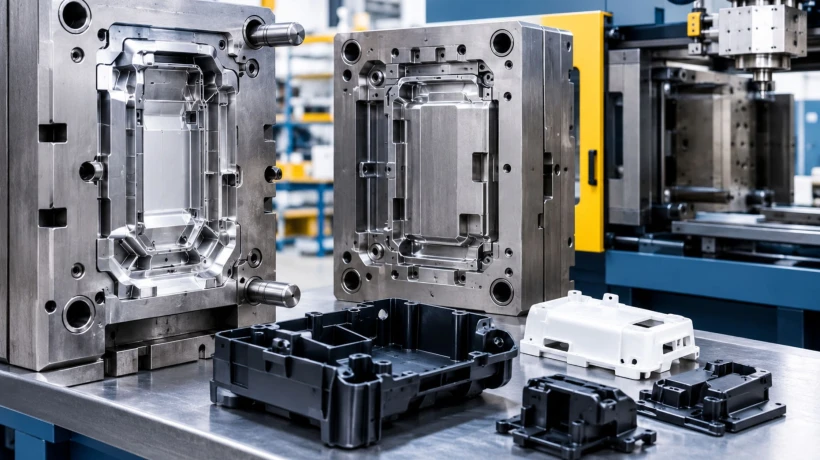
Mold Tooling And Manufacturing New Product Introduction Manufacturing
Finishing a mold is a big step in making a new product, but production does not begin right away. The next steps check the mold, make sample parts, fix any issues, and prepare the product for full production.
For product teams, this stage of mold tooling and manufacturing connects the approved design with the parts that will be made in larger quantities.
From Mold Tooling to Production
Once the mold is ready, the next step is to make a part with it. This gives the manufacturing team a real part to check.
The basic path is:
Prototype → approval → production tooling → sample parts → testing and checks → production
This process gives the product team a chance to review the actual part before larger quantities are made.
Reviewing the First Tooling Output
The first parts made from new tooling give the team something real to inspect.
They can check:
-
Shape and size
-
Appearance
-
Fit
-
Function
-
Production needs
The team can compare the physical part with the approved design. If something needs to change, the issue can be handled before full production.
What T-0 Reveals Before T-1
What Does T-0 Mean?
T-0 is the first sample made from the new tooling. It is used to find differences between the planned design and the actual part.
For example, the team can look at whether:
-
The part has the right shape
-
Important dimensions are correct
-
The part works as planned
-
The appearance matches the intended result
If a problem is found, the tooling or process can be adjusted before the next sample.
Moving From T-0 to T-1
After the T-0 review, needed corrections are made. The next step is the T-1 sample. A T-1 sample represents the intended function and appearance of the finished product.
The process can be easy to follow:
Design → prototype → approval → tooling → T-0 → corrections → T-1 → production
This gives product teams clear checkpoints before larger quantities are produced.
Machine Programming and Production Setup
After the tooling is ready, the machines need to be set up for production.
For injection molding, the process includes:
-
Preparing the plastic material
-
Melting the plastic at a set temperature
-
Injecting it into the mold
-
Cooling the part
-
Removing the finished part
Machine programming is also part of this stage. The right production method depends on the product, material, quantity, application, and manufacturing needs.
Quality Checks Before Production
Quality checks take place during the move into production.
These checks can include:
-
Measuring important dimensions
-
Checking the material
-
Inspecting parts
-
Testing parts
-
Gauging parts
-
Tracking key dimensions during production
Statistical Process Control (SPC) is one method used to track important measurements during production. Material records can also be used to verify the material used for a product.
Starting New Product Introduction Manufacturing
New product introduction manufacturing brings the product from development into production.
The process can include:
-
Reviewing 3D data
-
Reviewing material requirements
-
Building prototypes
-
Creating production tooling
-
Checking T-0 and T-1 samples
-
Setting up production
-
Inspecting parts
-
Moving into full production
For projects that need more engineering review, FEA or mold-flow modeling can be used during development. This gives product teams a clear path from an approved idea to a physical product.
Scaling Production After Approval
Once the product reaches the required approval stage, production can move forward. The type of tooling is connected to the number of parts needed. A mold for a smaller production run can have different requirements from tooling designed for millions of parts. Material also matters. The material being molded and the manufacturing process both affect the tooling approach.
Assembly, Packaging, and Distribution
Making the part is only one part of the full production process. After manufacturing, the product can move through:
Production → Assembly → Quality Control → Labeling → Packaging → Distribution
Assembly brings the parts together so the finished product has the required look and function. Packaging and labeling then prepare the product for shipping and delivery.
Managing Production Through Multiple Stages
A new product can involve several teams and production locations.
Manufacturing oversight can continue from:
-
Tooling
-
Machine programming
-
Production
-
Assembly
-
Quality control
Production can also be arranged through U.S. or international manufacturing resources. This gives product teams options based on production scale, material needs, timeline, and project requirements.
Final Takeaways
Mold completion is the start of the production stage, not the end of product development.
The next steps create a clear path:
T-0 → corrections → T-1 → production → quality checks → assembly → packaging → distribution
Provinces bringing a new product to market, mold tooling and manufacturing connect the mold with the actual production process and provide a clear path from an approved design to finished products.


Comments
Login to Comment