How Tow Truck Repair Software Improves Fleet Efficiency
30 Oct, 2026
12 Views 0 Like(s)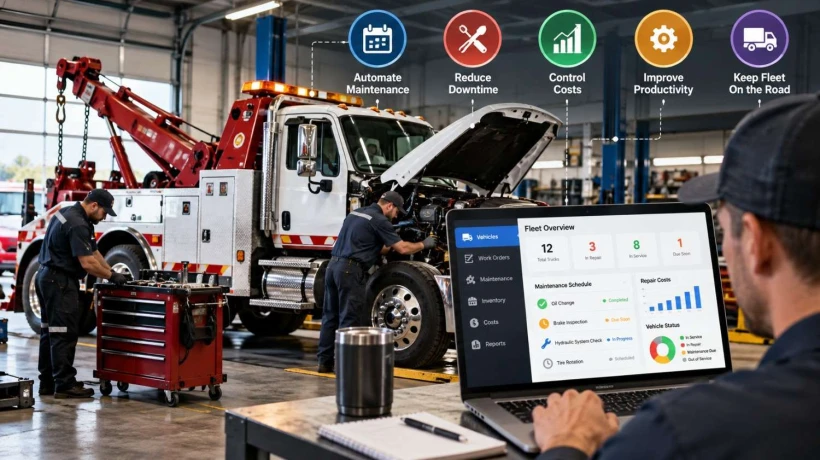
Discover how tow truck repair software improves fleet efficiency, reduces vehicle downtime, automates maintenance, and helps control repair costs.
Managing a towing fleet is not an easy task. Tow trucks operate in demanding conditions, respond to emergency calls, and often travel long distances. Keeping every vehicle in good working condition is essential for providing reliable towing services. However, unexpected breakdowns, delayed repairs, and poor maintenance planning can affect fleet performance and increase operating costs.
This is where tow truck repair software can make a significant difference. By automating maintenance schedules, organizing repair records, tracking expenses, and improving communication, this technology helps towing companies manage their fleets more efficiently.
Whether you operate a small towing business or manage a large fleet of recovery vehicles, the right software can simplify daily operations, reduce vehicle downtime, and improve overall productivity.
What Is Tow Truck Repair Software?
Tow truck repair software is a digital management solution designed to help towing businesses and repair shops organize vehicle maintenance, repairs, and related operations.
Instead of relying on paperwork, spreadsheets, or manual reminders, fleet managers can use a centralized system to monitor vehicle service history, schedule preventive maintenance, and track repair activities.
Modern tow truck maintenance software may include features such as:
-
Preventive maintenance scheduling
-
Digital repair orders and service records
-
Vehicle maintenance history tracking
-
Parts and inventory management
-
Repair cost monitoring
-
Technician workflow management
-
Maintenance reporting and analytics
These features help businesses make informed maintenance decisions while keeping their towing vehicles ready for service.
Why Fleet Efficiency Matters in the Towing Industry
Fleet efficiency refers to how effectively a company uses its vehicles, employees, and resources to complete daily operations.
For towing companies, efficient fleet management is especially important because vehicle availability directly affects customer service and business revenue.
When a tow truck experiences an unexpected breakdown, the company may need to delay service requests, assign another vehicle, or pay for emergency repairs.
Poor maintenance management can also result in higher fuel consumption, repeated mechanical problems, and unnecessary operating expenses.
An efficient towing fleet helps businesses improve vehicle availability, control maintenance costs, reduce operational delays, and deliver more reliable services.
By using digital maintenance tools, towing companies can address potential problems before they disrupt operations.
1. Automates Preventive Maintenance Scheduling
Preventive maintenance is one of the most important factors in keeping tow trucks operating efficiently.
Tow trucks experience regular wear and tear because of heavy loads, frequent stops, and demanding working conditions. Without proper maintenance, small mechanical issues can develop into expensive repairs.
Tow truck repair software helps fleet managers create maintenance schedules based on mileage, engine hours, time intervals, or manufacturer recommendations, depending on the system's capabilities.
How Automated Maintenance Scheduling Helps
Instead of manually tracking service dates, businesses can receive reminders when vehicles require maintenance.
Common maintenance activities include oil changes, brake inspections, hydraulic system checks, tire inspections, and transmission servicing.
Automated scheduling helps ensure that important maintenance tasks are not overlooked.
It also allows fleet managers to plan maintenance during less busy periods, reducing disruptions to daily towing operations.
2. Reduces Unexpected Vehicle Downtime
Unexpected downtime is a major challenge for towing businesses.
When a truck is unavailable because of mechanical problems, the company may lose potential service opportunities and experience scheduling difficulties.
Tow truck repair management software helps reduce avoidable downtime by improving maintenance visibility and repair coordination.
Fleet managers can review vehicle service histories, identify recurring mechanical problems, and prioritize necessary repairs.
Identifying Problems Before They Become Serious
For example, if a tow truck repeatedly experiences hydraulic system issues, maintenance records can help technicians recognize the pattern.
Instead of performing temporary repairs, the company can investigate the underlying cause and take corrective action.
Digital maintenance records also make it easier to identify vehicles that require frequent repairs.
This information helps fleet managers decide whether continued maintenance or vehicle replacement is more cost-effective.
Although software cannot prevent every breakdown, it supports proactive maintenance decisions that can improve vehicle availability.
3. Improves Repair Shop Workflow and Productivity
Managing repairs manually can create unnecessary delays, especially when several tow trucks require maintenance simultaneously.
Technicians may struggle to locate service records, communicate repair updates, or identify available replacement parts.
Tow truck repair software helps organize these activities through a centralized digital platform.
Digital Work Orders
Digital work orders allow repair shops to document vehicle problems, assign technicians, record labor, and track repair progress.
Technicians can access relevant information without searching through paper files.
This improves communication and helps reduce administrative work.
Better Technician Coordination
Fleet managers and shop supervisors can monitor repair progress and identify jobs that require attention.
For example, if one tow truck is waiting for a replacement hydraulic component, the repair status can help the team coordinate the next steps.
Better workflow management helps technicians spend more time completing repairs and less time handling paperwork.
4. Centralizes Vehicle Maintenance Records
Maintaining accurate service records is essential for effective fleet management.
Traditional paper-based records can become difficult to organize as a towing company grows.
Important information may be misplaced, duplicated, or difficult to access when needed.
Tow truck fleet maintenance software stores vehicle repair and maintenance information in one centralized location.
Benefits of Digital Maintenance Records
With digital records, businesses can review previous repairs, track replacement parts, monitor maintenance expenses, and identify recurring problems.
For example, a fleet manager can review the maintenance history of a specific tow truck before approving another major repair.
This information provides a clearer understanding of the vehicle's condition and operating costs.
Accurate records also support maintenance planning, warranty documentation, and internal reporting.
5. Helps Control Maintenance and Repair Costs
Maintenance expenses can significantly affect the profitability of a towing business.
Unexpected engine repairs, hydraulic system failures, and replacement parts can increase operating costs.
Without proper expense tracking, it becomes difficult to understand which vehicles are consuming the most maintenance resources.
Tow truck repair software helps businesses monitor repair-related expenses and identify opportunities to control costs.
Tracking Cost Per Vehicle
Fleet managers can analyze maintenance expenses for individual trucks.
This may include labor charges, replacement parts, scheduled maintenance, and emergency repairs.
For example, if an older tow truck requires frequent expensive repairs, the company can compare its maintenance costs with those of newer vehicles.
These insights help businesses make better decisions about repairs, replacements, and long-term fleet investments.
Reducing Unnecessary Expenses
Organized maintenance schedules and accurate service records can help prevent duplicate work and unnecessary part replacements.
Businesses can also plan purchases more effectively when they understand upcoming maintenance requirements.
Over time, better expense visibility can contribute to improved financial management.
6. Simplifies Parts and Inventory Management
Tow truck repairs often require specialized components, including hydraulic hoses, winch parts, brake components, electrical equipment, and towing accessories.
When necessary parts are unavailable, repair work may be delayed.
On the other hand, maintaining excessive inventory can tie up valuable business resources.
Repair software with inventory management capabilities helps businesses track available parts, monitor usage, and identify items that need replenishment.
How Inventory Management Improves Efficiency
A centralized inventory system can help repair shops understand which components are used frequently.
For example, if hydraulic hoses require regular replacement across multiple trucks, inventory records can help the business maintain appropriate stock levels.
This reduces the likelihood of unnecessary delays caused by missing parts.
Better inventory visibility also supports purchasing decisions and helps businesses avoid overstocking rarely used components.
7. Improves Communication Between Fleet Managers and Technicians
Effective communication is essential for managing a busy towing fleet.
Fleet managers need accurate information about vehicle availability, while technicians need clear repair instructions and access to service records.
When communication depends entirely on phone calls, handwritten notes, or disconnected messages, important updates can be missed.
Tow truck repair software creates a more organized communication process.
Real-Time Repair Updates
Depending on the software, technicians can update work order statuses as repairs progress.
Fleet managers can review these updates and determine when vehicles may be ready to return to service.
This visibility makes it easier to coordinate maintenance activities and plan vehicle assignments.
It also reduces the need for repeated phone calls or manual status checks.
8. Supports Better Fleet Management Decisions
Efficient fleet management requires more than completing repairs on time.
Business owners also need to understand vehicle performance, maintenance trends, and operating expenses.
Tow truck repair software can provide reporting tools that help managers evaluate these factors.
Useful maintenance metrics include:
|
Maintenance metric |
How it helps fleet efficiency |
|---|---|
|
Vehicle downtime |
Identifies trucks that spend excessive time out of service |
|
Maintenance cost per vehicle |
Highlights vehicles with high repair expenses |
|
Preventive maintenance compliance |
Measures whether scheduled maintenance is completed |
|
Repair turnaround time |
Helps identify delays in repair workflows |
|
Repeat repairs |
Reveals recurring mechanical issues |
|
Parts consumption |
Supports inventory planning and purchasing |
By regularly reviewing these metrics, towing companies can identify inefficiencies and make more informed operational decisions.
For example, a business may discover that certain vehicles experience repeated brake problems.
This information can lead to additional inspections, revised maintenance intervals, or technician training.
9. Helps Extend the Lifespan of Tow Trucks
Tow trucks represent a significant investment for towing businesses.
Replacing vehicles frequently can create financial pressure, especially for smaller companies.
Regular maintenance and timely repairs help protect this investment.
Tow truck repair software supports vehicle longevity by helping businesses maintain consistent service schedules and monitor mechanical conditions.
Preventing Premature Wear
Proper maintenance can reduce excessive wear on critical components such as engines, transmissions, brakes, and hydraulic systems.
Digital service histories help technicians understand previous maintenance work and identify issues that require attention.
For example, tracking hydraulic system inspections can help businesses address leaks, worn hoses, or other problems before they cause additional equipment damage.
Although vehicle lifespan depends on many factors, including usage and operating conditions, organized maintenance management can help towing companies get more value from their equipment.
10. Streamlines Daily Repair Shop Operations
Administrative tasks can consume valuable time in repair shops.
Creating work orders, recording labor hours, tracking parts, preparing invoices, and organizing maintenance records all require attention.
When these processes are handled manually, they can become time-consuming and increase the risk of errors.
Modern repair shop management software can combine several activities into one digital workflow.
Solutions such as Fullbay help heavy-duty repair businesses manage repair orders, technician workflows, parts inventory, and invoicing from a centralized platform.
By reducing repetitive administrative tasks, repair shops can focus more on completing repairs efficiently and maintaining customer service.
For towing businesses with in-house repair operations, this type of technology can provide better visibility into maintenance activities and support more organized daily operations.
11. Improves Vehicle Availability and Service Reliability
Customer satisfaction is essential in the towing industry.
Customers often need immediate assistance after accidents, vehicle breakdowns, or roadside emergencies.
If a towing company has several vehicles unavailable because of maintenance problems, responding to service requests becomes more difficult.
Tow truck maintenance software helps businesses plan repairs and maintain better visibility into vehicle readiness.
Supporting Reliable Towing Operations
When fleet managers know which trucks are undergoing maintenance, they can coordinate with dispatch teams and plan vehicle availability more effectively.
Scheduled maintenance can also be arranged around expected workloads when practical.
This coordination helps businesses reduce avoidable service disruptions.
However, repair software should not be confused with towing dispatch software. Some platforms specialize in maintenance and repair operations, while others manage service requests, driver assignments, and roadside dispatching.
Businesses that require both functions should evaluate whether their selected systems offer integrations or complementary capabilities.
How to Choose the Right Tow Truck Repair Software
Not every repair management platform offers the same features.
Before selecting software, towing companies should evaluate their fleet size, maintenance requirements, repair shop operations, and business goals.
Important considerations include ease of use, maintenance scheduling, digital work orders, inventory management, reporting capabilities, and available integrations.
Look for Scalability
A small towing business may initially need basic maintenance tracking and repair records.
As the fleet grows, the company may require advanced reporting, technician management, and inventory control.
Choosing scalable software helps businesses accommodate future operational needs.
Consider Mobile Accessibility
Technicians and fleet managers may need access to maintenance information while working away from a desk.
Mobile-friendly software can make it easier to review service records, update repair statuses, and communicate with team members.
Evaluate Reporting Capabilities
Reporting tools help businesses understand maintenance costs, vehicle downtime, and repair performance.
Companies should select software that provides the information needed to make informed maintenance decisions.
Review Training and Customer Support
Even advanced software may deliver limited value if employees struggle to use it.
Businesses should consider available onboarding resources, training options, and customer support before making a decision.
Conclusion
Efficient fleet management is essential for towing companies that want to reduce operating costs, maintain vehicle availability, and deliver reliable services.
Tow truck repair software helps businesses achieve these goals by automating maintenance scheduling, centralizing service records, improving repair workflows, and providing better visibility into fleet expenses.
From preventive maintenance to inventory management and technician coordination, digital repair tools can simplify many of the challenges associated with managing towing vehicles.
By selecting the right software and following consistent maintenance practices, towing businesses can improve operational efficiency, reduce avoidable downtime, and support long-term fleet performance.
Frequently Asked Questions (FAQs)
1. What is tow truck repair software used for?
Tow truck repair software helps businesses manage vehicle maintenance, repair orders, service histories, parts inventory, and repair-related expenses. It provides a centralized platform for organizing maintenance activities and improving repair shop operations.
2. How does tow truck repair software reduce downtime?
It helps reduce avoidable downtime by supporting preventive maintenance schedules, tracking recurring vehicle problems, and improving repair coordination. These features allow businesses to address maintenance issues before they cause major disruptions.
3. Can small towing businesses benefit from repair software?
Yes. Small towing businesses can use repair software to organize maintenance records, schedule vehicle servicing, monitor expenses, and reduce manual administrative work. The most suitable solution depends on fleet size and operational needs.
4. What features should towing companies look for in repair software?
Important features include preventive maintenance scheduling, digital work orders, vehicle service history tracking, parts inventory management, expense reporting, and technician workflow tools.
5. Is tow truck repair software the same as towing dispatch software?
No. Tow truck repair software primarily manages vehicle maintenance and repair operations. Towing dispatch software focuses on service requests, driver assignments, and towing job coordination. Some systems may offer integrations or overlapping functionality.
6. How does repair software help lower fleet maintenance costs?
Repair software helps businesses track maintenance expenses, identify recurring mechanical problems, improve preventive maintenance compliance, and manage replacement parts. These capabilities can reduce unnecessary spending and support better financial decisions.

Comments
Login to Comment