Screen Time and Speech Delay: Separating Fact From Guilt
04 Jul, 2026
1086 Views 0 Like(s)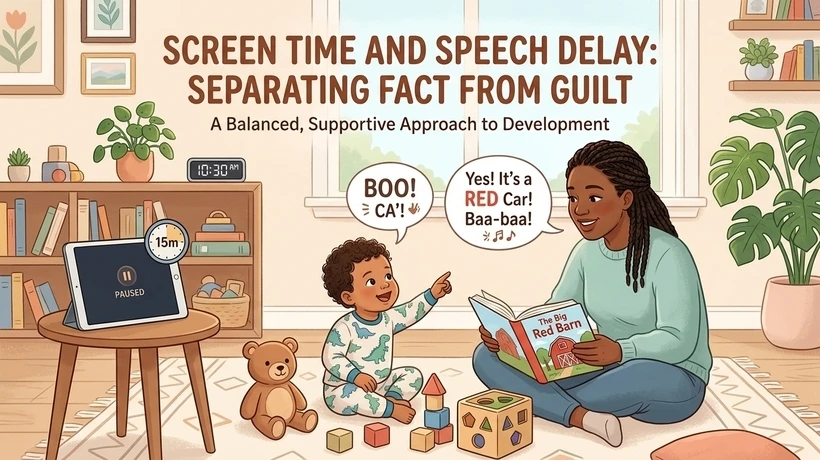
Does screen time really cause speech delay? A clear look at the research, plus a realistic screen plan for busy Lahore households.
Your toddler is glued to a tablet for hours, and now you're wondering if that's why they aren't talking. The internet will either tell you screens are destroying childhood or that it doesn't matter at all. Neither extreme helps you fix what's actually happening.
The Link Between Screens and Talking Less
Screens themselves aren't the direct cause of speech delay. What matters is what screen time replaces.
A toddler who spends three hours a day watching videos is spending three fewer hours talking, pointing, playing, and getting responses from a real person. Language develops through back-and-forth interaction, not through passive listening.
This is why heavy early screen use is consistently associated with smaller vocabularies and weaker early language skills in research on toddlers. The screen isn't teaching the delay directly. It's crowding out the interaction that builds language.
Passive Screen Time vs. Interactive Screen Time
Not all screen time carries the same risk, and this distinction gets lost in most advice parents receive.
Passive viewing, where a child watches cartoons alone with no one talking to them about what's happening, offers almost no language benefit at toddler age. The content moves too fast for a young child to connect words to meaning without help.
Co-viewing changes this. A parent sitting with the child, naming what's on screen, pausing to ask questions, and connecting the video to real objects turns screen time into a shared language activity instead of a silent babysitter.
Video calls with grandparents fall somewhere in between. They involve real back-and-forth talk, which is closer to in-person interaction than a cartoon ever will be.
A Realistic Screen Plan for Lahori Households
Total elimination isn't realistic for most families, especially in joint households where a tablet buys a working parent twenty quiet minutes.
A more workable approach sets boundaries around when and how screens are used, rather than banning them outright.
● Avoid screens as the default response to boredom or fussiness before age two
● Choose slower-paced, simple shows over fast-cut content for toddlers
● Sit with your child during at least part of their screen time and talk about what's happening
● Replace one screen session a day with a hands-on activity: blocks, books, or outdoor play
● Keep mealtimes screen-free so eating stays a talking opportunity
Small, consistent changes matter more than one dramatic screen-free week that doesn't last.
Rebuilding Talk Time Without a Full Ban
The fastest way to recover lost talk time isn't removing every screen. It's adding more narrated, face-to-face interaction throughout the day.
Narrate ordinary routines out loud: naming food while cooking, describing clothes while dressing, or talking through a walk outside. This kind of running commentary exposes a toddler to far more language than most parents realize.
If your child is already showing signs of delay alongside heavy screen use, cutting screen time alone often isn't enough to close the gap on its own. Heavy screen exposure can also intensify attention and focus difficulties, which is worth checking through Affordable ADHD therapy and support in Lahore alongside a speech evaluation.
FAQs
Can too much screen time actually cause speech delay?
Screens don't directly cause a language disorder, but heavy passive screen use replaces the interaction that builds early language, which is linked to slower vocabulary growth in toddlers. Reducing passive screen time and increasing direct interaction is a reasonable first step.
Is educational content on YouTube safe for toddlers under two?
Most pediatric guidance recommends minimal or no screen time for children under 18–24 months, with limited, co-viewed content after that. Educational labeling doesn't change how little a very young child learns from a screen without an adult explaining it alongside them.
How much screen time is appropriate for a two-year-old?
General pediatric guidance suggests limiting screen use to about one hour a day for children aged two to five, ideally co-viewed rather than solo. Consistency in keeping certain times of day, like meals, screen-free matters as much as the total hours.
Comments
Login to Comment