Powering the Future of Mobility With Smarter EV Charging Infrastructure
01 Oct, 2026
7 Views 0 Like(s)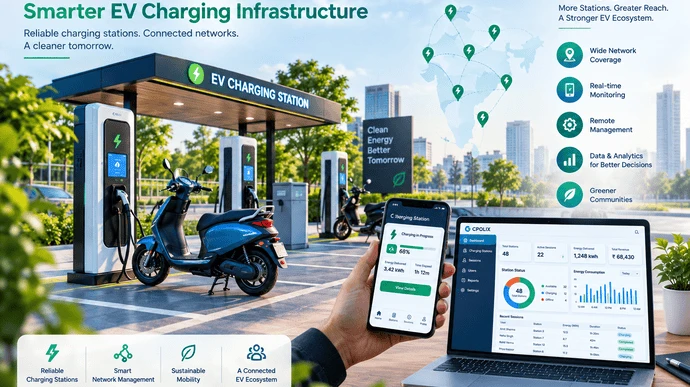
CPOlix is built to empower CPOs (Charge Point Operators) with the digital infrastructure required to scale, optimize, and future-proof EV charging networks. Founded by IIT alumni with 40+ years of combined experience, we bring together deep expertise in distributed systems, energy infrastructure, and enterprise-grade software to solve one of the most critical challenges in e-mobility, “operational complexity at scale.”
The shift toward electric mobility is changing the transportation landscape and creating new requirements for reliable charging infrastructure. As more people and businesses adopt electric vehicles, charging availability becomes an important part of the overall ownership experience. It is not enough to simply install chargers; operators also need technology that can monitor stations, manage charging sessions, track energy usage, and maintain a consistent experience for EV users.
A modern electric vehicle charging station can serve as an important connection between electric vehicles and the energy infrastructure supporting them. However, as the number of charging points increases, managing these stations efficiently becomes more challenging. Businesses need centralized systems that can provide visibility into station performance while helping them manage daily operations.
Why Charging Infrastructure Is Becoming More Important
Electric vehicle adoption depends on having convenient and dependable charging options. Drivers are more comfortable choosing an EV when they know that suitable charging facilities are available along their regular routes or near important destinations.
Charging stations can be deployed across different environments, including:
-
Residential and apartment communities
-
Office buildings and commercial spaces
-
Shopping centres and retail locations
-
Highways and major travel routes
-
Fleet and logistics facilities
-
Hotels, restaurants, and public parking areas
Each location can have different charging requirements, usage patterns, and operational challenges. This makes flexible charging management increasingly important.
Managing More Than Just a Charger
A charging station may appear to be a simple piece of infrastructure, but its operation involves several digital and physical components. Operators need to know whether a station is available, whether a charging session is active, how much energy is being delivered, and whether any technical issue needs attention.
A centralized charging management platform can bring these activities together. Instead of relying on separate systems or manual checks, operators can use a single dashboard to monitor their network and access relevant operational information.
Real-time visibility can help operators identify issues more quickly and understand how individual charging points are performing. This can also support better planning as businesses expand their infrastructure.
The Role of Real-Time Monitoring
Real-time monitoring is one of the most useful capabilities for charging operators. A station may become unavailable because of connectivity problems, equipment issues, or other operational conditions. Without proper monitoring, these problems may remain unnoticed until a customer tries to use the charger.
A connected management system can provide information such as station status, active charging sessions, energy consumption, and availability. This allows operators to keep track of their infrastructure remotely and take action when required.
For larger charging networks, this visibility becomes even more important because physically checking every location is not practical.
Creating a Better Experience for EV Users
For an EV driver, the charging experience should be simple and predictable. Users generally want to find a suitable station, check its availability, start a charging session, make payment, and complete the session without unnecessary complications.
Technology can help connect these activities. When station information, user management, payments, and charging sessions are integrated, operators can create a more organized experience for customers.
A reliable charging ecosystem can also encourage repeat usage. When users know that a network is easy to access and its stations are properly managed, charging becomes a more convenient part of their daily routine.
Scaling Infrastructure With Growing Demand
As EV adoption grows, businesses may need to expand their charging infrastructure. A network that starts with a handful of stations could eventually include dozens or hundreds of charging points across multiple locations.
This is where ev charging networks become particularly important. Managing a large network requires more than simply adding new chargers. Operators need systems that can support centralized monitoring, user management, analytics, billing, and maintenance across different locations.
A scalable platform can help businesses maintain consistent operational processes even as their infrastructure grows.
Data Can Help Operators Make Better Decisions
Every charging session generates useful information. Energy consumption, session duration, station utilization, transaction data, and peak usage periods can all provide insights into how a charging network is performing.
Operators can use this information to understand customer behaviour and identify areas where their infrastructure may need improvement.
Some useful data points include:
-
Most frequently used charging stations
-
Peak charging periods
-
Average charging session duration
-
Energy delivered across locations
-
Station availability and downtime
-
Transaction and revenue information
These insights can support decisions related to maintenance, station expansion, pricing strategies, and infrastructure planning.
Remote Management Can Reduce Operational Complexity
Charging stations are often distributed across different cities or areas. Sending a technician to every location for routine monitoring can increase operational costs and consume valuable time.
Remote management allows operators to access important information without being physically present at each station. Teams can monitor station activity, review alerts, and manage various operational functions from a centralized platform.
This can be particularly useful for businesses managing charging infrastructure across multiple locations.
Building a More Connected EV Ecosystem
The future of EV charging will depend on how effectively different parts of the ecosystem communicate with each other. Charging hardware, software platforms, payment systems, users, fleet operators, and service teams all need to work together.
Companies such as CPOLIX are contributing to this ecosystem with technology focused on EV charging management and infrastructure operations. By combining monitoring, analytics, charging management, and digital controls, such platforms can help businesses create a more connected approach to charging infrastructure.
What Businesses Should Consider
Before expanding an EV charging network, businesses should evaluate several practical factors:
Location: Charging stations should be positioned where EV users are likely to need them.
Charger requirements: Different users may have different charging speed and power requirements.
Network management: Operators need centralized visibility as the number of stations increases.
Maintenance: A clear process for detecting and resolving equipment issues is important.
User experience: Finding stations, starting sessions, and making payments should be convenient.
Scalability: The technology should be capable of supporting additional charging points in the future.
Looking Ahead
The growth of electric mobility is creating demand for charging infrastructure that is not only widely available but also intelligently managed. As more electric vehicles enter the market, businesses will need reliable systems to monitor stations, understand usage patterns, manage customers, and maintain network performance.
The future of charging will therefore involve more than installing physical charging points. It will depend on creating connected and scalable infrastructure where hardware and software work together. With real-time monitoring, centralized management, analytics, and remote operational capabilities, businesses can build charging networks that are better prepared for the evolving needs of electric mobility.
As the EV ecosystem continues to expand, smart charging technology can become an important foundation for making electric mobility more accessible, organized, and convenient for both businesses and users.



Comments
Login to Comment