Environmental and Social Due Diligence in the Renewable Energy Industry: Process, Risks & Compliance Guide
01 Oct, 2026
11 Views 0 Like(s)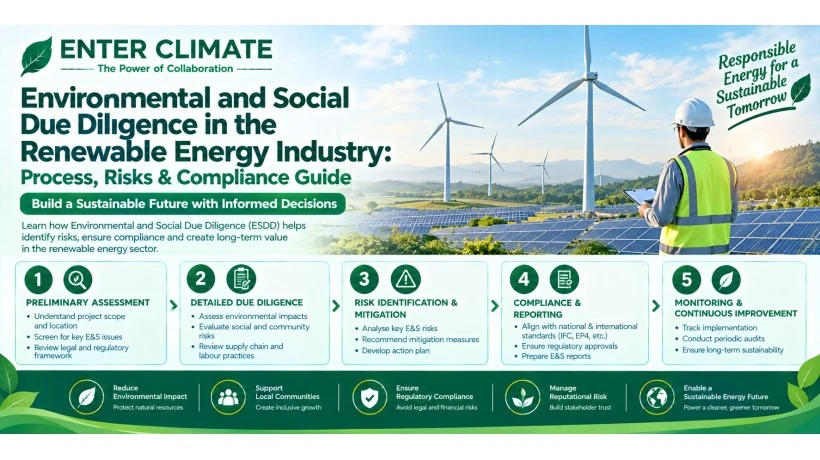
Learn Environmental and Social Due Diligence in the Renewable Energy Industry, including the process, key risks, compliance requirements, and essential documentation.
The renewable energy industry is growing rapidly as businesses look for cleaner and more sustainable ways to produce electricity. Solar parks, wind farms and other renewable energy projects help reduce pollution and protect natural resources. However, these projects can also create environmental and social challenges if they are not planned properly.
This is where Environmental and Social Due Diligence in the Renewable Energy Industry becomes important. It helps businesses identify possible risks, follow environmental laws and protect the people living near project sites. With proper planning and expert guidance, companies can develop renewable energy projects responsibly.
What Is Environmental and Social Due Diligence?
Environmental and Social Due Diligence (ESDD) is a process used to check how a project may affect the environment and nearby communities. It helps businesses understand potential problems before starting construction or investing in a project.
For example, a solar power plant may require large areas of land. If the land is used without proper planning, it may affect farming activities, local wildlife or nearby communities. ESDD helps identify these concerns early so businesses can take suitable steps to manage them.
It also helps companies meet regulatory requirements, reduce unexpected costs and build trust with investors and local communities.
Why Is ESDD Important for Renewable Energy Projects?
Renewable energy projects are designed to support a cleaner future, but they still need responsible planning. ESDD helps businesses:
-
Protect the environment: Identify possible impacts on land, water, air, plants and wildlife.
-
Support local communities: Understand how a project may affect people, jobs, homes and livelihoods.
-
Follow legal requirements: Identify the environmental permissions, approvals and compliance obligations that apply to the project.
-
Reduce financial risks: Find potential issues before they become expensive problems.
-
Build investor confidence: Show that the project follows responsible environmental and social practices.
These steps help businesses manage projects more smoothly while supporting long-term sustainability.
Key Steps in the ESDD Process
Environmental and Social Due Diligence usually involves several important steps.
1. Initial Project Assessment
The first step is to understand the project, its location, size, activities and possible environmental effects. Experts review available documents, land details, permits and project plans to identify areas that may need further investigation.
2. Environmental Risk Assessment
The next step is to study how the project may affect natural resources. This can include checking land use, water consumption, waste generation, air quality, noise levels and the impact on local wildlife.
For example, a wind energy project may need to consider its impact on birds and nearby habitats. Identifying these risks early allows businesses to plan suitable preventive measures.
3. Social Impact Assessment
A social impact assessment helps businesses understand how a project may affect people living and working nearby. It considers factors such as employment, land use, public safety, access to resources and local livelihoods.
For instance, if a renewable energy project uses land that local farmers depend on, the company must carefully assess the possible effects on their income and daily activities. Speaking with local communities and addressing their concerns can help prevent future disputes.
4. Regulatory Compliance Review
Every renewable energy project must identify the laws, permits and approvals that apply to its activities and location. These may include environmental clearances, pollution control permissions, waste management requirements and other applicable authorisations.
A proper compliance review helps businesses understand their responsibilities and avoid delays caused by missing approvals.
5. Risk Management and Action Plan
After identifying the risks, experts prepare an action plan to manage them. This may include reducing pollution, improving waste management, protecting natural habitats, providing worker safety measures and addressing community concerns.
A clear action plan helps businesses track progress and ensure that identified risks are properly managed.
Common Environmental and Social Risks
Renewable energy projects may face different risks depending on their location and activities.
-
Land-related risks: Land acquisition or land-use changes may affect farmers, local residents and natural habitats.
-
Water and waste risks: Construction and operation may require water and generate waste that needs proper management.
-
Biodiversity risks: Projects may disturb wildlife, birds, forests and other sensitive ecosystems.
-
Worker safety risks: Construction activities may expose workers to electrical hazards, heavy machinery and workplace accidents.
-
Community concerns: Noise, traffic, changes in land access and livelihood impacts may affect nearby residents.
Identifying these risks before construction can help businesses prevent problems and maintain good relationships with local communities.
Role of a Disaster Management Plan
A Disaster Management Plan is an important part of responsible project planning. It helps businesses prepare for emergencies such as fires, electrical accidents, extreme weather, equipment failures and other unexpected events.
For renewable energy projects, a disaster management plan should clearly explain emergency procedures, evacuation routes, safety responsibilities, communication methods and the steps required to protect workers and nearby communities.
Regular safety training, emergency drills and equipment inspections can also help reduce the impact of unexpected incidents. A well-prepared plan allows businesses to respond quickly and protect people, property and the environment.
Importance of Post Compliance Auditing under GPCB
For renewable energy projects operating in Gujarat, compliance with applicable Gujarat Pollution Control Board (GPCB) requirements is an important responsibility.
Post Compliance Auditing under GPCB helps businesses review whether applicable environmental conditions, pollution control requirements and regulatory obligations are being followed after the relevant approvals have been granted.
Depending on the project and its applicable permissions, an audit may involve reviewing records, checking pollution control systems, examining waste management practices and identifying areas where corrective action is needed.
Regular compliance reviews help businesses find gaps, maintain proper documentation and address issues before they become more serious. The exact requirements depend on the type of project, its approvals and the regulations that apply.
How Environmental Consultants Can Help
Environmental consultants help businesses understand complex environmental and social requirements in a simple and practical way. They can support project assessments, regulatory documentation, risk identification, compliance planning and monitoring.
Enterclimate provides environmental compliance and consultancy support to businesses working towards responsible and sustainable operations. With professional guidance, renewable energy companies can better understand their regulatory responsibilities, identify potential risks and develop suitable environmental management plans.
Working with experienced consultants can make the compliance process easier to manage and help businesses focus on their project goals.
Conclusion
Renewable energy is an important part of building a cleaner and more sustainable future. However, successful projects need more than modern technology and financial investment. They also require responsible environmental planning, community engagement and strong compliance practices.
Environmental and Social Due Diligence helps businesses identify risks, protect natural resources, support local communities and meet applicable legal requirements. By combining proper risk assessments, a Disaster Management Plan and regular compliance reviews, renewable energy companies can build projects that are safer, more responsible and sustainable in the long run.
Author Profile
Upendra Sharma is an Environmental Compliance Consultant associated with Enterclimate. He writes about environmental regulations, sustainability, environmental clearances and compliance requirements, helping businesses better understand environmental responsibilities and make informed decisions.


Comments
Login to Comment