“I Am Speaking to NIA…” — One Call, Fear of Bomb Blast, and Rs 40 Lakh Looted
07 May, 2026
1826 Views 0 Like(s)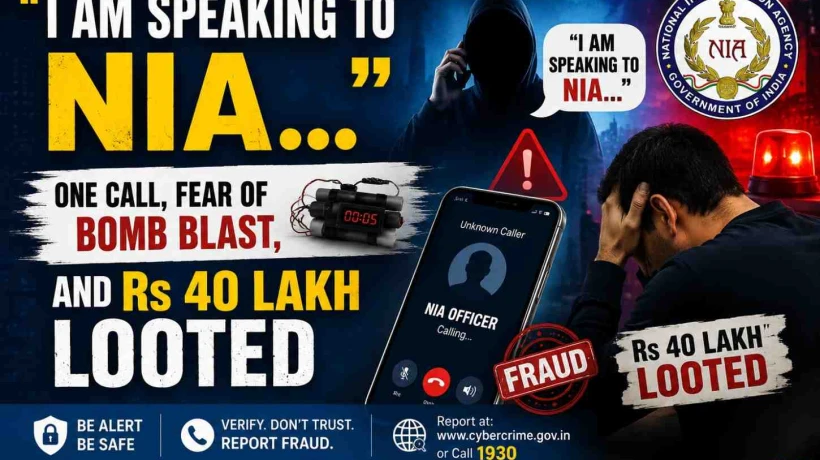
“I Am Speaking to NIA…” — One Call, Fear of Bomb Blast, and Rs 40 Lakh Looted
In a shocking case of cyber fraud and psychological manipulation, a businessman recently lost nearly Rs 40 lakh after receiving a terrifying phone call from fraudsters posing as officials from the National Investigation Agency (NIA). The scammers used fear, intimidation, and fake legal threats to trap the victim in what authorities are now calling a sophisticated “digital arrest” scam.
The incident has once again highlighted the growing danger of cybercrime in India, where fraudsters are using advanced tactics and impersonation techniques to exploit innocent people.
According to reports, the victim received a call from an unknown number. The caller introduced himself as an officer from the NIA and claimed that the victim’s mobile number and bank account were linked to suspicious activities involving bomb threats and money laundering. The fraudster spoke confidently and used official-sounding language, making the conversation appear genuine.
The caller then warned the victim that a serious criminal investigation was underway and that he could be arrested if he failed to cooperate immediately. Panic quickly took over as the fraudster claimed that sensitive evidence had connected the victim to illegal transactions and possible terror-related activities.
To increase fear and pressure, the scammers reportedly transferred the call to another person pretending to be a senior officer. The fake officials threatened legal action, arrest warrants, and even media exposure. The victim was instructed not to speak to family members or anyone else, as the case was allegedly “confidential.”
This type of scam works primarily through psychological pressure. Fraudsters create a sense of urgency and fear, leaving victims unable to think rationally. In many cases, people obey instructions simply because they fear police action or public humiliation.
The scammers then convinced the victim that his bank accounts needed to be “verified” for investigation purposes. They asked him to transfer money to multiple accounts for temporary checking and assured him that the funds would be returned once the inquiry was complete. Believing he was cooperating with a government investigation, the victim transferred nearly Rs 40 lakh.
After the money was transferred, the callers became unreachable. Only then did the victim realize he had been cheated. A complaint was later filed with the cybercrime authorities, and an investigation was launched to trace the fraudsters and recover the stolen funds.
Cybersecurity experts say such scams are increasing rapidly across the country. Fraudsters often impersonate agencies like the NIA, CBI, ED, police departments, telecom authorities, or even banks. They use fake documents, spoofed phone numbers, and video calls with people dressed as officers to make the scam look authentic.
In many recent cases, scammers have used “digital arrest” tactics, where victims are told they are under investigation and must remain isolated while following instructions from fake officials. Some victims have spent hours or even days under psychological control before transferring their savings.
Experts warn that genuine law enforcement agencies never ask people to transfer money for verification purposes. They also do not conduct investigations over random video calls or demand confidential banking details through phone conversations.
People are advised to stay calm if they receive such threatening calls. Instead of reacting emotionally, they should verify the identity of the caller through official government websites or local police stations. Sharing OTPs, bank details, or transferring money based on fear should be strictly avoided.
Cybercrime officials also recommend immediately disconnecting suspicious calls and reporting them to the national cybercrime helpline or online reporting portal. Quick reporting can sometimes help authorities freeze fraudulent bank accounts before the money is withdrawn.
The growing number of such incidents shows how cybercriminals are evolving and targeting people from all backgrounds, including professionals, businessmen, students, and senior citizens. The combination of technology and emotional manipulation has made these scams extremely dangerous.
Awareness remains the strongest defense against cyber fraud. Families should openly discuss such scams and educate elderly relatives and less tech-savvy individuals about common fraud tactics. Schools, workplaces, and organizations should also promote digital safety awareness regularly.
This incident serves as a powerful reminder that fear can become a weapon in the hands of cybercriminals. A single phone call claiming to be from a powerful agency created panic, confusion, and ultimately led to a massive financial loss.
As cyber fraud cases continue to rise, experts stress one important message: no government agency will ever demand money transfers over the phone. Staying alert, verifying information, and thinking calmly during threatening situations can prevent people from becoming victims of such devastating scams.



Comments
Login to Comment