How to Choose the Best Aquarium Water Test Kit for Your Fish Tank
28 Oct, 2026
12 Views 0 Like(s)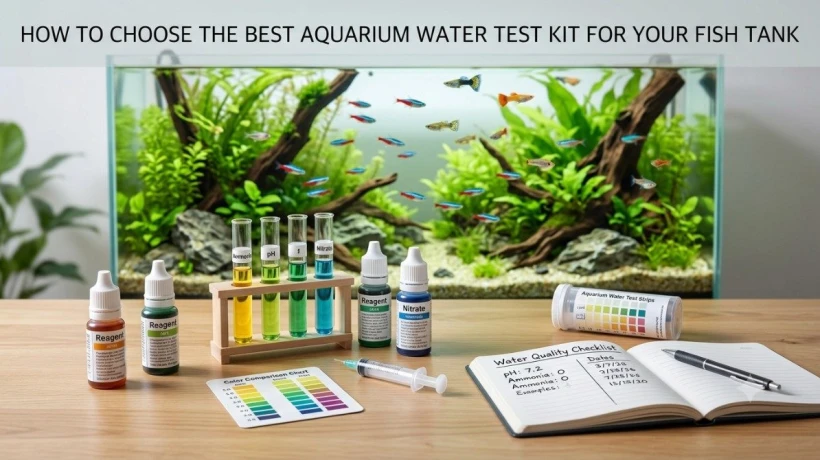
Learn how to choose the best aquarium water test kit for your fish tank. Compare freshwater and saltwater testing options to monitor pH, ammonia, nitrite, and nitrate levels.
Choosing the right aquarium water test kit helps you understand your aquarium's water quality and identify potential problems before they seriously affect your fish. Even clear water can contain harmful levels of ammonia, nitrite, or other substances that are difficult to detect by sight alone. Regular testing helps aquarium owners make informed decisions about maintenance and provide a healthier environment for their fish.
Whether you maintain a freshwater aquarium, a tropical fish tank, or a saltwater setup, the best test kit depends on your aquarium type, the parameters you need to measure, and how easy the kit is to use. This guide explains what to test, how to compare testing methods, and how to choose a suitable kit for your fish tank.
What Is an Aquarium Water Test Kit?
An aquarium water test kit is a product used to measure specific water-quality parameters in an aquarium. Depending on the kit, it may test pH, ammonia, nitrite, nitrate, and other parameters relevant to your aquarium.
These measurements help you understand whether your water conditions are appropriate for the fish and other aquatic animals you keep.
Regular testing is especially useful when:
- Setting up a new aquarium.
- Adding new fish to an established tank.
- Investigating unusual fish behavior.
- Monitoring an aquarium after maintenance.
- Managing a saltwater aquarium or a sensitive aquatic setup.
Testing does not replace water changes, filtration, or regular observation. Instead, it helps you decide when maintenance or further investigation may be needed.
Why Is a Fish Tank Water Test Kit Important?
A reliable fish tank water test kit helps reveal changes that may not be visible in the aquarium. Water can look clean while its chemical conditions are unsuitable for fish.
1. Detect Ammonia Problems
Ammonia can enter aquarium water through fish waste, decomposing food, and decaying organic matter. It is toxic to fish, and the level of risk depends partly on pH and temperature.
Testing ammonia is particularly important in new aquariums, heavily stocked tanks, and tanks experiencing filtration problems.
2. Monitor Nitrite Levels
Nitrite is produced during the aquarium nitrogen cycle as beneficial bacteria process ammonia. Nitrite can harm fish, so it is important to monitor it while an aquarium establishes its biological filtration and whenever a cycle disruption is suspected.
3. Check Nitrate Levels
Nitrate is a later product of the nitrogen cycle. It can accumulate over time and is commonly managed through appropriate water changes, suitable stocking, and aquarium maintenance.
Testing nitrate helps you understand whether your maintenance routine is keeping levels appropriate for your aquarium inhabitants.
4. Measure pH
pH indicates how acidic or alkaline the water is. Different fish and aquatic species have different preferred ranges, so there is no single ideal pH for every aquarium.
Avoid making sudden pH adjustments based only on a general recommendation. Consider the needs of your species and the stability of the aquarium.
Which Parameters Should an Aquarium Test Kit Measure?
The best aquarium test kit is one that measures the parameters relevant to your tank.
|
Water parameter |
Why it matters |
|
pH |
Helps determine whether the water suits the species in your aquarium. |
|
Ammonia |
Helps identify a potentially toxic water-quality problem. |
|
Nitrite |
Helps monitor the nitrogen cycle and detect possible cycling issues. |
|
Nitrate |
Helps track nutrient accumulation and maintenance needs. |
|
General hardness (GH) |
Measures dissolved minerals, including calcium and magnesium. |
|
Carbonate hardness (KH) |
Helps assess alkalinity and resistance to changes in pH. |
|
Salinity or specific gravity |
Important for many marine aquariums and saltwater animals. |
Not every kit measures all these parameters. Choose a kit based on the fish you keep, your aquarium type, and the water conditions you need to monitor.
For a newly established freshwater tank, ammonia, nitrite, nitrate, and pH are useful starting points. Marine aquariums may require additional testing depending on the animals and system being maintained.
What Types of Aquarium Water Test Kits Are Available?
Different testing methods offer different levels of convenience, detail, and precision.
1. Liquid Test Kits
Liquid kits typically involve adding aquarium water and test reagents to a vial, then comparing the resulting color with a chart.
Advantages:
- Often measure several important parameters.
- Can provide detailed color comparisons.
- Useful for routine monitoring when instructions are followed carefully.
Considerations: They require more steps than strips, and accurate results depend on correct measurements, timing, and interpretation of the color chart.
2. Aquarium Test Strips
Test strips are dipped into a water sample or used according to the manufacturer's instructions. Results are interpreted by comparing the strip's colors with a reference chart.
Advantages:
- Convenient for routine checks.
- Quick and simple to use.
- Often suitable for beginners who want a straightforward testing method.
Considerations: The parameters included vary by product, and some strips do not test ammonia. Check the packaging carefully to confirm which measurements are included.
3. Digital Water Testers
Digital testers measure specific parameters using an electronic device or sensor. Some are designed for pH, while others measure different properties.
Advantages:
- Can provide numerical readings for supported parameters.
- May be convenient for frequent testing.
- Some models reduce the need to interpret color charts.
Considerations: Digital testers are parameter-specific, may need calibration, and can require replacement sensors or other maintenance. A digital pH meter, for example, does not automatically test ammonia or nitrate.
How to Choose the Best Water Test Kit Aquarium Owners Need
When comparing a water test kit aquarium owners can use, consider these important factors.
Match the Kit to Your Aquarium Type
Freshwater and saltwater aquariums have different testing needs.
- Freshwater aquariums: Consider pH, ammonia, nitrite, and nitrate testing, particularly for new tanks.
- Tropical fish aquariums: Choose tests that suit the specific species and the water conditions they require.
- Saltwater aquariums: In addition to basic water-quality testing, marine setups may need tests for salinity, alkalinity, calcium, or other parameters depending on the system.
Do not assume a general-purpose kit covers every parameter required for a reef or marine aquarium.
Check the Parameters Included
Compare the kit's list of tests with your actual needs. A product that measures several relevant parameters may be more convenient than purchasing separate tests, but only if those parameters are appropriate for your setup.
Pay particular attention to whether ammonia is included if you are cycling a new aquarium or investigating a possible water-quality problem.
Consider Ease of Use
If you are new to aquarium care, look for clear instructions, easy-to-read charts, and a testing process you can follow consistently.
Also check the number of tests included, the storage instructions, and the product's expiration information where applicable.
Review Accuracy and Reading Ranges
Look for a kit that measures the range relevant to your aquarium. Follow the instructions carefully, use clean testing equipment, and observe the required waiting times.
If a result seems unexpected, repeat the test with a fresh sample and verify that the kit has been stored correctly. If fish appear distressed, do not rely on a single questionable result before taking appropriate action.
How Often Should You Test Aquarium Water?
Testing frequency depends on the aquarium's age, stocking, stability, and recent changes.
- New aquariums : Test frequently while establishing the nitrogen cycle, following a suitable cycling plan.
- Established aquariums : Test regularly as part of routine maintenance, adjusting frequency based on stability and stocking.
- After adding fish : Monitor water quality more closely as the biological filter adapts to the additional waste.
- When fish behave unusually : Test promptly for relevant water-quality problems.
- After equipment or filtration issues : Check water parameters and continue monitoring until conditions stabilize.
There is no universal schedule for every tank. Keep a record of your results so you can identify trends rather than relying on a single reading.
Common Aquarium Water Testing Mistakes to Avoid
Even a good aquarium water test kit can produce misleading results if it is used incorrectly.
- Testing too infrequently: Problems can develop between checks, particularly in new or heavily stocked tanks.
- Ignoring the instructions: Incorrect sample volumes or reading times can affect results.
- Using expired or poorly stored reagents: Check expiration dates and storage guidance.
- Testing only pH: pH alone cannot tell you whether ammonia, nitrite, or nitrate levels are appropriate.
- Changing water chemistry too quickly: Sudden adjustments can stress aquatic animals. Make changes carefully and based on the needs of your species.
- Ignoring fish behavior: Test results should be considered alongside fish appearance, behavior, equipment performance, and aquarium conditions.
If testing indicates a potentially dangerous parameter, take appropriate steps for your aquarium and species. Avoid adding chemicals without understanding the cause of the problem.
Where Can You Buy an Aquarium Water Test Kit?
Choosing a suitable testing kit starts with identifying the parameters you need to monitor and selecting a product that matches your aquarium type.
Explore the Kwik Pets Aquarium Water Test Kits Collection to compare available options for your aquarium care routine.
Before purchasing, review each product's test parameters, instructions, and compatibility with your setup.
Frequently Asked Questions
1. What is the best aquarium water test kit for beginners?
A kit that measures pH, ammonia, nitrite, and nitrate is a useful starting point for many freshwater aquarium owners. Choose a testing method that is easy to follow and includes clear instructions.
2. How often should I use a fish tank water test kit?
New aquariums generally need more frequent testing while the nitrogen cycle develops. Established tanks can be tested on a regular maintenance schedule, with additional checks after changes or when fish show signs of stress.
3. Are aquarium test strips as useful as liquid test kits?
Both can be useful, depending on the parameters measured and the manufacturer's specifications. Strips are convenient, while liquid kits often offer more detailed testing options. Compare the included tests and reading ranges before choosing.
4. Can clear aquarium water still be unsafe for fish?
Yes. Clear water can contain harmful ammonia or nitrite, and other water-quality problems may not be visible. Testing is a more reliable way to evaluate important chemical parameters.
5. What should I test first in a new fish tank?
Ammonia, nitrite, nitrate, and pH are important parameters to monitor during aquarium cycling. Wait until the aquarium is appropriately cycled and conditions suit your species before adding fish, and continue testing after stocking.
Final Thoughts
The best aquarium water test kit is one that measures the parameters your fish need you to monitor and is simple enough to use consistently. Consider your aquarium type, compare the available testing methods, and follow the instructions carefully. Regular testing helps you understand water-quality changes and make informed decisions about aquarium maintenance.
Explore the Kwik Pets Aquarium Water Test Kits Collection to find a testing kit that suits your fish tank and ongoing care routine.


Comments
Login to Comment