Cat Feeders That Could Make Your Daily Feeding Routine Easier
28 Oct, 2026
8 Views 0 Like(s)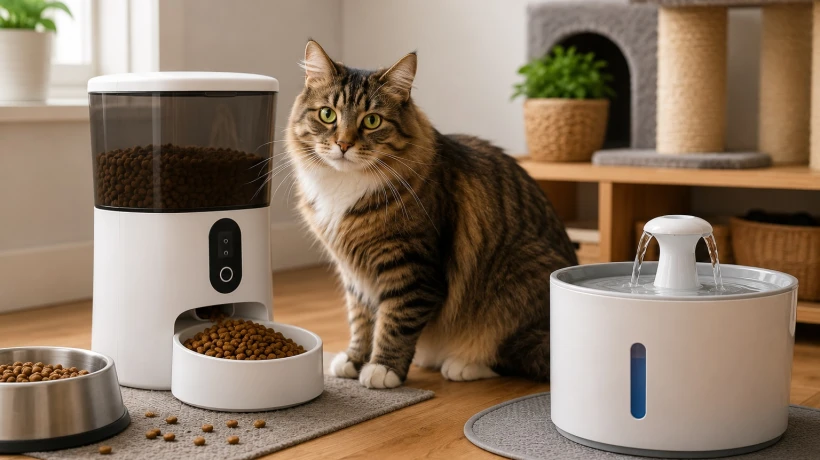
Discover how cat feeders simplify daily feeding with portion control, scheduled meals, and fresh water solutions. Find the right feeder for your cat's needs.
Your cat may have a simple feeding routine, but your schedule probably doesn't. Work, errands, travel, and late nights can make it harder to serve meals at the same time every day. That's where cat feeders can make a real difference.
A good feeder can help you control portions, maintain a feeding schedule, and reduce the stress of wondering whether your cat has eaten. Some models are simple gravity feeders, while others offer programmable meal times and portion controls.
But which type actually makes sense for your home? And do you need a separate cat water feeder too?
Let's look at the practical options so you can choose feeding equipment that fits both your cat and your daily routine.
Why Cat Feeders Can Make Daily Life Easier
Cats often do well with consistent routines. If breakfast normally happens at 7 a.m., your cat may quickly learn that 7 a.m. means food.
The problem is that humans aren't always that consistent.
Maybe you sleep through an alarm. Perhaps you're stuck at work. Or your weekend schedule is completely different from your weekday routine.
A feeder can take some of that pressure off.
Depending on the model, cat feeders can help you:
-
Serve meals at scheduled times
-
Control how much food your cat receives
-
Reduce accidental overfeeding
-
Maintain a routine when you're away
-
Make feeding easier for busy households
-
Keep dry food available in a controlled way
Think of a feeder as a tool for managing your cat's routine, not as a replacement for your attention.
Your cat still needs interaction, fresh water, playtime, and regular care.
Which Type of Cat Feeder Is Right for Your Cat?
Not every feeder solves the same problem. Before buying one, think about how your cat currently eats.
Automatic Cat Feeders
Automatic feeders are useful when meal timing is your biggest challenge.
You can program many models to release food at specific times. Some also let you control portions, which can be helpful if your cat tends to eat too much when food is freely available.
For example, imagine you normally leave for work at 8 a.m. Your cat eats breakfast at 7:30, but lunch would normally be missed.
An automatic feeder could release a measured meal around lunchtime without requiring you to come home.
This can make the daily routine much easier.
Gravity Feeders
Gravity feeders are simpler.
They typically hold a larger amount of dry food and allow more food to move into the bowl as your cat eats.
They can be convenient, but there's an important catch: they don't necessarily control how much your cat eats.
If your cat happily eats every piece available, a gravity feeder could make portion control harder rather than easier.
For cats that overeat, a programmable or portion-controlled feeder may be a better choice.
Slow Feeders
Some cats treat mealtime like a race.
They finish their food quickly, then look at you as if they haven't eaten anything all day.
Slow feeders use ridges, compartments, or other designs to make cats work a little harder for their food. This can slow down eating and turn mealtime into a more engaging activity.
However, every cat has a different preference. A feeder that works beautifully for one cat may frustrate another.
Do Cat Feeders Help With Portion Control?
They can.
Portion control is one of the biggest reasons cat owners consider automatic cat feeders.
Instead of filling a bowl whenever it looks empty, you can measure a specific amount for each meal.
That can make your cat's daily intake easier to manage.
However, don't assume the feeder's portion setting automatically equals the right amount for your cat.
Different foods have different calorie densities. A cup of one food may provide a different number of calories than the same volume of another food.
So before programming your feeder, check the feeding instructions and calorie information for the food you're using.
If your cat needs a specific diet or calorie target, your veterinarian can help you determine an appropriate feeding plan.
A Simple Portion-Control Routine
Try this:
-
Determine your cat's daily food requirement.
-
Divide that amount between the meals you want to serve.
-
Check how much food your feeder actually dispenses.
-
Adjust the settings if necessary.
-
Recheck portions whenever you change food.
That last step matters.
Switching from one recipe to another can change the amount of food your cat needs.
What About Wet Food?
This is where choosing a feeder gets a little more complicated.
Many automatic feeders are designed primarily for dry food. If your cat eats wet food, you'll need a feeder specifically designed to handle it.
Some wet-food feeders use covered compartments that open at scheduled times. Others may include cooling features designed to help keep food fresh for a limited period.
Always follow the manufacturer's storage and food-safety instructions.
If you're feeding wet food while away from home for an extended period, don't assume a standard dry-food feeder will work.
Can You Mix Wet and Dry Feeding?
Yes, many cat households use both.
For example, you might serve wet food in the morning and evening while using a portion-controlled automatic feeder for a dry-food meal during the day.
The important thing is to account for the total amount your cat eats.
Adding an automatic feeder shouldn't mean adding extra calories.
Don't Forget the Water
Food gets most of the attention, but water is just as important.
That's where a cat water feeder can become useful.
Depending on the design, a cat water feeder may provide a larger water supply or help maintain a more consistent supply throughout the day.
Some cat owners also prefer water fountains because moving water can encourage certain cats to drink more.
Regardless of the equipment you choose, the goal is simple: your cat should have access to clean, fresh water.
When Should You Consider a Cat Water Feeder?
It may be especially useful if:
-
Your cat spends part of the day alone
-
Your cat drinks frequently
-
You have multiple cats
-
You travel occasionally
-
Your cat tends to knock over lightweight water bowls
-
You want to reduce how often you need to refill the water container
Keep the water setup clean. A large reservoir isn't useful if the water is old or the bowl becomes dirty.
How to Choose a Feeder for Multiple Cats
One feeder may not be enough when you have two or more cats.
Why?
Because cats don't always share food peacefully.
One cat might eat quickly while another prefers to return to the bowl throughout the day. A confident cat may even push another cat away from its food.
In a multi-cat household, consider:
-
Separate feeding stations
-
Individual portions
-
Different feeding locations
-
Feeders that can identify individual pets
-
Enough distance between food and water stations
Individual feeders can be particularly helpful when cats have different dietary needs.
For example, one cat may need a weight-management diet while another requires a different formula.
In that situation, a shared bowl can make feeding much harder to control.
What Features Actually Matter?
Modern feeders can come with plenty of features. Some are useful. Others may simply make the product sound more impressive.
Focus on the features that solve your actual problem.
Useful Features to Look For
Programmable meal times: Helpful if your schedule changes or you want consistent feeding times.
Portion control: Useful for measured meals and weight management.
Large food capacity: Convenient if you don't want to refill the feeder every day.
Battery backup: Helpful during power interruptions if the feeder normally uses an outlet.
Easy cleaning: One of the most important features. Food residue can build up quickly.
Secure lid: Useful for cats that are determined to get into the food container.
Reliable dispensing: A feeder is only helpful if it releases food consistently.
Clear food visibility: Makes it easier to know when the food supply is getting low.
Don't buy a complicated feeder simply because it has the longest feature list.
A simple, reliable feeder is often more useful than a smart feeder with functions you'll never use.
How Your Cat's Food Choice Fits Into the Setup
A feeder is only one part of the feeding system.
The food itself still matters.
When comparing the top cat food brands, look beyond the brand name. Consider whether the recipe is appropriate for your cat's life stage, how it fits your cat's nutritional needs, and how easily it works with your chosen feeder.
Dry foods are generally easier to use with automatic dispensing systems.
Wet foods may require a feeder designed specifically for them.
Treats should also be considered when you're managing your cat's overall daily intake.
A good feeding system should bring the food, portion, schedule, and storage method together.
Common Cat Feeder Mistakes to Avoid
A feeder can simplify your routine, but it isn't completely hands-off.
Setting It Up Without Testing It
Don't program a new feeder and immediately trust it for an entire weekend away.
Run it for several days first.
Check whether the correct amount comes out and whether your cat actually uses it.
Ignoring Cleaning
Food bowls and feeder components need regular cleaning.
Follow the manufacturer's cleaning instructions and pay attention to areas where food particles can collect.
Assuming One Setting Fits Every Food
If you change food, check the portion again.
Different kibble sizes, shapes, and densities can affect how much a feeder dispenses.
Putting the Feeder in a Busy Location
Cats generally benefit from a calm feeding area.
Avoid placing the feeder directly beside noisy appliances, heavy foot traffic, or a litter box.
A quiet corner can make mealtime more comfortable.
Forgetting About Manual Feeding
Automatic doesn't mean permanent.
Your cat should still have normal interaction and care from you. The feeder should support your routine, not replace it.
A Simple Cat Feeder Buying Checklist
Before buying, ask yourself these questions:
1. What problem am I trying to solve?
Is it missed meals, portion control, travel, or simply convenience?
2. Does my cat eat dry food, wet food, or both?
Choose a feeder designed for the food format you actually use.
3. Does my cat eat too quickly?
If so, consider a slow feeder or a system that divides food into smaller meals.
4. Do I need portion control?
If your cat tends to overeat, avoid relying on a simple gravity feeder.
5. Do I need a cat water feeder?
If your cat spends long periods alone or regularly tips over its water bowl, a more stable water system may help.
6. Is the feeder easy to clean?
If cleaning it feels like a chore, you may stop doing it regularly.
7. Have I tested it?
Always test a new feeder before depending on it while you're away.
Make Your Feeding Routine Work for You
The right cat feeders can turn a stressful feeding schedule into something much easier to manage.
If your biggest problem is missed meals, consider an automatic feeder with reliable scheduling. If portion control is the challenge, look for accurate dispensing. If your cat eats too quickly, a slow feeder may be more useful. And if keeping water available is difficult, consider adding a cat water feeder to the setup.
The goal isn't to buy the most advanced feeder available.
It's to choose a feeding system that fits your cat's habits, your food choice, and your daily routine.
Before you buy, identify the problem you want to solve, check the food you're currently feeding, and choose the simplest setup that handles those needs well. Then test it at home before making it part of your everyday routine.
A little planning now can make every mealtime easier for both you and your cat.
Frequently Asked Questions About Cat Feeders
Are automatic cat feeders good for cats?
They can be useful for maintaining consistent meal times and measured portions. However, they should support your cat's overall care routine rather than replace regular human interaction.
Do automatic feeders control portions?
Many models do, but the accuracy and portion size vary by product. Test the feeder and compare the actual amount dispensed with your cat's feeding plan.
Is a cat water feeder worth buying?
It can be useful for households where cats spend time alone, multiple cats share a water source, or traditional bowls are frequently tipped over. A water fountain may also be worth considering for cats that prefer moving water.
Can I use an automatic feeder for wet food?
Only if the feeder is specifically designed for wet food. Check the manufacturer's instructions for food storage, cooling, cleaning, and maximum holding time.
Should I use a feeder for every cat in a multi-cat home?
Not always, but separate feeders can make portion control much easier when cats have different diets, eating speeds, or feeding schedules.


Comments
Login to Comment