Catnip Toys for Cats That Spark Curiosity and Playful Antics
28 Oct, 2026
11 Views 0 Like(s)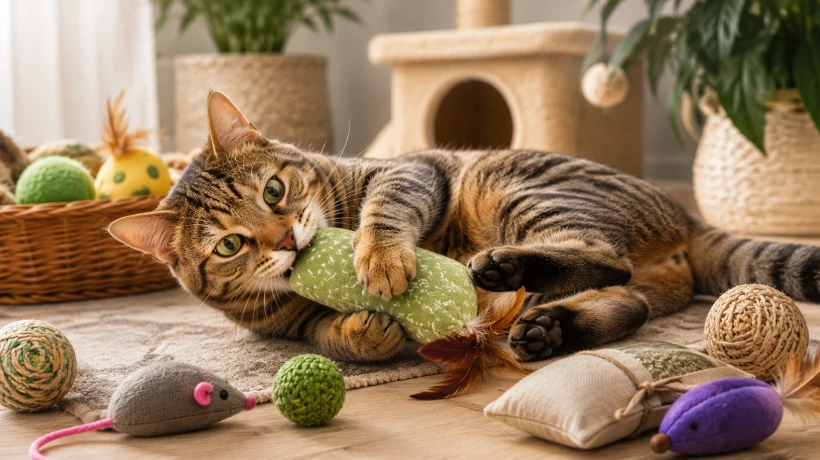
Discover how catnip toys for cats encourage playful behavior, spark curiosity, and keep indoor cats entertained. Learn about toy types, safety tips, and ways to make playtime more engaging.
One minute your cat is stretched out on the couch. The next, they are rolling, pouncing, kicking, and rubbing their face against a tiny toy. What changed? For many cats, the answer is catnip.
Catnip toys for cats can turn an ordinary play session into something much more exciting. But not every cat reacts to catnip, and the response can look different from one feline to another. Some cats become playful and energetic. Others simply sniff, rub, or relax.
So, what does catnip do to cats, and how can you choose the right toy for your pet?
Let's look at how catnip works, why cats respond to it, how to use catnip toys safely, and what to look for when choosing a toy.
What Does Catnip Do to Cats?
If you've ever watched a cat encounter fresh catnip, you may have seen some funny behavior.
A cat might:
-
Rub its face against the catnip
-
Roll around on the floor
-
Bat or pounce at a toy
-
Kick with its back legs
-
Chase the toy around the room
-
Meow or become more vocal
-
Become calm and relaxed
These reactions come from nepetalactone, a natural compound found in the catnip plant.
When a cat smells catnip, nepetalactone can interact with receptors involved in the cat's sense of smell. This can trigger a short period of unusual or playful behavior.
The response usually does not last very long. Afterward, many cats lose interest in catnip for a while.
Here's something important to remember: not every cat reacts to catnip.
If your cat sniffs a catnip toy and walks away, that doesn't necessarily mean anything is wrong. Sensitivity to catnip varies between individual cats and can also be influenced by age and genetics.
Why Catnip Toys for Cats Can Make Play More Interesting
Cats are natural hunters. Even indoor cats still have instincts that encourage them to stalk, chase, pounce, grab, and kick.
A good toy gives those instincts somewhere to go.
Catnip toys for cats can add an extra sensory element to ordinary play. Instead of simply batting at a toy, your cat may become more interested in sniffing, rubbing, chasing, or wrestling with it.
Imagine your cat's favorite plush toy sitting on the floor for several days.
Normally, they walk past it.
Add fresh catnip to the toy, and suddenly it gets a second life.
That's one reason catnip can be useful as part of an indoor enrichment routine.
Catnip Can Encourage Different Types of Play
Different toys encourage different behaviors.
For example:
Plush catnip toys: Great for grabbing, biting, bunny-kicking, and carrying.
Catnip balls: Encourage batting and chasing.
Catnip-filled mice: Appeal to a cat's natural prey instincts.
Catnip kicker toys: Give cats something larger to grab and kick with their back legs.
Catnip toys with crinkle material: Add sound to the experience, which may make the toy even more interesting.
The best choice often depends on how your cat already likes to play.
Not Every Cat Loves Catnip
This is one of the biggest things new cat owners should know.
You can buy the most attractive catnip toy for cats on the market, but your cat may completely ignore it.
And that's okay.
Some cats are simply less responsive to catnip. Young kittens may also show little interest because sensitivity to catnip often develops as cats mature.
So don't judge a toy entirely by your cat's first reaction.
Try introducing it at a time when your cat is naturally alert and interested in playing.
You can also try different forms of catnip. Some cats may respond more strongly to fresh or aromatic catnip than to an older toy that has been sitting in a toy basket for months.
What If Your Cat Doesn't React?
Don't force it.
Instead, experiment with other types of enrichment:
-
Wand toys
-
Interactive toys
-
Crinkle toys
-
Balls
-
Puzzle feeders
-
Chase toys
-
Tunnels
-
Treat-based toys
Every cat has its own preferences.
One cat may go wild for catnip. Another may prefer chasing a feather wand across the living room.
The goal isn't to make every cat love catnip. The goal is to find what makes your cat want to play.
How to Choose the Right Catnip Toy
Shopping for a catnip toy can be surprisingly overwhelming. There are mice, cushions, kickers, balls, plush animals, and interactive designs.
Start with your cat's personality.
For Cats That Love to Wrestle
Choose a longer kicker-style toy.
These toys give cats something substantial to grab with their front paws while kicking with their back legs.
For Cats That Love to Chase
Choose lightweight toys that can move easily across the floor.
Small catnip mice or balls can work well for cats that enjoy batting and chasing.
For Cats That Love Plush Toys
A soft stuffed toy filled with catnip may be the better choice.
Look for sturdy stitching and materials that can handle repeated biting and kicking.
For Curious Cats
Try a toy that combines catnip with another sensory feature, such as crinkle material or interesting textures.
Curious cats often enjoy toys that give them something new to investigate.
Safety Comes First With Catnip Toys
Catnip itself is generally considered safe for cats when used appropriately. However, the toy containing it still needs to be safe.
Before giving your cat a toy, inspect it carefully.
Check for:
-
Loose threads
-
Torn seams
-
Exposed stuffing
-
Small pieces that could break off
-
Damaged bells or attachments
-
Sharp edges
-
Excessively worn areas
If your cat is an aggressive chewer, inspect toys more frequently.
A toy that was perfectly safe last month may become unsafe after repeated chewing.
Replace Damaged Toys
Don't wait until a toy is completely destroyed.
If stuffing is coming out or the fabric has developed a large tear, replace it.
This is particularly important with catnip toys because cats may bite, claw, kick, and carry them around during play.
How Often Should You Give Your Cat Catnip Toys?
You don't necessarily need to leave a catnip toy on the floor every day.
In fact, rotating toys can help keep playtime interesting.
Try this simple routine:
Step 1: Keep several toys stored away.
Step 2: Bring out one or two toys for a play session.
Step 3: Put them away after your cat loses interest.
Step 4: Introduce a different toy later.
Step 5: Bring the original toy back after some time.
This creates novelty without requiring you to constantly buy new toys.
Some cats also seem less responsive when they have continuous access to catnip. Rotating toys gives the experience a chance to feel new again.
How to Make Catnip Play More Engaging
Simply throwing a catnip toy onto the floor may work, but you can make the experience more interactive.
Try placing the toy near a favorite hiding spot.
Then move it slowly across the floor.
Pause.
Let your cat watch.
Move it again.
This mimics the stop-and-start movement of prey and can encourage your cat to stalk before pouncing.
You can also hide a catnip toy beneath a lightweight blanket or beside a tunnel.
Give your cat an opportunity to discover it rather than putting it directly in front of their face.
Want to see what your cat chooses when you give them several different toys? You might be surprised.
Sometimes the simplest toy becomes the favorite.
Catnip Toy vs. Catnip Spray: What's the Difference?
Catnip comes in several forms.
A catnip toy for cats already contains catnip and is ready to use.
Catnip spray, on the other hand, can be applied to certain toys, scratching posts, or other cat-safe items according to the product directions.
Spray can be useful when you want to refresh an older toy or encourage interest in a scratching area.
However, always follow the product's instructions and avoid spraying products where they aren't intended to be used.
If your cat doesn't respond strongly to one form, another may produce a different reaction.
How to Keep Catnip Toys Fresh
Catnip can lose some of its aroma over time.
If a toy has become less interesting, don't immediately assume your cat has permanently lost interest.
Store catnip toys somewhere cool and dry when they're not being used.
Keep them away from moisture and excessive heat.
Toy rotation also helps. Rather than leaving every catnip toy around all day, store some and bring them back later.
This simple trick can make an older toy feel new again.
Common Mistakes Cat Owners Make With Catnip Toys
Giving Too Many Toys at Once
More toys don't always mean more fun.
A crowded toy basket can actually make individual toys less interesting.
Rotate them instead.
Ignoring Your Cat's Play Style
Don't buy a kicker toy for a cat that only enjoys chasing toys across the floor.
Choose based on what your cat naturally likes to do.
Keeping Damaged Toys
A favorite toy can become dangerous once it starts falling apart.
Inspect it regularly and replace it when necessary.
Assuming Every Cat Loves Catnip
Catnip sensitivity varies.
If your cat doesn't react, try another enrichment option rather than repeatedly presenting the same toy.
A Simple Catnip Toy Shopping Checklist
Before buying your next toy, ask:
-
Does the toy match my cat's play style?
-
Is the construction sturdy enough for my cat?
-
Are the seams secure?
-
Are there any small detachable parts?
-
Is the catnip fresh and properly contained?
-
Can I easily inspect and clean the toy?
-
Will I be able to rotate it with other toys?
A good cat toy doesn't have to be complicated.
It simply needs to be safe, interesting, and suited to the way your cat likes to play.
Bring More Curiosity Into Playtime
The right catnip toys for cats can turn an ordinary afternoon into a burst of chasing, rolling, pouncing, and playful chaos.
But don't worry if your cat doesn't immediately go crazy for catnip. Every cat is different. The best toy is the one that matches your pet's natural play style and keeps them safely engaged.
Start with one catnip toy for cats that fits the way your cat already likes to play. Watch what happens. Do they wrestle with it? Chase it? Rub against it? Or completely ignore it?
That reaction tells you what to try next.
Ready to make playtime more interesting? Explore catnip toys that match your cat's favorite way to play and give their next play session something new to discover.
Frequently Asked Questions About Catnip Toys for Cats
What does catnip do to cats?
Catnip contains a natural compound called nepetalactone that can trigger a temporary behavioral response in many cats. Some cats become playful and energetic, while others may roll, rub against the toy, or become relaxed.
Are catnip toys safe for cats?
Catnip toys are generally safe when used appropriately. The bigger concern is the condition of the toy itself. Check regularly for torn fabric, loose threads, exposed stuffing, or small parts that could become detached.
Why doesn't my cat react to catnip?
Not every cat responds to catnip. Sensitivity varies between individual cats and can be influenced by genetics and age. If your cat isn't interested, try other forms of enrichment.
How often should cats play with catnip toys?
There isn't one schedule that works for every cat. Toy rotation can help prevent boredom and maintain interest. Store some toys away and bring them back during future play sessions.
What is the best catnip toy for cats?
The best choice depends on your cat's personality. Kicker toys work well for cats that like wrestling, while small mice and balls may suit cats that prefer chasing and batting.


Comments
Login to Comment