How Salesforce Implementation Companies Help Businesses Scale Faster
28 Jan, 2026
9404 Views 0 Like(s)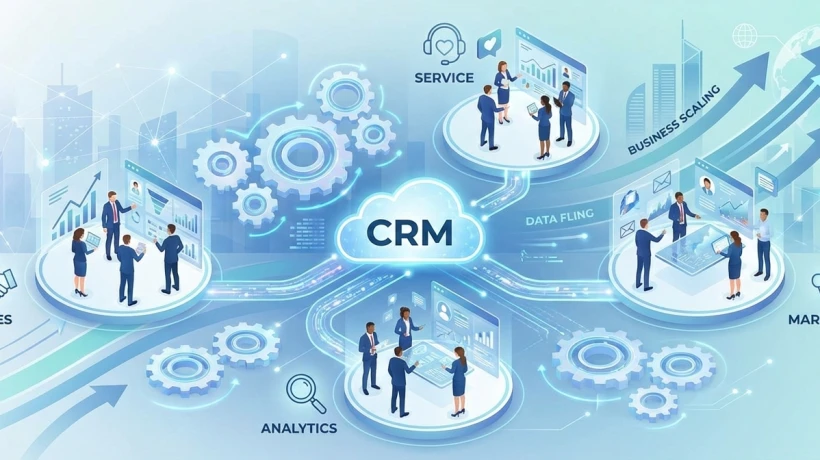
Scaling a business requires more than ambition — it demands systems built for growth. This article explores how Salesforce implementation partners help organizations streamline processes, improve data accuracy, automate workflows, and integrate systems for faster, smarter scaling. Learn how the right CRM strategy becomes a long-term growth engine.
Growth sounds exciting, yet scaling a business brings complex challenges. Systems break under pressure. Teams struggle with disconnected data. Leaders lose visibility into performance. As operations expand, manual processes create delays and costly errors. Therefore, companies need technology that grows with them, not against them.
This is where experienced Salesforce Implementation companies step in to guide structured expansion. They do more than install software. Instead, they design scalable systems, streamline workflows, and align technology with business goals. As a result, organizations gain the foundation needed to grow confidently without operational chaos.
Scaling successfully requires a clear strategy, strong processes, and reliable data. However, most businesses lack the internal resources to design enterprise-level CRM systems alone. Implementation experts fill this gap by translating growth plans into practical system architecture. Consequently, companies scale faster while avoiding common technical and operational pitfalls.
Understanding the Link Between CRM and Business Growth
A CRM platform sits at the center of customer-facing operations. Sales, marketing, and service teams rely on it daily. When configured properly, it becomes a powerful growth engine. Yet, when poorly implemented, it slows teams down and blocks visibility.
Scaling businesses need consistent data across departments. For example, marketing must see sales outcomes. Service teams must view customer history. Leadership needs forecasting accuracy. Without integration and structure, these needs remain unmet. Therefore, CRM design directly affects scalability.
Implementation partners assess current processes before building solutions. They identify bottlenecks, duplication, and manual dependencies. Then, they replace these with automated, standardized workflows. As a result, teams work faster and with fewer errors, which supports sustainable growth.
Building Scalable CRM Architecture
Growth requires systems that can handle increasing complexity. New products, markets, and customer segments demand flexible CRM structures. Implementation specialists design data models that adapt to these changes. They plan for expansion from the start.
For instance, they configure objects, fields, and relationships with future needs in mind. They also design role hierarchies that accommodate growing teams. Consequently, companies avoid painful rework later. This foresight saves both time and money.
Moreover, scalable architecture ensures reporting remains accurate as operations expand. Leaders continue to trust dashboards, even as data volume increases. Therefore, strategic decisions remain data-driven during rapid growth phases.
Streamlining Processes Through Automation
Manual work slows scaling efforts. Repetitive tasks consume valuable employee time. In contrast, automation increases efficiency and consistency. Implementation experts identify tasks suitable for automation across sales and service workflows.
For example, lead assignment rules ensure fast follow-ups. Approval processes maintain governance while reducing delays. Automated notifications keep teams aligned without constant meetings. As a result, operations move faster with fewer mistakes.
Additionally, automation reduces dependency on individual employees. Knowledge becomes embedded within the system rather than stored in people’s heads. This stability supports onboarding and team expansion. Therefore, businesses scale without losing operational control.
Improving Data Quality for Better Decisions
Poor data creates poor decisions. Duplicate records confuse sales teams. Missing fields weaken reporting accuracy. Inconsistent formats make integration difficult. Implementation partners address these issues systematically.
They design validation rules that prevent incorrect data entry. They also create standardized naming conventions. Furthermore, they establish deduplication processes to maintain clean records. Consequently, leadership gains confidence in reports and forecasts.
Clean data also improves customer experience. Service teams resolve issues faster with accurate histories. Marketing targets campaigns more precisely. Therefore, data quality directly contributes to revenue growth and customer retention.
Integrating Salesforce With Other Business Systems
Scaling companies rely on multiple tools. ERP systems manage finances. Marketing platforms handle campaigns. Support tools track customer issues. Without integration, teams operate in silos. This disconnect slows growth.
Implementation experts connect Salesforce with these systems. Data flows automatically between platforms. Sales teams see billing status. Finance teams view pipeline forecasts. Support teams access order histories. As a result, collaboration improves across departments.
Integration also eliminates redundant data entry. Employees spend less time updating multiple systems. Instead, they focus on revenue-generating work. Therefore, operational efficiency rises as the business expands.
Enabling Better Reporting and Forecasting
Leaders need visibility to guide scaling decisions. They must understand pipeline health, revenue trends, and customer churn. Implementation professionals design dashboards tailored to business goals. These dashboards provide real-time insights.
They also build forecasting models aligned with sales processes. This alignment improves accuracy. Consequently, leadership can plan hiring, budgeting, and expansion with confidence. Data replaces guesswork during growth phases.
Furthermore, automated reporting reduces manual spreadsheet work. Teams access insights instantly. Therefore, decision cycles become faster and more responsive to market changes.
Supporting User Adoption During Growth
Technology alone does not drive scale. People must use it effectively. Rapid growth often means new hires and evolving roles. Implementation partners focus heavily on user adoption strategies.
They design intuitive interfaces that match real workflows. They also provide training tailored to different roles. Additionally, they gather feedback and refine processes after launch. As a result, employees embrace the system rather than resist it.
High adoption leads to better data, stronger collaboration, and higher productivity. Therefore, user engagement becomes a key driver of successful scaling.
Strengthening Governance and Security
As companies grow, compliance and security risks increase. More users access sensitive data. Regulations may also change with expansion into new markets. Implementation experts establish governance frameworks early.
They define user permissions carefully. They also set approval hierarchies for sensitive actions. Audit trails ensure accountability. Consequently, organizations maintain control while expanding operations.
Strong governance prevents costly compliance issues later. It also builds trust with customers and partners. Therefore, structured security supports long-term growth stability.
Reducing Risk During Rapid Expansion
Scaling introduces uncertainty. New markets may perform unpredictably. Teams may grow faster than processes can handle. Implementation partners reduce risk by building adaptable systems.
They use phased rollouts instead of large, risky deployments. They also document processes for easier replication. Furthermore, they monitor performance metrics after launch. As a result, adjustments happen quickly when challenges arise.
This structured approach ensures growth does not overwhelm internal operations. Therefore, businesses expand confidently without sacrificing service quality.
Driving Long-Term Innovation
Finally, implementation experts prepare organizations for continuous improvement. Growth does not stop after initial scaling. Markets evolve. Customer expectations rise. Technology advances.
A well-implemented Salesforce environment supports innovation. New features can be added without disrupting operations. Automation can expand as processes mature. Integrations can evolve with business strategy. Consequently, the CRM becomes a long-term growth platform.
Instead of reacting to problems, companies proactively explore opportunities. They launch new services faster. They enter new markets with confidence. Therefore, innovation becomes part of daily operations.
Conclusion
Scaling a business requires more than ambition. It demands systems designed for growth, flexibility, and efficiency. Without expert guidance, CRM projects often become obstacles rather than enablers.
Implementation specialists transform Salesforce into a scalable foundation for expansion. They streamline processes, improve data quality, and integrate critical systems. Moreover, they ensure users adopt and trust the platform.
As a result, businesses move faster, make smarter decisions, and deliver better customer experiences. With the right implementation strategy, Salesforce becomes a powerful engine for sustainable, long-term growth


Comments
Login to Comment