How Google Really Evaluates the People Behind Your Website — And What Indian Brands Can Do
26 May, 2026
1589 Views 0 Like(s)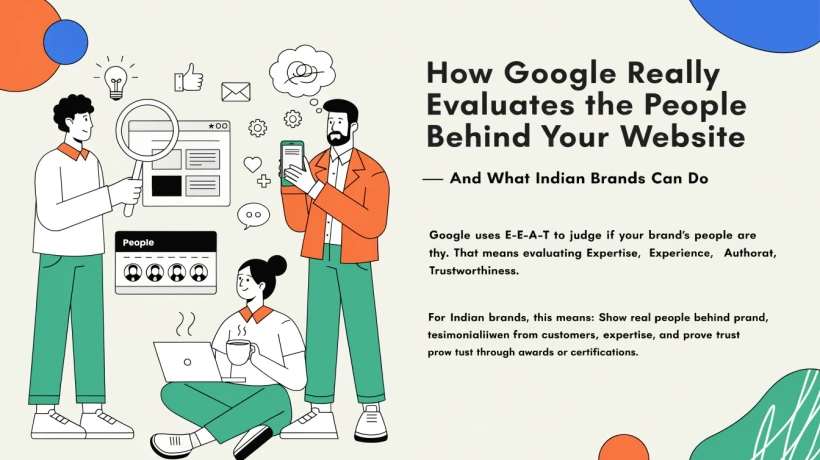
Search engine optimization has changed dramatically over the past few years. Ranking on Google is no longer only about keywords, backlinks, or technical SEO.
Search engine optimization has changed dramatically over the past few years. Ranking on Google is no longer only about keywords, backlinks, or technical SEO. Today, Google increasingly evaluates the credibility of the people behind the content as much as the content itself.
This shift has become especially important after Google introduced stronger emphasis on E-E-A-T signals — Experience, Expertise, Authoritativeness, and Trustworthiness.
For Indian brands, founders, creators, doctors, consultants, financial advisors, SaaS companies, and D2C businesses, this evolution is reshaping how websites build visibility and trust online.
Many brands still focus heavily on publishing SEO content without realizing that Google also wants to understand:
-
Who created the content
-
Why they are qualified
-
Whether they have real-world experience
-
Whether users can trust them
As AI-generated content floods the internet, Google is placing even greater importance on authentic expertise and human credibility.
This is why Founder Pages and E-E-A-T Signals are becoming critical for modern SEO strategies in India.
What Is E-E-A-T?
E-E-A-T stands for:
-
Experience
-
Expertise
-
Authoritativeness
-
Trustworthiness
Google uses these quality signals to evaluate the reliability and usefulness of content, especially for topics that can impact:
-
Health
-
Finance
-
Legal decisions
-
Safety
-
Business outcomes
-
Consumer trust
These are commonly known as “Your Money or Your Life” (YMYL) topics.
Google wants to ensure that content ranking for important queries comes from trustworthy and knowledgeable sources.
For example:
-
Medical content should ideally come from healthcare professionals.
-
Financial advice should reflect expertise and credibility.
-
Business consulting content should demonstrate real operational experience.
This means websites can no longer rely only on anonymous blog publishing strategies.
Why Google Cares About the People Behind Content
The internet is filled with generic, low-quality, and AI-generated articles.
As content volume increases, Google needs better ways to determine:
-
Which information is credible
-
Which websites are trustworthy
-
Which creators have genuine expertise
This is why identity and authorship matter more than ever.
Google increasingly looks for signals that show:
-
Real human involvement
-
Industry experience
-
Public credibility
-
Professional reputation
-
Transparent ownership
A website with visible experts, founder profiles, and authentic contributors often appears more trustworthy than websites with anonymous or unclear authorship.
Founder Visibility Is Becoming an SEO Asset
In India, many brands still treat founder visibility as optional.
However, modern SEO increasingly rewards businesses that clearly showcase:
-
Founders
-
Subject matter experts
-
Leadership teams
-
Industry credentials
-
Real-world experience
Founder visibility creates stronger trust signals for both users and search engines.
For example:
-
A health startup led by doctors appears more credible.
-
A fintech company with experienced financial experts builds greater trust.
-
A SaaS platform with publicly visible founders demonstrates legitimacy.
Google may not use a single “founder score,” but strong entity-based trust signals can positively influence how content is perceived.
What Are Founder Pages?
Founder pages are dedicated website pages that explain:
-
Who the founder is
-
Their background
-
Industry experience
-
Expertise
-
Achievements
-
Media mentions
-
Professional journey
These pages help establish authority and humanize the brand.
A strong founder page may include:
-
Professional bio
-
Experience timeline
-
Certifications
-
Publications
-
Speaking engagements
-
Interviews
-
LinkedIn profile
-
Company mission
Founder pages are especially useful for:
-
D2C brands
-
SaaS companies
-
Healthcare platforms
-
Agencies
-
Finance businesses
-
Coaches and consultants
They create transparency, which is a major trust signal.
Why Indian Brands Often Ignore E-E-A-T
Many Indian websites still prioritize:
-
High-volume blogging
-
Aggressive keyword targeting
-
Cheap SEO content
-
AI-generated articles
-
Backlink quantity
while ignoring credibility signals.
This creates a major gap.
As Google improves quality evaluation systems, websites without clear expertise signals may struggle to maintain long-term rankings.
Brands often underestimate how much users care about:
-
Who wrote the content
-
Whether the company is legitimate
-
Whether expertise is real
-
Whether advice can be trusted
Trust is becoming a ranking advantage.
Experience Is Becoming More Important Than Generic Expertise
One of the biggest changes in Google’s E-E-A-T framework is the added emphasis on “Experience.”
Google increasingly values firsthand knowledge and real-world usage.
For example:
-
A dermatologist sharing skincare insights
-
A founder discussing startup scaling challenges
-
A parent reviewing baby products
-
A surgeon explaining medical procedures
This type of lived experience creates stronger authenticity signals than generic rewritten content.
Indian brands can benefit enormously by creating content rooted in:
-
Actual business experience
-
Real customer stories
-
Founder insights
-
Industry observations
-
Case studies
-
Operational learnings
Experience-driven content is harder to replicate and more valuable to users.
Personal Branding Helps SEO
Many founders still separate personal branding from SEO strategy.
In reality, they increasingly support each other.
When founders:
-
Publish insights
-
Speak publicly
-
Participate in podcasts
-
Write LinkedIn posts
-
Give interviews
-
Build industry recognition
they strengthen the authority signals connected to their brand.
Search engines can better associate expertise with the company itself.
This is especially important for:
-
B2B companies
-
Consulting firms
-
SaaS startups
-
Healthcare businesses
-
Financial services
-
Agencies
The stronger the founder’s digital footprint, the stronger the trust ecosystem around the website.
Author Pages Also Matter
Beyond founders, websites should also showcase content contributors clearly.
Author pages help establish:
-
Subject matter expertise
-
Industry relevance
-
Professional credibility
Good author pages may include:
-
Bio information
-
Professional qualifications
-
Social profiles
-
Areas of expertise
-
Published articles
Anonymous content publishing is becoming less effective in competitive SEO environments.
Trust Signals Extend Beyond Content
Google evaluates trust using multiple website signals.
These may include:
-
Transparent contact information
-
About pages
-
Privacy policies
-
HTTPS security
-
Business mentions
-
Customer reviews
-
External references
-
Consistent branding
-
Reputation signals
Indian brands should think of trust as an ecosystem rather than a single SEO tactic.
Every trust signal contributes to how users and search engines perceive the business.
AI Content Makes Human Credibility More Valuable
AI-generated content is rapidly increasing across the web.
As a result, human credibility is becoming more important.
Google is not automatically against AI-generated content, but it strongly prioritizes:
-
Originality
-
Value
-
Accuracy
-
Real expertise
-
Authenticity
Brands that combine AI efficiency with genuine human expertise are likely to perform better than brands publishing mass-produced generic content.
This is why founder-led and expert-driven content strategies are gaining momentum.
How Indian Brands Can Strengthen E-E-A-T Signals
Create Detailed Founder Pages
Clearly explain the founder’s expertise, journey, and professional background.
Add Real Author Profiles
Show who creates content and why they are qualified.
Publish Experience-Driven Insights
Share operational learnings, case studies, and firsthand experiences.
Improve Website Transparency
Include:
-
Contact details
-
Team pages
-
Policies
-
Company information
Build Public Credibility
Encourage founders and experts to:
-
Publish online
-
Speak at events
-
Participate in interviews
-
Contribute to industry discussions
Focus on Quality Over Volume
High-quality expert content performs better long term than mass-produced generic articles.
E-E-A-T Is Becoming a Long-Term Competitive Advantage
SEO is evolving from pure keyword optimization into trust optimization.
In the future, the brands that win organic visibility will not simply publish more content. They will build stronger credibility ecosystems around their websites.
For Indian businesses, this means:
-
Investing in founder visibility
-
Strengthening expertise signals
-
Building transparent brands
-
Creating authentic content
-
Demonstrating real-world experience
As Google continues improving search quality systems, the people behind websites will increasingly influence how brands rank online.
The companies that understand this early will gain a major long-term advantage in organic search visibility and customer trust.
FAQs:
1. What does E-E-A-T stand for?
E-E-A-T stands for Experience, Expertise, Authoritativeness, and Trustworthiness.
2. Why is E-E-A-T important for SEO?
Google uses E-E-A-T signals to evaluate the credibility and quality of website content.
3. What are founder pages?
Founder pages are dedicated pages showcasing the founder’s background, expertise, experience, and professional credibility.
4. How do founder pages help SEO?
Founder pages improve trust signals and help search engines understand the expertise behind a website.
5. Does Google evaluate website authors?
Yes, Google increasingly evaluates the credibility and expertise of content creators and contributors.



Comments
Login to Comment