Energy Crop Pellets Could Change the Biopellet Energy Growth Equation
16 Sep, 2026
7 Views 0 Like(s)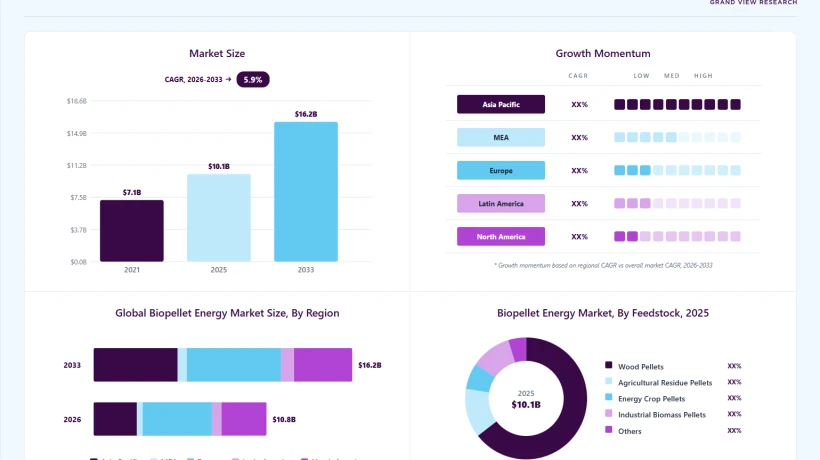
The global biopellet energy market size was valued at USD 10.1 billion in 2025 and is projected to grow from USD 10.8 billion in 2026 to USD 16.2 billion by 2033, at a CAGR of 5.9% from 2026 to 2033.
The biopellet energy market is expanding as governments, utilities, and industrial users increasingly adopt biomass-based energy solutions to reduce dependence on fossil fuels and support decarbonization goals. The market was valued at USD 10.1 billion in 2025 and is projected to grow from USD 10.8 billion in 2026 to USD 16.2 billion by 2033, advancing at a CAGR of 5.9% from 2026 to 2033. Rising investments in biomass power generation, heating applications, industrial energy, and combined heat and power systems are strengthening the market's growth trajectory.
Renewable Energy Demand Creates New Growth Opportunities
The increasing adoption of renewable energy and low-carbon fuel alternatives is a major factor supporting biopellet energy market growth. Governments, utilities, and industrial sectors are increasingly using biomass-based energy solutions to support decarbonization targets, reduce greenhouse gas emissions, and lower reliance on conventional fossil fuels.
Supportive renewable energy mandates, carbon-reduction programs, biomass incentives, and emissions regulations are improving the commercial viability of biopellet projects. This environment is encouraging investments in pellet production capacity, biomass processing infrastructure, storage facilities, and supply-chain networks.
Wood Pellets Maintain a Strong Market Position
Wood pellets accounted for the largest feedstock revenue share of 64.50% in 2025, supported by widespread use across power generation, residential heating, and industrial energy applications. Established production infrastructure and strong feedstock availability further reinforce their position.
Wood pellets offer higher energy density, uniform combustion performance, lower moisture content, and easier storage and transportation compared with several alternative biomass fuels. Coal-to-biomass conversion projects and long-term supply agreements are also contributing to continued demand.
Meanwhile, energy crop pellets are expected to register the fastest CAGR of 9.8% from 2026 to 2033. Growing interest in dedicated renewable biomass feedstocks, predictable yields, shorter cultivation cycles, and improved supply reliability is creating opportunities for this segment.
Industrial Applications Become an Important Growth Engine
The utilities segment accounted for the largest end-use revenue share of 36.34% in 2025, driven by increasing adoption of biopellets in utility-scale power and heat generation. Their compatibility with existing infrastructure, reliable energy output, and lower lifecycle emissions compared with fossil fuels support continued adoption.
At the same time, the industrial segment is projected to grow at the fastest CAGR of 10.2% from 2026 to 2033. Manufacturing, processing, and energy-intensive industries are increasingly using biomass-based fuels for industrial heat and energy generation while pursuing emission-reduction and sustainability objectives.
Power Generation Leads While Industrial Energy Gains Pace
Power generation captured the largest application revenue share of 37.00% in 2025. Biopellets are increasingly utilized in utility-scale power plants because of their high energy density, ease of handling, and compatibility with existing coal-fired generation assets through co-firing and conversion projects.
Industrial energy, however, is expected to record the fastest application CAGR of 8.9% from 2026 to 2033. Rising investments in biomass combustion systems, renewable heat, and energy-efficiency initiatives are creating additional demand from energy-intensive industries.
Regional Expansion Supports the Market Outlook
Europe held the largest revenue share of 40.50% in 2025, supported by renewable energy targets, established biomass supply chains, widespread biomass utilization, and decarbonization policies. Biopellets are increasingly used for residential heating, industrial energy, and power generation.
Asia Pacific is expected to register the fastest CAGR from 2026 to 2033, supported by increasing energy demand, renewable fuel adoption, and expanding biomass energy infrastructure. Growing investments in biomass-based power generation and imports of industrial pellets are expected to create additional opportunities.
Supply Chain Challenges and Technology Shape Future Growth
Despite strong opportunities, high capital requirements for pellet manufacturing, feedstock collection, processing, storage, and transportation remain key challenges. Seasonal biomass availability, raw material cost fluctuations, transportation limitations, and sustainability requirements can affect production efficiency and profitability.
Technology advancement is therefore becoming increasingly important. Improvements in pellet production, expanding sustainable biomass availability, and stronger supply-chain infrastructure can support market expansion. Recent industry developments also demonstrate continued investment in production efficiency and supply reliability.
FAQ
What is driving biopellet energy market growth?
Rising demand for renewable energy and low-carbon fuel alternatives, together with supportive renewable energy policies and investments in biomass infrastructure, is driving market expansion.
Which segment leads the biopellet energy market?
Wood pellets led the feedstock segment with a 64.50% revenue share in 2025, while power generation led applications with a 37.00% revenue share in 2025.
Key Biopellet Energy Companies:
· Enviva Holdings
· Drax Group
· Pinnacle Renewable Energy
· Green Circle Bio Energy
About us:
Grand View Research, a market research and consulting company, provides syndicated research reports, customized research reports, and consulting services. Grand View Research database is used by the world's renowned academic institutions and Fortune 500 companies to understand the global and regional business environment. Our database features thousands of statistics and in-depth analysis on 46 industries in 25 major countries worldwide.

Comments
Login to Comment