AutoML Tools That Speed Up ML Workflows
06 May, 2026
1817 Views 0 Like(s)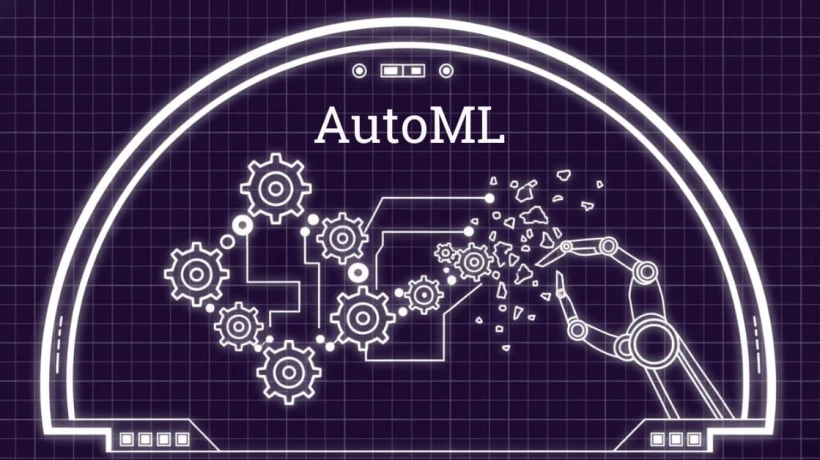
Explore AutoML tools that speed up machine learning workflows by automating data preprocessing, model selection, hyperparameter tuning, and deployment processes.
Machine learning has become an essential part of modern business operations, helping organizations automate decision-making, analyze patterns, and generate predictive insights from data. However, building machine learning models traditionally requires expertise in data preprocessing, feature engineering, model selection, hyperparameter tuning, and deployment. These processes can be time-consuming and technically demanding, especially for beginners or teams with limited machine learning expertise.
AutoML, or Automated Machine Learning, simplifies this workflow by automating many repetitive and complex tasks involved in model development. It enables users to build, train, evaluate, and deploy machine learning models more efficiently while reducing manual effort. AutoML tools are widely used by businesses, developers, and analysts to accelerate machine learning projects and improve productivity. Learning these technologies through a Machine Learning Course in Chennai helps professionals understand practical AI workflows and modern model development approaches.
What Is AutoML?
AutoML refers to the usage of software tools and platforms for automating machine learning processes.
Instead of manually building every stage of the machine learning pipeline, users can rely on AutoML platforms to perform tasks such as:
-
Data preprocessing
-
Feature selection
-
Model selection
-
Hyperparameter tuning
-
Model evaluation
-
Deployment support
This reduces technical barriers and makes machine learning more accessible to non-experts while also helping experienced practitioners save time.
AutoML does not replace data scientists or machine learning engineers, but it improves efficiency by automating repetitive workflows.
Why AutoML Is Important in ML Workflows
Traditional machine learning workflows can be resource-intensive.
A typical ML project involves collecting data, cleaning datasets, engineering features, training multiple algorithms, tuning parameters, validating models, and deploying solutions.
Each stage requires time, experimentation, and technical expertise.
AutoML accelerates these processes by automatically testing different algorithms, tuning configurations, and selecting high-performing models.
Benefits of AutoML include:
-
Faster model development
-
Reduced manual effort
-
Improved experimentation efficiency
-
Lower technical barriers
-
Faster deployment cycles
This makes AutoML highly valuable for organizations aiming to integrate machine learning into business operations quickly.
Popular AutoML Tools
Several AutoML tools help accelerate machine learning workflows across industries.
Google Cloud AutoML
Google Cloud AutoML is a cloud-based platform designed to simplify machine learning model development.
It enables users to train custom models for:
-
Image classification
-
Natural language processing
-
Video analysis
-
Structured data prediction
Google Cloud AutoML offers user-friendly interfaces and integrates well with cloud infrastructure.
Users can upload data, configure training, and deploy models without extensive coding.
This makes it useful for organizations looking to implement machine learning rapidly.
H2O.ai AutoML
H2O.ai is a widely used open-source AI platform with strong AutoML capabilities.
Its AutoML module automates:
-
Algorithm selection
-
Model training
-
Hyperparameter tuning
-
Ensemble generation
H2O supports multiple algorithms and generates leaderboards ranking model performance.
This helps practitioners quickly compare models and select optimal solutions.
Its flexibility makes it popular among data scientists and enterprise teams.
Professionals exploring practical AI workflows through a Best Training Institute in Chennai often gain exposure to tools like H2O for real-world model development.
Auto-Sklearn
Auto-Sklearn is built on Python’s Scikit-learn library.
It automates machine learning tasks while leveraging familiar Python workflows.
Key features include:
-
Automated model selection
-
Hyperparameter optimization
-
Ensemble learning
-
Data preprocessing pipelines
Auto-Sklearn is useful for developers already working in Python environments.
It improves productivity by reducing repetitive experimentation tasks.
Because of its open-source nature, it is widely used for research and prototyping.
TPOT
TPOT (Tree-based Pipeline Optimization Tool) uses genetic programming to optimize machine learning pipelines automatically.
It explores multiple pipeline combinations and identifies effective workflows.
TPOT automates:
-
Feature preprocessing
-
Model selection
-
Hyperparameter tuning
-
Pipeline optimization
The tool generates optimized Python code, allowing users to review and customize final workflows.
TPOT is particularly valuable for experimentation and pipeline discovery.
Microsoft Azure AutoML
Microsoft Azure AutoML is part of the Azure Machine Learning ecosystem.
It simplifies model building for cloud-based workflows.
Azure AutoML supports:
-
Classification
-
Regression
-
Forecasting
-
Natural language tasks
It automatically tests multiple algorithms and tuning strategies.
Users can deploy models directly within Azure environments.
This integration supports scalable enterprise AI implementation.
DataRobot
DataRobot is an enterprise-focused AutoML platform designed for large-scale machine learning automation.
It provides end-to-end automation for:
-
Data preparation
-
Model training
-
Validation
-
Deployment
-
Monitoring
DataRobot emphasizes business usability and model governance.
Organizations use it to accelerate AI adoption while maintaining compliance and performance oversight.
Its enterprise features make it suitable for business-critical applications.
How AutoML Improves Workflow Speed
AutoML tools accelerate machine learning workflows in multiple ways.
Faster Data Preparation
Preparing datasets often consumes significant project time.
AutoML tools automatically handle tasks such as:
-
Missing value treatment
-
Encoding categorical variables
-
Feature normalization
-
Dataset splitting
This reduces preprocessing effort significantly.
Automated Model Selection
Instead of manually testing algorithms one by one, AutoML platforms evaluate multiple models automatically.
These may include:
-
Decision trees
-
Random forests
-
Gradient boosting
-
Neural networks
-
Logistic regression
Automated experimentation speeds up model discovery.
Hyperparameter Optimization
Hyperparameter tuning can be extremely time-consuming.
AutoML platforms automatically optimize settings such as:
-
Learning rates
-
Tree depth
-
Batch size
-
Regularization parameters
This improves model performance without manual trial and error.
Deployment Support
Many AutoML platforms support deployment workflows.
Users can export models, create APIs, or deploy directly to cloud environments.
This reduces operational delays and shortens time to production.
Limitations of AutoML
Although AutoML offers major benefits, it has limitations.
Potential challenges include:
-
Reduced model interpretability
-
Limited customization
-
Dependence on platform capabilities
-
Higher cloud costs for large experiments
Complex domain-specific problems may still require expert intervention.
AutoML works best as an efficiency enhancer rather than a full replacement for machine learning expertise.
Career Relevance of AutoML
As organizations increasingly adopt AI solutions, understanding AutoML tools is becoming valuable for professionals.
AutoML skills are relevant for:
-
Data analysts
-
Machine learning engineers
-
Business analysts
-
AI developers
Additionally, business professionals exploring AI-driven decision-making often benefit from analytical frameworks taught in a Business School in Chennai, where data-driven strategy is increasingly emphasized.
AutoML tools significantly speed up machine learning workflows by automating repetitive and complex tasks such as preprocessing, model selection, hyperparameter tuning, and deployment.
Platforms like Google Cloud AutoML, H2O.ai, Auto-Sklearn, TPOT, Azure AutoML, and DataRobot help organizations reduce development time while improving productivity.
Although AutoML has limitations in customization and interpretability, it remains a powerful solution for accelerating AI adoption.
As machine learning continues expanding across industries, AutoML tools are becoming essential for organizations seeking faster, more efficient, and scalable model development workflows.
Comments
Login to Comment