AI Audio Data Collection as the Backbone of Voice-Driven Artificial Intelligence
16 Apr, 2026
2130 Views 0 Like(s)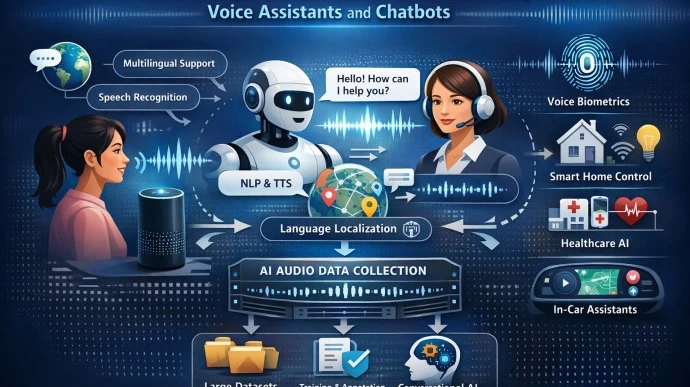
It provides the essential datasets required for training systems to understand and process human speech accurately.
AI Audio Data Collection as the Backbone of Voice-Driven Artificial Intelligence
Introduction
Voice-driven artificial intelligence is no longer a futuristic concept it is now deeply embedded in everyday life. From virtual assistants and voice search to automated customer support and smart devices, voice has become one of the most natural ways for humans to interact with machines. But behind these seamless interactions lies a powerful engine that often goes unnoticed: AI audio data collection.
In 2026, the success of voice-driven systems depends not just on advanced algorithms, but on the quality, diversity, and structure of the audio data used to train them. AI audio data collection has evolved into the backbone of modern voice technologies, enabling machines to understand speech, interpret intent, and respond intelligently.
This article explores how AI audio data collection supports voice-driven AI, why it is essential for scalability, and how it continues to shape the future of intelligent communication systems.
What Is AI Audio Data Collection in Voice-Driven AI?
AI audio data collection refers to the process of gathering voice recordings from diverse sources to train machine learning models. These datasets include variations in language, accent, tone, environment, and conversational context.
In voice-driven artificial intelligence, the objective is not just to convert speech into text, but to create systems that can listen, understand, and respond like humans.
Key insight:
“Voice AI does not begin with algorithms it begins with data.”
Without structured and well-curated audio datasets, even the most advanced systems fail to deliver consistent results.
Why Is AI Audio Data Collection the Backbone of Voice-Driven AI?
How does audio data shape voice recognition systems?
Voice recognition systems rely heavily on the quality of data they are trained on. AI audio data collection ensures that systems can:
-
Recognize different accents and dialects
-
Understand variations in speech patterns
-
Process real-time voice inputs accurately
-
Adapt to diverse environments
By training models on realistic datasets, developers ensure that voice-driven AI performs reliably in real-world conditions.
Why is data diversity critical for global voice AI adoption?
Voice AI systems are used globally, which means they must understand users from different regions and linguistic backgrounds.
AI audio data collection improves global usability by including:
-
Multilingual speech datasets
-
Regional accents and dialects
-
Code-switching behavior (mixing languages)
Highlighted insight:
“Diversity in data is the foundation of inclusivity in voice AI.”
This is especially important in regions like India, where users frequently switch between languages in a single conversation.
Can voice AI function effectively without high-quality data?
The short answer is no. Poor-quality data leads to inaccurate outputs, misinterpretation of commands, and poor user experience.
AI audio data collection focuses on:
-
Clean and high-resolution recordings
-
Accurate transcription and labeling
-
Balanced datasets across demographics
Important takeaway:
“Garbage in, garbage out data quality defines AI performance.”
How Does AI Audio Data Collection Enable Real-Time Voice Intelligence?
Voice-driven AI systems must operate in real time, processing speech instantly and delivering responses without delay.
AI audio data collection enables this by:
-
Training models on real-time conversational datasets
-
Including fast-paced speech and interruptions
-
Simulating real-world usage scenarios
This allows systems to respond naturally, making interactions feel smooth and human-like.
What Role Does Annotation Play in Voice AI Development?
Raw audio data alone is not sufficient. It must be annotated to provide context and meaning.
Annotation in AI audio data collection includes:
-
Speech-to-text transcription
-
Speaker identification
-
Emotion tagging
-
Intent classification
“Annotation transforms raw audio into structured intelligence that AI can learn from.”
Proper annotation ensures that voice AI systems can interpret not just words, but also the intent behind them.
How Does AI Audio Data Collection Improve Voice AI Accuracy in Noisy Environments?
Real-world environments are rarely silent. Background noise, overlapping speech, and device distortions can affect performance.
AI audio data collection addresses this by including:
-
Noisy datasets for training
-
Real-life recordings from different environments
-
Variations in audio quality
This prepares voice AI systems to function effectively in everyday scenarios such as busy streets, offices, or homes.
What Industries Depend on Voice-Driven AI Powered by Audio Data?
Customer Experience and Support
-
Voice bots handling customer queries
-
Call center analytics and automation
-
Sentiment analysis for better service
Healthcare
-
Voice-based documentation systems
-
Medical transcription
-
Hands-free assistance for professionals
Automotive
-
Voice-controlled navigation and commands
-
Driver assistance systems
-
Enhanced safety through hands-free interaction
Smart Homes and IoT
-
Voice-enabled devices and automation
-
Personalized home experiences
-
Seamless device integration
Each of these industries relies heavily on AI audio data collection to build accurate and reliable voice systems.
What Challenges Exist in AI Audio Data Collection?
Despite its importance, AI audio data collection presents several challenges:
Data Privacy and Compliance
Voice recordings often contain sensitive information, requiring strict adherence to data protection regulations.
Bias and Representation
Lack of diversity in datasets can result in biased AI systems that fail for certain user groups.
Scalability
Collecting large-scale datasets across multiple regions and languages is complex.
High Annotation Costs
Manual labeling requires expertise and time, increasing operational costs.
Key takeaway:
“Solving data challenges is essential for building ethical and scalable voice AI systems.”
How Are Companies Advancing AI Audio Data Collection in 2026?
Organizations are leveraging modern techniques to improve data collection processes:
-
Crowdsourcing global voice datasets
-
Using AI-assisted annotation tools
-
Implementing automated quality checks
-
Combining synthetic and real-world data
These innovations help create scalable and high-quality datasets for voice-driven AI.
How Can Businesses Leverage AI Audio Data Collection?
Businesses that invest in AI audio data collection gain a competitive edge by:
-
Enhancing user experience through accurate voice interactions
-
Expanding into global markets with multilingual support
-
Improving operational efficiency with automation
-
Gaining insights from voice analytics
For organizations building voice-driven systems, partnering with experts ensures access to reliable, scalable, and high-quality audio datasets tailored to specific business needs.
Final Thoughts
AI audio data collection is not just a supporting component—it is the backbone of voice-driven artificial intelligence in 2026. It enables machines to understand human speech in all its complexity, from accents and emotions to context and intent.
As voice becomes the primary interface for human-machine interaction, the importance of high-quality audio data will continue to grow. Businesses and developers who prioritize data collection will be better positioned to build intelligent, scalable, and globally accessible voice AI systems.
“The future of voice AI depends not just on how machines speak, but on how well they are trained to listen.”
Frequently Asked Questions
Why is AI audio data collection considered the backbone of voice AI?
It provides the essential datasets required for training systems to understand and process human speech accurately.
What makes audio data high quality for AI training?
Clear recordings, diverse speakers, accurate annotation, and real-world scenarios define high-quality audio data.
How does AI audio data collection improve voice AI performance?
It helps systems adapt to different accents, environments, and conversational patterns, improving accuracy and reliability.
What industries benefit most from voice-driven AI?
Customer service, healthcare, automotive, and smart home industries benefit significantly.
Is multilingual data important for voice AI systems?
Yes, it enables systems to operate globally and serve diverse user bases effectively.
How can businesses get started with AI audio data collection?
By partnering with experienced providers and implementing structured data collection and annotation strategies.



Comments
Login to Comment