Why Storytelling Is the Best Way to Teach Kids Cybersecurity
14 Feb, 2026
7722 Views 0 Like(s)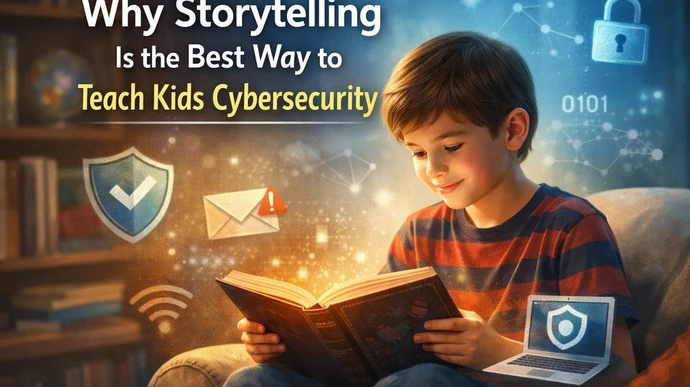
Learn why storytelling is the most effective way to teach kids cybersecurity. Discover how stories help children understand online risks and build safe digital habits.
Introduction
Children today are growing up in a world where the internet is part of everyday life. Online games, learning platforms, messaging apps, and social media have become normal parts of childhood. While technology offers learning and creativity, it also exposes children to risks they may not fully understand. This has made it increasingly important for parents and educators to find effective ways to teach kids cybersecurity without overwhelming or frightening them.
Traditional approaches often rely on rules and warnings. Children are told not to share personal information or not to click unknown links, but these instructions can feel abstract. Without context, many children struggle to understand why these rules matter or how they apply in real situations.
Storytelling offers a different approach. Stories help children connect ideas with emotions and experiences. Instead of memorizing rules, they learn through situations they can imagine and understand. This makes storytelling one of the most effective ways to teach kids cybersecurity in a way that feels natural and memorable.
Why Kids Need Cybersecurity Education Today
Early Internet Exposure and Digital Risks
Children are using digital devices earlier than ever before. Many begin interacting online through games, videos, and educational apps at a young age. As they grow older, online communication becomes more common, increasing exposure to potential risks.
Without guidance, children may not recognize unsafe situations. A friendly message from a stranger, a link promising rewards, or a request for personal details may seem harmless. Early cybersecurity education helps children recognize these situations before they become problems.
Common Cyber Threats Facing Children
Some of the most common online risks for children include phishing attempts, cyberbullying, privacy violations, and unsafe interactions with strangers. These threats are often disguised as normal online activities, which makes them difficult for children to identify.
Teaching children how to recognize these risks requires more than simply listing dangers. They need to understand how and why these situations occur.
Why Traditional Methods Often Fall Short
Cybersecurity education is frequently designed with adults in mind. Technical explanations and strict warnings may communicate urgency, but they do not always create understanding. Children learn best through examples, experiences, and stories that help them visualize outcomes.
When lessons feel disconnected from real life, children are less likely to remember them when it matters most.
How Storytelling Helps Teach Kids Cybersecurity
Simplifying Complex Cyber Concepts
Cybersecurity topics such as privacy, scams, and online manipulation can be difficult to explain in simple terms. Storytelling allows these ideas to be presented through situations children recognize.
For example, a story about a character who trusts the wrong online message can show how scams work without using technical language. Children follow the character’s decisions and naturally understand the lesson through the outcome.
This approach makes it easier to teach kids cybersecurity without turning learning into a lecture.
Emotional Learning Improves Memory
Children remember stories because they connect emotionally with characters and events. When a character experiences a mistake or learns an important lesson, readers often remember that moment long after the story ends.
This emotional connection strengthens learning. Instead of remembering a rule, children remember a situation and the consequences that followed. Over time, this helps them apply similar thinking in their own online experiences.
Story-driven learning is one reason why cybersecurity themes have increasingly appeared in children’s literature. In series such as The Cyber Squad Chronicles, online safety concepts are introduced through adventures and problem-solving scenarios, allowing young readers to understand digital risks through story rather than instruction.
Encouraging Independent Thinking
Another advantage of storytelling is that it encourages children to think rather than simply obey instructions. Stories invite questions. Children begin to ask what the character could have done differently or how a problem could have been avoided.
This process develops critical thinking skills, which are essential for online safety. The internet constantly changes, and children need the ability to evaluate situations independently rather than rely only on memorized rules.
Making Cybersecurity Lessons Practical Through Stories
Learning Through Relatable Characters
Children often learn best when they see themselves reflected in characters. When stories include familiar environments such as school, friendships, or online games, lessons feel realistic rather than theoretical.
Characters allow children to experience mistakes safely. They see consequences unfold without facing real-world risks, which helps them understand why certain online behaviors matter.
Connecting Stories to Real Online Situations
Stories become even more effective when adults connect them to everyday digital habits. After reading or discussing a story, parents and teachers can talk about real situations such as creating strong passwords, recognizing suspicious messages, or deciding what information should remain private.
This connection helps children move from understanding a story to applying the lesson in real life.
Building Confidence Instead of Fear
Many conversations about online safety focus on danger. While awareness is important, fear alone does not prepare children to make good decisions. Storytelling shifts the focus toward problem solving and confidence.
Children learn that mistakes can be avoided and that they have control over their online choices. This encourages them to speak openly with parents or teachers if something online feels uncomfortable.
How Parents and Teachers Can Use Storytelling to Teach Kids Cybersecurity
Choose Age Appropriate Stories
The effectiveness of storytelling depends on relevance. Younger children benefit from simple stories with clear lessons, while older children can understand more complex situations involving social media or digital identity.
Selecting stories that match a child’s level of understanding helps make cybersecurity education more engaging.
Encourage Discussion After Reading
Storytelling becomes more powerful when followed by conversation. Asking questions such as what the character learned or how a situation could have been handled differently encourages deeper thinking.
These discussions help children connect fictional scenarios with real-life decisions.
Reinforce Lessons Through Daily Practice
Stories introduce concepts, but daily habits reinforce them. Families and classrooms can practice safe online behavior together by reviewing privacy settings, discussing online experiences, and creating shared digital safety rules.
Over time, these small actions help children develop responsible online habits naturally.
Long Term Benefits of Story-Based Cybersecurity Learning
When storytelling becomes part of cybersecurity education, the benefits extend beyond immediate safety lessons. Children develop awareness, confidence, and decision-making skills that continue as technology evolves.
They learn to question suspicious situations, respect privacy, and communicate openly about their online experiences. These skills contribute to the development of responsible digital citizens who can navigate online spaces safely and thoughtfully.
About the Author
Lakshmi Srinivasan is a cybersecurity professional, children’s author, and online safety advocate focused on helping families and educators make digital safety understandable for young learners. Through her work, she promotes practical and engaging approaches that help children build awareness and confidence in an increasingly connected world.
Conclusion
Teaching children how to stay safe online requires more than rules and warnings. As digital environments continue to evolve, education methods must also adapt to how children naturally learn and remember information.
Storytelling provides a meaningful way to teach kids cybersecurity by combining learning with emotion, context, and experience. Through relatable characters and realistic situations, children gain a deeper understanding of online risks and how to respond to them responsibly.
When storytelling is supported by open conversations and consistent digital habits, cybersecurity education becomes less about fear and more about empowerment. This approach not only helps children stay safe today but also prepares them to navigate the digital world with confidence in the future.



Comments
Login to Comment