Why Should Every Life Sciences Lab Course Should Teach Fluorescent Microscopy First?
09 Jun, 2026
1441 Views 0 Like(s)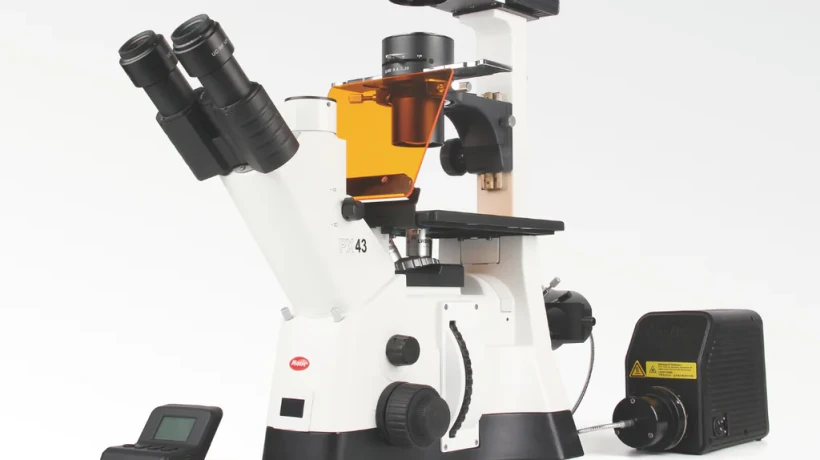
Most science lab classes start the same way. You open a textbook, read about cells and molecules, maybe draw a diagram, and then sit there wondering when any of this is ever going to feel real. A lot of students just zone out at that point. And honestly, who can blame them?
Most science lab classes start the same way. You open a textbook, read about cells and molecules, maybe draw a diagram, and then sit there wondering when any of this is ever going to feel real. A lot of students just zone out at that point. And honestly, who can blame them?
The truth is, that way of starting is just not the most exciting approach. There are better ways to get students hooked on science from the very first day of class.
One of the best things a teacher can do is start with something students can actually see. Not read about. Not copy from a board. Actually see, with their own eyes, right there in the lab.
Why Fluorescent Microscopy Works So Well for Beginners
Okay so imagine looking through a microscope and seeing tiny parts of a cell glowing in bright colors. Not a grey blurry blob. Actual glowing structures, clearly visible, right in front of you. That is what fluorescent microscopes looks like, and it is genuinely one of the coolest things a beginner can experience in a lab setting.
Regular microscopes show you the general shape of things. This type goes further. It uses special markers that attach to specific parts of a cell, and those parts light up when light hits them. The microscope then has filters that help you see only that glowing light. So instead of guessing what you are looking at, you can actually tell.
For a student who just walked into a lab for the first time, that is a huge thing. It removes the confusion that usually comes with looking at unclear images. You see something real, you understand what it is, and you feel like you actually did something. That feeling matters more than most people think.
On top of that, you are learning two things at once without it feeling like too much. You learn a bit about how cells work and also how the equipment works, all at the same time, all in one go.
Seeing Something Makes It Stick
There is a big difference between reading "cells have organelles" and actually seeing an organelle glow bright green through a microscope lens. One of those stays with you. The other one you forget by the time the next class starts.
When students can see the direct result of what they just did, the whole experience becomes more meaningful. You prepared the slide, you placed it under the microscope, and now you are looking at something real. Your brain makes a connection that no textbook ever quite manages to create.
Along the way, students are also picking up practical skills they will use forever. Things like how to handle lab tools carefully, how to prepare a sample the right way, and how to look at something closely and actually pay attention to the details. None of that sounds flashy, but all of it is incredibly important for anyone who wants to work in science one day.
Something else happens too. When a student makes a mistake, which is totally normal and happens to everyone, they can usually see it right away. The image looks wrong. Something did not go as planned. And instead of just moving on and forgetting about it, the student has to stop and figure out what went wrong. That is not a bad thing at all. That is actually exactly how scientists think.
Hard Ideas Become Easy When You Can See Them
Some of the concepts in cell biology are genuinely hard to wrap your head around. Proteins moving to specific spots inside a cell. A cell dividing into two separate cells. An organelle doing its job. These are not easy things to imagine just from reading a description.
But when you see them happening, even through a microscope image, it clicks. It stops being an idea and starts being something you have actually witnessed. That is a completely different kind of understanding, and it tends to last a lot longer.
Students also start asking better questions once they can see things directly. Instead of just trying to memorize facts, they start wondering things on their own. Why is that structure in that part of the cell? What would happen if we changed something? That shift from just memorizing to actually being curious is one of the most important things that can happen to a young science student.
It Also Helps With the Harder Stuff Later On
Science gets more complex as you move up in school. The tools get bigger, the techniques get more detailed, and the ideas get harder to follow. Students who were introduced to imaging early on have a much easier time keeping up.
They already know the basics of how fluorescence works. They already understand why certain tools are used. So when they get to more advanced classes, they are not starting completely fresh. They have something to build on, and that makes a huge difference.
These skills are also useful in many different fields. Whether someone grows up to work in a hospital lab, a research center, or a biotech company, experience with imaging is something that comes up again and again. Starting early gives students a real advantage.
Interested Students Learn Better. Simple As That.
When a student is bored, they are not really learning. They might be sitting in the classroom. They might even be writing things down. But none of it is going in the way it should.
Techniques that produce quick, clear, and visually interesting results naturally keep students interested. They want to look more closely. They want to try changing something and see what happens. They start talking to each other about what they are seeing. That kind of energy in a lab is not accidental. It is what happens when the activity itself is engaging enough to pull people in.
And here is the thing about what you experience firsthand. You remember it. Way better than anything you just read. Students who have seen something through a microscope are going to remember it far longer than students who only heard about it in a lecture.
School Should Prepare You for the Real World
One problem that comes up a lot in science education is that students finish school without actually knowing how to do the things that real labs need. They have the theory down, but they have never really practiced the hands-on work that matters in an actual professional setting.
Starting lab classes with imaging helps fix that. Real research labs depend on visual data. Scientists spend a huge amount of time looking at images, interpreting what they see, and drawing conclusions from them. When students practice those exact skills from day one, they are building habits that will carry into their future careers.
That is the kind of education that actually prepares someone for what comes after school.
One Last Thought
How a lab class starts has a big impact on how students feel about science for a long time after. Starting with something they can see, something that looks amazing and feels hands-on and real, gives students a reason to care. It teaches them real skills. It helps them understand big ideas more easily. And it shows them what science actually looks like outside of a classroom.
Sometimes the best decision a teacher can make is simply choosing a better place to begin.

Comments
Login to Comment