Why Do Wastewater Lift Stations Need Upgrades Right Now?
26 Aug, 2026
496 Views 0 Like(s)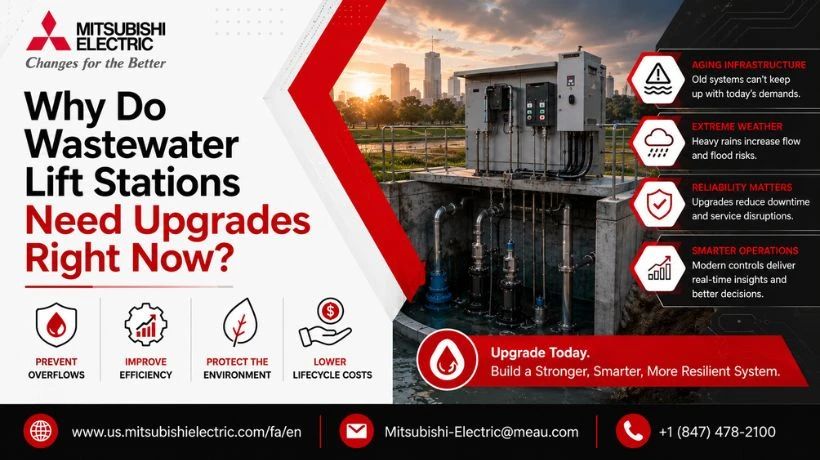
Many wastewater lift stations have been running for years with equipment built for totally different demands. Population expansion, aging components, rising operating expenses and more demands on system reliability are placing increasing pressure on municipal infrastructure. Wastewater lift station upgrades are becoming a necessity for many towns to maintain dependability in wastewater collection and prepare for future needs.
Many wastewater lift stations have been running for years with equipment built for totally different demands. Population expansion, aging components, rising operating expenses and more demands on system reliability are placing increasing pressure on municipal infrastructure. Wastewater lift station upgrades are becoming a necessity for many towns to maintain dependability in wastewater collection and prepare for future needs.
Waiting for a significant component to fail might lead to costly emergency repairs and operating delays. With a scheduled overhaul, towns have an opportunity to look at the whole system and fix problems before they get harder to deal with.
Aging Equipment Is Becoming Harder to Ignore
Lift stations are complex systems with several components working together. Pumps, motors, controllers, sensors, valves and electrical equipment can all suffer wear and tear after years of continuous operation.
Older systems could also require additional maintenance. In other circumstances, parts could be harder to replace and harder to fix if something goes wrong unexpectedly.
Reliability Can Decline Over Time
Sometimes equipment doesn’t just break down suddenly. If a system is subjected to more stress, it may show itself in the form of performance variations, longer working cycles and higher maintenance requirements.
Regular reporting of wastewater lift station reporting can assist operators in identifying these tendencies and better understanding what equipment may need attention.
Emergency Repairs Can Disrupt Long-Term Planning
Municipalities often have to make quick decisions after an unexpected failure. Emergency repairs may be necessary, but they don’t always allow for a chance to determine if the entire station requires modernization.
Planning improvements in advance allows utilities more time to think about options, budgets and future capacity needs.
Growing Communities Create New Capacity Demands
Residential development , commercial growth , and industrial activities , all contribute to increasing wastewater volume in a collecting system .
A lift station that previously had typical flows may now operate closer to its maximum capacity for a longer period of time. This might put additional load on pumps and other equipment.
This is why wastewater lift station upgrades must address not just present conditions, but also anticipated expansion within the service area.
Flow Patterns Can Change
Population growth isn’t the sole thing impacting wastewater flow. Developments may alter the timing and location of peak demand.
Engineers may need to determine if existing pumps and controls can adequately respond to these changing conditions.
Future Capacity Should Be Part of the Plan
An update can also be a chance to make way for future expansion. Just designing for today’s needs could mean more infrastructure work sooner than intended.
Equipment and control scalability allows for additional flexibility in the face of future uncertainties.
Energy Costs Are Influencing Upgrade Decisions
Lift stations pump the wastewater through the collection system when needed. Over time, inefficient pumps and motor systems can lead to higher running expenses.
Modern equipment may enable facilities to better match pumping operations with changing flow conditions.
Variable Control Can Improve Operations
Motor controls can help manage equipment performance, rather than rely on fixed working patterns.
This flexibility can save wasteful energy use while allowing for more consistent system operation.
Automation Is Becoming More Common
Utilities are increasingly turning to automation to improve the monitoring and management of infrastructure. Equipment functioning can be aligned to actual conditions using sensors, programmable controls, and communications systems.
Another use is conveyor system automation although the same basic concepts of automated monitoring and coordinated equipment management can allow efficient industrial and infrastructure operations.
Automated Systems Can Respond to Changing Conditions
It is possible to design a control system that will adapt to changes in water levels or operational circumstances.
This could decrease the need for continual manual adjustments and help with more consistent operating of equipment.
Connected Systems Need Proper Planning
As lift stations become more linked, towns must also consider cybersecurity, user access, and communication dependability.
Besides mechanical and electrical renovations, digital upgrades must be planned.
Complete System Reviews Can Prevent Missed Problems
Replacing one bad pump can fix an immediate problem, but it doesn't fix the other old parts.
A full examination could cover pumps, motors, controllers, electrical systems, backup power, monitoring devices and communication infrastructure.
This larger approach is the basis for the design of many wastewater lift station solutions, as system reliability is a function of more than one component.
Resilience Is Becoming a Planning Priority
Heavy rain, changing weather patterns and higher flows can throw an extra strain on infrastructure.
Modernization helps towns to check if present systems are in shape for demanding operational conditions.
Delaying Upgrades Can Increase Future Costs
And if you wait for equipment to fail, you could be stuck with emergency bills and little options. Planned modernization enables towns to prioritize upgrades and to schedule projects in relation to available budgets.
The need for wastewater lift station upgrades may be more evident as maintenance costs increase, equipment performance becomes erratic or system capacity is pushed to its limits.
We can help communities solve these problems sooner, so that they have reliable service and are not under the pressure of unexpected infrastructure failures.
FAQs
What are common signs that a wastewater lift station needs an upgrade?
Frequent equipment failures, growing maintenance costs, variable pump performance, inadequate monitoring capabilities and insufficient capacity all point to the need to review modernization.
Do lift station upgrades always require replacing every component?
No. The scope depends on the present equipment's condition and the facility's operational needs. Some projects may be control or electrical system oriented, others may be more general updating.
How can municipalities prioritize multiple lift station projects?
Utilities can analyze parameters like equipment condition, failure history, capacity restrictions, costs of maintenance, operational risk and importance of each station to the overall collecting system.
Conclusion
Wastewater collection needs technology that can handle today's needs and adapt to tomorrow's requirements. The combination of growing capacity demands, aging infrastructure, rising energy prices and limited operational visibility is offering municipalities greater reasons to reexamine their systems today. By planning thoughtfully for wastewater lift station upgrades, you may increase reliability, tighten monitoring and help make smarter long-term infrastructure decisions before small concerns become big operational difficulties.



Comments
Login to Comment