Aluminum Air Piping Installation: A Complete Guide for Industrial Facilities in India
11 Oct, 2026
15 Views 0 Like(s)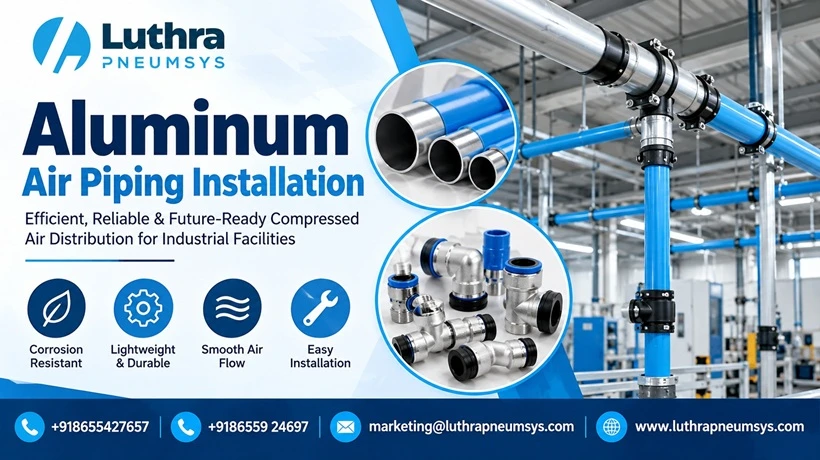
Explore aluminum air piping installation for industrial facilities in India. Learn about system design, installation benefits, pipe sizing and maintenance.
Modern manufacturing facilities require a reliable compressed air supply to operate pneumatic tools, automated machinery, packaging equipment and production lines. A properly designed distribution network ensures compressed air reaches every workstation with suitable pressure and flow. Aluminum air piping installation is a practical solution for industrial facilities seeking efficient air distribution, easier maintenance and flexible system expansion.
In India, manufacturing plants are increasingly focused on improving operational efficiency, reducing compressed air losses and maintaining consistent equipment performance. An aluminium compressed air piping system can support these goals through its lightweight construction, corrosion resistance and smooth internal surface. When installed correctly, it helps establish a dependable network that supports present production requirements and future industrial growth.
The performance of an air distribution network depends on more than the compressor alone. Pipe diameter, route length, fitting selection, operating pressure and moisture management all influence the quality of air delivery. Choosing a suitable piping layout and using compatible components during installation helps businesses create an organised and dependable compressed air infrastructure.
What Is Aluminum Air Piping Installation?
Aluminum air piping installation involves planning, assembling and commissioning a piping network that transports compressed air from the compressor room to machinery, tools and other points of use. The system generally includes aluminium pipes, connectors, elbows, tees, reducers, isolation valves, brackets and outlet connections. Depending on the application, it may also incorporate air dryers, filters, receivers and condensate drainage equipment.
Unlike conventional pipework that may require extensive threading or welding, purpose-built modular aluminium systems use compatible mechanical fittings to simplify assembly. This can make installation and future modifications more convenient, particularly in factories where equipment locations and production requirements change over time.
The installation process begins with understanding the facility's compressed air demand and operating conditions. Engineers assess the compressor capacity, working pressure, distance between equipment and number of simultaneous air-consuming machines. These details help determine the appropriate pipe diameter, distribution layout and accessories required for reliable operation.
Benefits of Aluminium Compressed Air Piping Systems
One significant advantage of aluminium piping is its resistance to rust-related contamination. Unlike ferrous steel pipes, aluminium does not develop iron rust, helping reduce the risk of rust particles entering downstream equipment. This can be valuable in manufacturing environments where air cleanliness supports equipment reliability and product quality. Appropriate filtration and air treatment remain essential for applications with specific air purity requirements.
Another important benefit is the smooth internal surface of purpose-designed aluminium pipes. A properly sized system can help reduce airflow resistance and pressure losses across the distribution network. Maintaining suitable pressure at the point of use allows pneumatic equipment to operate as intended and may reduce the need to compensate for piping losses by increasing compressor discharge pressure.
Aluminium piping is also lightweight compared with many traditional steel alternatives, making components easier to handle during installation. Modular fittings can simplify the creation of branches, workstation connections and additional air outlets. For facilities planning production expansion, these characteristics can make aluminium air distribution systems a practical long-term investment.
Key Steps in Aluminum Air Piping Installation
Planning and System Design
Successful aluminum air piping installation begins with a detailed assessment of the industrial facility. The design should account for current and anticipated compressed air consumption, compressor output, working pressure and the distance between the air source and equipment. Identifying high-demand machines and possible future expansion areas helps prevent undersized pipework and unnecessary modifications.
The piping route should minimise avoidable restrictions, excessive bends and unnecessary changes in direction. Depending on the building layout and air demand, a ring-main configuration may help distribute air more evenly across multiple workstations. Branch lines and isolation valves should be positioned to provide convenient access for operation and maintenance.
Pipe Sizing and Component Selection
Selecting the correct pipe diameter is essential for maintaining airflow and controlling pressure drop. Undersized piping can restrict air delivery during periods of high demand, while unsuitable fittings may introduce additional resistance. The complete network should be sized according to calculated airflow, pipe length, operating pressure and the acceptable pressure loss for the application.
All pipes, connectors and valves must be compatible with the intended service conditions. Before installation, confirm the manufacturer's pressure and temperature ratings, connection requirements and applicable safety standards. Using components from a suitable, compatible system helps improve connection reliability and simplifies maintenance throughout the operating life of the installation.
Assembly and Installation
During assembly, installers should follow the manufacturer's instructions for cutting, preparing, joining and supporting aluminium pipes. Pipes must be aligned correctly, connections secured using the specified procedure and brackets installed at suitable intervals. Supports should accommodate the system design and prevent excessive movement, vibration or stress on fittings.
Air treatment and condensate management must also be considered. Compressed air can contain moisture, which may accumulate in parts of the network if drainage is poorly planned. Appropriate dryers, filters, drain points and piping arrangements help manage moisture and protect downstream equipment. Any installation work must be carried out by qualified personnel using components rated for compressed air service.
Applications of Aluminum Air Piping Installation in India
Manufacturing plants use aluminium compressed air piping to supply pneumatic tools, automated production equipment, assembly stations and industrial machinery. Its modular construction can support multiple production zones while making it easier to add outlets as manufacturing requirements change. Proper planning is especially important in facilities where several machines operate simultaneously and require stable air pressure.
Automotive workshops, engineering units and metal fabrication facilities can use aluminium distribution networks for compatible pneumatic applications. Packaging and textile operations may also benefit from organised air distribution that supports production equipment and routine maintenance activities. In each case, the system must be designed according to actual air demand and environmental conditions.
Facilities across India can benefit from evaluating their existing compressed air infrastructure before investing in a new installation. Replacing inefficient or corroded pipework may improve distribution performance, but the expected results depend on the condition of the complete system. Compressor efficiency, air treatment, leakage, piping dimensions and operating practices should all be assessed together.
Factors Affecting Aluminum Air Piping Installation Cost
The cost of aluminum air piping installation depends on several project-specific factors. Total pipe length, pipe diameter, fitting quantities, number of air outlets and the complexity of the facility layout all influence the material and installation requirements. Large industrial networks generally require more components and detailed engineering than small workshop installations.
Building height and accessibility can also affect installation expenses. Overhead pipework may require additional supports, lifting equipment and access arrangements. Other cost considerations include isolation valves, filtration, drainage equipment, system testing and any modifications needed to connect the new network to existing compressors and machinery.
Businesses should evaluate the total cost of ownership rather than focusing exclusively on the initial purchase price. A well-designed system may reduce avoidable pressure losses, simplify future modifications and lower maintenance requirements. Requesting a site assessment and a detailed quotation helps establish the project's scope, component specifications and installation requirements before work begins.
Maintenance Tips for Long-Term Performance
Although aluminium compressed air piping systems can require less maintenance than corroding steel networks, periodic inspections remain important. Operators should check joints, valves, supports and outlet connections for leaks, movement or physical damage. Promptly correcting leaks helps prevent unnecessary compressor operation and wasted energy.
Air dryers, filters and condensate drains should be maintained according to their manufacturers' recommendations. Monitoring pressure at the compressor and at important points of use can help identify restrictions or changes in system performance. If distant machines experience low pressure, inspect the complete distribution network rather than automatically increasing compressor pressure.
Future production changes should also be reflected in the piping design. Before adding new machinery, confirm that the existing compressor capacity, pipe diameter and distribution layout can accommodate the additional demand. Regular inspections and appropriate system upgrades help maintain reliable compressed air delivery while supporting long-term industrial productivity.
Why Choose Professional Aluminum Air Piping Installation?
Professional installation helps ensure that the distribution network is designed around the facility's actual operating requirements. Experienced personnel can assess airflow demand, select suitable pipe sizes, plan routes and identify the fittings and accessories needed for a complete installation. This reduces the likelihood of avoidable design problems and expensive changes after commissioning.
A professional approach also helps ensure that components are installed according to the manufacturer's instructions and tested using an appropriate, approved procedure. The completed network should be checked for leaks, secure supports, correct valve operation and satisfactory pressure delivery under representative operating conditions.
For industrial facilities planning a new compressed air network or upgrading existing pipework, Luthra Pneumsys provides a relevant starting point for exploring aluminium compressed air piping solutions. Businesses can review their requirements and request guidance on a system suited to their production environment, operating pressure and planned expansion.
Conclusion
Aluminum air piping installation can help industrial facilities develop an efficient, organised and adaptable compressed air distribution network. Its corrosion resistance, lightweight construction and modular design make it suitable for many manufacturing environments where reliable air delivery and future flexibility are important.
However, long-term performance depends on proper engineering, accurate pipe sizing, compatible components, effective moisture management and professional installation. Businesses should assess the entire compressed air system before selecting a solution to ensure that the network meets current production demands and accommodates future growth.
For aluminium compressed air piping requirements, visit Luthra Pneumsys at https://luthrapneumsys.com/ to explore the available solution and discuss your industrial installation needs.
Frequently Asked Questions About Aluminum Air Piping Installation
What is aluminum air piping installation?
Aluminum air piping installation is the process of designing and assembling an aluminium pipe network that distributes compressed air from a compressor to machinery, tools and industrial workstations.
What are the main benefits of aluminium air piping?
Key benefits include lightweight construction, resistance to iron rust, smooth internal surfaces and modular connections. Actual system performance depends on pipe sizing, component quality, installation and maintenance.
Is aluminium piping suitable for industrial compressed air systems?
Yes. Purpose-designed aluminium piping systems can be suitable for many industrial compressed air applications when their pressure and temperature ratings, fittings and other specifications match the operating conditions.
How much does aluminum air piping installation cost in India?
The cost depends on pipe length, diameter, fittings, installation complexity, access requirements and additional components. A site assessment and detailed quotation provide a more reliable estimate.
How can pressure loss be reduced in an aluminium piping system?
Correct pipe sizing, sensible routing, suitable fittings, leak prevention and a well-planned distribution layout can help minimise pressure losses. Regularly maintaining filters and air treatment equipment is also important.
Does aluminium air piping require regular maintenance?
Yes. Periodic inspections should check connections, valves, supports and leaks. Filters, dryers and drainage components also require maintenance according to the manufacturer's instructions.
Can an existing compressed air system be upgraded to aluminium piping?
In many facilities, existing pipework can be replaced or upgraded in stages. The approach depends on the current layout, production schedule, pressure requirements and compatibility with the existing compressed air equipment.



Comments
Login to Comment