Why B2B Cross Border Payments Are Becoming Important for Global Trade
26 Aug, 2026
509 Views 0 Like(s)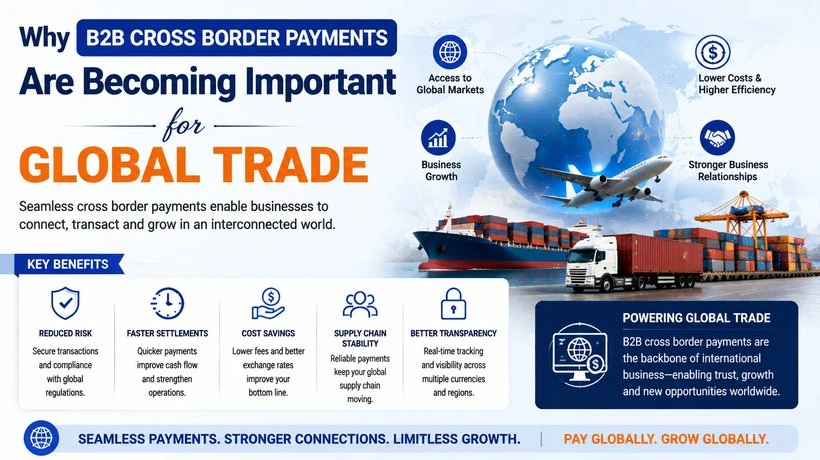
Modern payment solutions help businesses overcome challenges related to currency conversion, transaction speed, compliance, and financial transparency. With the rise of digital commerce, companies are increasingly adopting advanced online payment solutions to simplify global business payments.
Introduction
The growth of globalisation has changed the way businesses operate. Companies are no longer limited to local markets and are increasingly working with international suppliers, distributors, and customers. This expansion has created a strong demand for faster, safer, and more reliable financial transaction methods.
Traditional international payment methods often involve lengthy processing times, high fees, and complex banking procedures. To overcome these challenges, businesses are adopting advanced B2B cross border payments solutions that make international transactions more efficient and accessible.
Whether a company is paying overseas suppliers, receiving payments from global customers, or managing international partnerships, having the right business payment solution plays a crucial role in maintaining smooth financial operations.
What Are B2B Cross Border Payments?
B2B cross border payments refer to financial transactions between businesses located in different countries. These payments allow companies to purchase goods, pay service providers, manage international supply chains, and conduct global operations.
Unlike domestic transactions, international business payments involve multiple factors such as:
- Currency exchange rates
- International banking regulations
- Payment processing networks
- Compliance requirements
- Transaction fees
- Settlement timelines
A reliable cross-border payment system helps businesses handle these complexities while ensuring secure and timely transactions.
As companies continue expanding globally, efficient cross-border payment infrastructure has become a necessity rather than an option.
Growing Importance of Cross Border Payments in Global Trade
1. Supporting International Business Expansion
Businesses today are entering new markets to reach more customers and build stronger partnerships. However, expanding internationally requires a reliable financial system that can support transactions across different regions.
Cross border payments enable businesses to easily send and receive money globally, allowing companies to work with international suppliers, manufacturers, and customers without unnecessary delays.
For example, an e-commerce company in one country can purchase inventory from another country and complete payments through a secure digital payment platform. This improves operational efficiency and strengthens global business relationships.
2. Faster and More Efficient Transactions
Speed is a major factor in modern business operations. Delayed payments can impact supplier relationships, inventory management, and overall cash flow.
Advanced payment solutions provide faster transaction processing compared to traditional banking methods. Businesses can complete international payments more efficiently, reducing waiting periods and improving financial management.
Faster payments also allow companies to respond quickly to market opportunities and maintain better relationships with global partners.
3. Reducing Operational Costs
International transactions often involve multiple intermediaries, which can increase costs. Traditional payment methods may include additional charges for currency conversion, bank transfers, and processing fees.
Modern online payment solutions help businesses reduce these expenses by offering streamlined payment processes and improved transparency.
A well-designed business payment system allows companies to understand transaction costs clearly and choose efficient payment methods according to their requirements.
Lower payment costs help businesses improve profitability while making international trade more accessible.
The Role of Digital Payment Solutions in Global Trade
Technology has transformed the financial industry by introducing digital platforms that simplify international transactions. Businesses now require flexible and scalable payment systems that can support their global operations.
Modern business payment solutions provide features such as:
- Multi-currency payment support
- Real-time transaction tracking
- Automated payment processing
- Improved security controls
- Better reporting and analytics
These features help businesses manage international payments with greater confidence and control.
Digital payment platforms also improve financial visibility by allowing companies to monitor transactions and manage cash flow more effectively.
How Businesses Benefit From Advanced Business Payment Solutions
Improved Cash Flow Management
Cash flow is one of the most important aspects of business success. Delayed payments can create financial challenges, especially for companies operating internationally.
Reliable business payments solutions help companies receive and send funds efficiently, ensuring smoother cash flow management.
With faster settlements and better transaction visibility, businesses can make informed financial decisions and maintain operational stability.
Enhanced Security and Compliance
Security is a major concern when handling international transactions. Businesses need payment systems that protect sensitive financial information and comply with global regulations.
Modern payment solutions include advanced security features such as encryption, fraud monitoring, and authentication processes.
These security measures reduce risks and help businesses conduct international transactions with greater confidence.
Better Supplier and Partner Relationships
Timely payments play an important role in maintaining strong business relationships. Suppliers and partners prefer working with companies that provide consistent and reliable payment processes.
Efficient B2B cross border payments help businesses build trust with international partners by ensuring payments are completed accurately and on time.
Strong payment relationships can lead to better negotiations, improved cooperation, and long-term partnerships.
Challenges in Traditional International Business Payments
Despite advancements in financial technology, businesses still face several challenges when managing international transactions.
Some common challenges include:
High Transaction Fees
Traditional international payments often involve multiple banking networks, increasing overall transaction costs.
Currency Management Issues
Fluctuating exchange rates can impact payment values and create financial uncertainty.
Complex Regulatory Requirements
Different countries have different financial regulations, making compliance management challenging.
Slow Processing Times
Traditional payment methods may take several days to complete, affecting business operations.
These challenges highlight the need for efficient and technology-driven payment systems.
Future Trends in B2B Cross Border Payments
The future of global trade will continue to depend on faster and more intelligent payment technologies. Several trends are shaping the evolution of international business payments.
Increased Adoption of Digital Payment Platforms
More businesses are moving towards digital payment platforms because they provide convenience, speed, and improved control over transactions.
Automation of Payment Processes
Automation will help companies reduce manual work, minimize errors, and improve transaction efficiency.
Greater Transparency Through Technology
Businesses will increasingly demand payment systems that provide real-time tracking and detailed transaction information.
Expansion of Global Commerce
As more companies enter international markets, the demand for reliable B2B cross border payments will continue to increase.
Choosing the Right Business Payment Solution
Selecting the right payment system is essential for businesses involved in global trade. Companies should consider factors such as:
- Transaction speed
- Security features
- Supported currencies
- Integration capabilities
- Compliance support
- Cost efficiency
A suitable business payment solution should align with the company’s operational requirements and provide flexibility for future growth.
Businesses that invest in reliable payment infrastructure can improve efficiency, reduce risks, and strengthen their position in global markets.
Conclusion
Global trade is becoming more connected, and businesses require efficient financial systems to support international operations. B2B cross border payments have become a critical component of modern commerce by enabling faster, safer, and more transparent transactions between companies worldwide.
With the adoption of advanced payment solutions, businesses can overcome traditional payment challenges and improve their global operations. From reducing costs to enhancing security and improving cash flow, modern online payment solutions are helping companies build stronger international connections.
As global markets continue to expand, businesses that adopt reliable business payments infrastructure will be better prepared to compete and grow in the international economy.

Comments
Login to Comment