What to Look for in a Business Payment Solution for International Business Operations
23 Oct, 2026
13 Views 0 Like(s)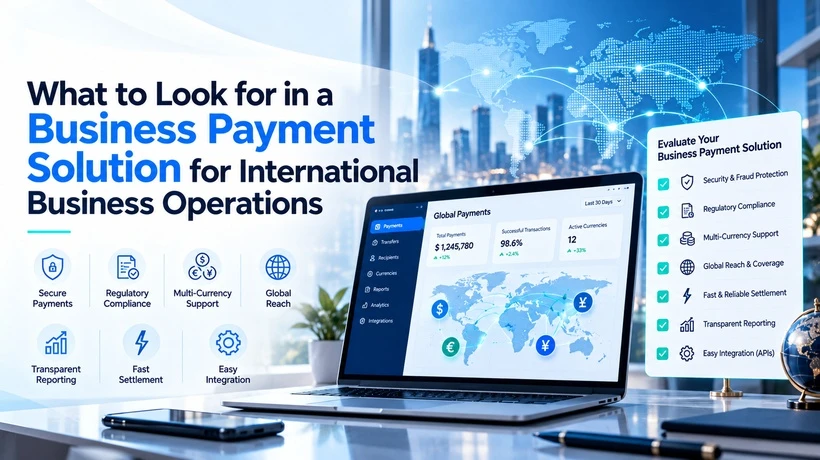
Choosing the right business payment solution is an important decision for companies operating across international markets. Businesses should consider security, scalability, payment methods, transaction visibility, settlement processes, and cross-border capabilities. A suitable payment platform can simplify international operations while supporting efficient and reliable business growth.
Introduction
Expanding internationally creates opportunities to reach new customers, work with global suppliers, and build stronger business networks.
However, international operations also create more complex financial requirements.
Companies need to manage multiple currencies, payment methods, settlement processes, international customers, suppliers, and regulatory environments.
Choosing the right business payment solution can make these processes significantly easier.
The right platform should do more than process transactions. It should help businesses manage payment information, improve financial visibility, support international expansion, and provide reliable transaction experiences.
Businesses should therefore evaluate payment solutions carefully before selecting a provider.
1. Cross-Border Payment Capabilities
International businesses need reliable cross border payments.
Companies should determine whether a payment platform supports the markets where they currently operate and the countries they plan to enter.
Businesses should review:
-
Supported countries
-
Supported currencies
-
Settlement options
-
International payment methods
-
Transaction tracking
A provider that supports future expansion can reduce the need for payment platform changes later.
2. Support for B2B Transactions
Companies working with suppliers, distributors, and enterprise customers should evaluate B2B capabilities.
B2b cross border payments often involve larger transaction amounts and more complex financial processes than consumer payments.
Businesses may need to handle:
-
Supplier invoices
-
Wholesale payments
-
Distributor transactions
-
Enterprise customer collections
-
Service provider fees
A payment platform should provide sufficient transaction information for accounting and reconciliation.
3. Flexible Online Payment Solutions
Digital transactions have become essential for many international businesses.
Customers expect convenient ways to pay through websites, applications, and online portals.
Flexible online payment solutions can support different customer preferences and reduce payment friction.
Businesses should evaluate which payment channels matter most in their target markets.
A convenient payment process can improve customer experience and increase the likelihood that customers complete transactions.
4. Reliable Pay-in Services
Receiving customer payments efficiently is a fundamental requirement.
Strong Pay-in services can help companies organize incoming transactions and maintain better financial visibility.
Businesses should evaluate whether Pay-in services can support:
-
Customer collections
-
Multiple payment channels
-
Transaction tracking
-
Payment reconciliation
-
Financial reporting
Efficient collections also contribute to stronger cash flow.
5. Transaction Security
Security should remain one of the most important considerations when selecting payment infrastructure.
International payment systems handle sensitive financial information and may process transactions across several markets.
Businesses should evaluate:
-
Transaction protection
-
Authentication
-
Access controls
-
Fraud monitoring
-
Data protection
-
Relevant security standards
Strong security protects both businesses and their customers.
6. Scalability
A payment solution should support growth.
A company may start with a limited international presence and expand into several countries over time.
Transaction volumes may also increase significantly.
Scalable payment solutions should accommodate:
-
More transactions
-
Additional users
-
New markets
-
More currencies
-
New payment methods
-
Increased reporting requirements
Businesses should select payment infrastructure based on both current and future needs.
7. Settlement Speed and Predictability
Payment approval and payment settlement are different stages.
Businesses need to understand when collected funds become available.
Settlement speed can affect working capital and operational planning.
Companies should review:
-
Settlement timelines
-
Settlement currencies
-
Market-specific differences
-
Applicable fees
-
Exceptions or delays
Predictable settlement processes make cash flow planning easier.
8. Currency Support
International businesses may receive payments in several currencies.
A suitable business payment solution should provide appropriate currency capabilities for the company's target markets.
Businesses should understand how currency conversion works and what costs may apply.
Clear currency information helps organizations calculate transaction costs and maintain more accurate financial records.
9. Payment Reporting
International operations generate large volumes of financial data.
Finance teams need accurate payment reports to monitor activity and reconcile accounts.
Useful reporting features may include:
-
Transaction history
-
Payment status
-
Settlement details
-
Currency information
-
Failed transactions
-
Refund records
Centralized reporting can save time and improve financial accuracy.
10. Reconciliation Capabilities
Reconciliation becomes increasingly difficult as the number of transactions grows.
Businesses may need to match customer payments with invoices, accounts, or orders.
A payment system that provides organized transaction data can simplify reconciliation.
Automation can make the process even more efficient.
This allows finance teams to spend less time on repetitive administrative work.
11. Integration Options
Payment systems rarely operate independently.
Businesses may need to integrate payment infrastructure with:
-
Websites
-
E-commerce platforms
-
ERP systems
-
Accounting platforms
-
Customer relationship management systems
-
Mobile applications
Good integration capabilities improve automation and reduce duplicate data entry.
12. Reliability
Payment downtime can negatively affect business operations.
Customers may be unable to complete purchases, and finance teams may lose visibility into transactions.
Businesses should therefore consider platform reliability when comparing providers.
A dependable payment system should maintain consistent performance as transaction volumes increase.
13. Customer Experience
Payment infrastructure affects the customer journey.
A difficult or confusing payment process can create unnecessary friction.
Businesses should aim to provide a payment experience that is:
-
Simple
-
Fast
-
Secure
-
Mobile-friendly
-
Transparent
Customer convenience becomes particularly important when companies serve users from several markets.
14. Transparency of Costs
Businesses should understand the full cost of processing business payments.
Costs may vary depending on currency, transaction type, payment method, and market.
Companies should evaluate:
-
Transaction fees
-
Conversion costs
-
Settlement charges
-
Platform fees
-
Other relevant costs
Transparent pricing makes financial planning easier.
15. Support for Business Growth
The best payment solution should align with the company's overall growth strategy.
Businesses should think about where they expect to operate in the next several years.
Payment infrastructure should support expansion rather than restrict it.
Companies should consider whether the platform can adapt to changing payment requirements and increasing transaction complexity.
16. Automation Capabilities
Automation can significantly improve payment efficiency.
Businesses can use automated workflows for:
-
Transaction processing
-
Payment confirmations
-
Reconciliation
-
Financial reporting
-
Settlement tracking
Automation reduces manual workload and improves consistency.
As transaction volumes increase, these benefits become more important.
17. International Financial Visibility
Companies operating across multiple markets need a clear view of financial activity.
Without centralized transaction information, finance teams may struggle to understand payment performance.
A strong business payment solution should help companies monitor transactions across markets and payment channels.
Better visibility supports more informed decision-making.
18. Evaluating Uniteller
Businesses reviewing payment infrastructure may include Uniteller among the providers they evaluate.
The decision should depend on specific business requirements rather than brand recognition alone.
Companies should compare payment providers based on:
-
Target countries
-
Transaction volumes
-
Payment methods
-
Currency requirements
-
Security
-
Integration
-
Settlement needs
-
Reporting capabilities
Businesses should also confirm that the chosen provider aligns with their operational and regulatory requirements.
Creating an Effective International Payment Strategy
Selecting a payment provider is only one part of the process.
Businesses also need an overall payment strategy.
An effective international payment strategy should consider:
-
Customer preferences
-
Supplier requirements
-
Target markets
-
Currency exposure
-
Transaction costs
-
Settlement requirements
-
Security
-
Reporting
Combining these factors helps companies build payment infrastructure that supports sustainable international operations.
Why the Right Payment Solution Matters
Payment infrastructure directly affects several areas of business performance.
A reliable payment system can improve:
Cash Flow
Efficient collections help businesses access funds more predictably.
Customer Experience
Convenient payment options reduce transaction friction.
Operational Efficiency
Automation reduces manual financial tasks.
International Expansion
Strong cross border payments capabilities make new markets easier to manage.
Supplier Relationships
Reliable b2b cross border payments support predictable international supplier transactions.
Financial Control
Centralized reporting improves visibility over company finances.
Conclusion
Choosing the right payment infrastructure is an important strategic decision for businesses operating internationally.
A dependable business payment solution should provide security, scalability, reliable transaction processing, strong reporting, and support for international markets.
Businesses should also evaluate online payment solutions, efficient Pay-in services, currency capabilities, settlement processes, integrations, and transaction costs.
Companies involved in global commerce require reliable cross border payments and efficient b2b cross border payments to maintain customer, supplier, and partner relationships.
By evaluating modern payment solutions carefully and considering providers such as Uniteller based on actual business requirements, companies can build a stronger infrastructure for managing business payments and supporting long-term international growth.



Comments
Login to Comment