The Science Behind GFRP Rebar That Could Transform Concrete Reinforcement
23 Oct, 2026
39 Views 0 Like(s)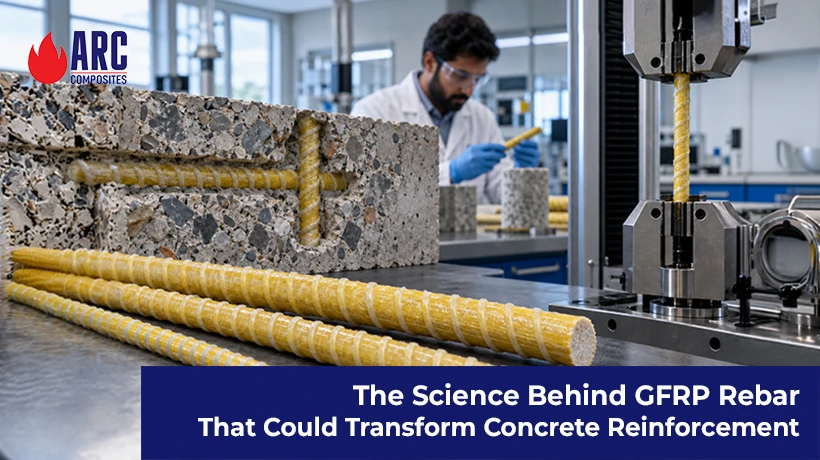
Explore the science behind GFRP rebar, its corrosion resistance, tensile strength, and why it could transform concrete reinforcement.
Steel rebar has a hidden expiration date. The moment moisture and chloride ions reach embedded steel inside concrete, corrosion begins, and that corrosion expands the steel bar, cracks the surrounding concrete, and eventually compromises the entire structure. Bridges, coastal buildings, and parking structures across the world are quietly failing years ahead of schedule because of this exact chemistry problem, and repair costs keep climbing every year.
Engineers and contractors dealing with corrosion prone infrastructure finally have a genuinely different option. The global GFRP rebar market reached approximately USD 1.01 billion in 2026 and continues growing at a compound annual rate exceeding 11 percent, driven largely by infrastructure owners tired of watching steel reinforced concrete fail decades ahead of its intended lifespan.
If you specify materials for construction projects, especially in marine, coastal, or chemically exposed environments, understanding the actual science behind this material will change how you think about reinforcement altogether. Keep reading, because this decision affects structural longevity for generations.
What GFRP Rebar Actually Is at the Material Level?
GFRP rebar stands for glass fiber reinforced polymer rebar, a non-metallic reinforcement built from continuous glass fibers bound together with a resin matrix. Understanding what happens at the material level explains exactly why this product performs so differently from traditional steel reinforcement.
The Core Composition That Defines Performance
Manufacturers typically combine roughly 80 percent glass fiber roving with around 20 percent resin, most commonly vinyl ester resin, which currently holds over 55 percent of total resin market share across GFRP rebar production. This composition gives the finished bar exceptional tensile strength along its length while remaining completely non-metallic, which means it never participates in the electrochemical corrosion process that eventually destroys steel reinforcement embedded in concrete.
How Pultrusion Shapes the Bar's Internal Structure?
The pultrusion process remains the dominant manufacturing method for GFRP rebar production, pulling continuous glass fiber strands through a resin bath and then through a heated die that cures the bar into its final shape. This continuous process aligns every fiber strand in the same direction along the bar's length, delivering consistent strength characteristics from one end of the bar to the other, unlike manufacturing methods that introduce variability through chopped or randomly oriented fibers.
Why Corrosion Resistance Changes the Entire Reinforcement Equation?
Steel corrosion remains the single largest cause of premature concrete failure worldwide. This section explains exactly why GFRP rebar sidesteps that failure mode entirely rather than merely delaying it, along with the chemistry that makes this possible.
The Chemistry Behind Corrosion Free Reinforcement
A question worth answering directly here is, why does GFRP rebar not corrode the way steel rebar does? Steel corrodes through an electrochemical reaction that requires both moisture and an electrically conductive metal surface, and once chloride ions from seawater or deicing salts reach embedded steel, that reaction begins and never stops on its own. GFRP rebar contains no metal at all, so this electrochemical corrosion process simply cannot occur, removing the single biggest cause of concrete deterioration in coastal, marine, and salt exposed structures.
Where This Advantage Delivers the Most Value
Coastal infrastructure, marine piers, bridge decks exposed to deicing salt, and wastewater treatment structures represent the applications benefiting most from corrosion free performance. Rebar diameters between 10 and 20 millimeters currently hold nearly 55 percent of total market share, reflecting the sizes most commonly specified for these demanding structural applications where long-term durability outweighs upfront material cost.
Tensile Strength and How It Compares to Traditional Steel
Reinforcement exists to carry tensile load that concrete alone cannot resist. This section explains how GFRP rebar performs against that fundamental engineering requirement and how it differs mechanically from steel.
Understanding High Strength Classifications
A commonly searched engineering question fits naturally here, is GFRP rebar strong enough to replace steel in structural applications? High strength rebar, rated above 1000 megapascals, currently holds the largest share of the market, reflecting strong industry confidence in composite reinforcement for demanding structural roles. This tensile strength often exceeds that of comparable steel rebar grades, though the two materials behave differently under load, since GFRP exhibits linear elastic behavior all the way to failure rather than the ductile yielding steel displays before breaking.
Why Engineers Must Design Differently for Composite Bars?
This difference in failure behavior means structural engineers cannot simply substitute GFRP rebar into a steel design without recalculating reinforcement ratio and safety factors. Design codes for GFRP reinforced concrete account for this linear elastic property by building in more conservative safety margins, ensuring structures perform reliably even though the material's stress and strain relationship differs fundamentally from steel throughout the loading process.
Lightweight Properties and Their Impact on Construction
Weight matters enormously in construction logistics, transportation, and on site handling. This section covers how GFRP rebar's reduced weight translates into real project advantages across the build process.
Comparing Weight Against Conventional Steel Rebar
GFRP rebar weighs roughly one quarter of comparable steel rebar, which dramatically reduces transportation costs and handling effort on job sites. Construction crews can move, position, and tie GFRP rebar manually with far less physical strain than steel reinforcement requires, and this weight advantage becomes especially valuable on projects with limited crane access or challenging construction logistics.
How Reduced Weight Affects Project Economics
Lighter reinforcement also reduces the dead load a structure must support, which can influence foundation design and overall material requirements across a project. Contractors working on remote infrastructure projects, where transportation costs weigh heavily on total project budget, increasingly find that reduced shipping weight partially offsets the higher per unit cost of GFRP rebar compared to steel.
Electrical and Thermal Properties That Expand Application Range
Beyond corrosion resistance and strength, GFRP rebar brings electrical and thermal characteristics that open up applications steel reinforcement simply cannot serve. This section covers both properties in detail.
Non-Conductive Properties Matter for Specialized Structures
GFRP rebar remains completely non-conductive material, making it the preferred reinforcement choice for structures requiring electromagnetic transparency, such as MRI facilities, research laboratories with sensitive electronic equipment, and structures near high voltage electrical infrastructure. Steel reinforcement interferes with magnetic fields and electrical signals in ways that GFRP simply avoids, since the material contains no conductive metal to disrupt these sensitive environments.
Thermal Behavior Under Varying Conditions
GFRP rebar exhibits different thermal expansion characteristics compared to steel, and engineers account for this during design to ensure compatibility with surrounding concrete across seasonal temperature swings. Resin formulation plays a significant role here, since manufacturers select specific resin systems based on the expected temperature range and environmental exposure the finished structure will face throughout its service life.
Cost Considerations and Long-Term Value Analysis
Upfront material cost remains the most commonly cited barrier to wider GFRP rebar adoption. This section addresses that concern honestly while explaining the fuller financial picture behind the decision.
Why Upfront Pricing Runs Higher Than Steel?
A fair and frequently searched question deserves an honest answer here, is GFRP rebar more expensive than traditional steel reinforcement? Yes, GFRP rebar typically costs between 1.5 and 2 times more than conventional steel reinforcement at the point of procurement, reflecting the specialized manufacturing process and raw material costs involved in composite production. This price gap remains the primary hesitation point for contractors working within tight construction budgets.
How Lifecycle Savings Change the Calculation?
Structures reinforced with GFRP rebar avoid the recurring repair costs tied to corrosion damage, including concrete spalling, cracking, and structural rehabilitation that steel reinforced structures eventually require in aggressive environments. Infrastructure owners calculating total lifecycle cost across several decades increasingly find that eliminating corrosion related repairs delivers stronger long-term financial value, particularly for bridges, marine structures, and coastal buildings where steel corrosion repair costs accumulate rapidly over a structure's service life.
Final Notes
Concrete reinforcement has relied on steel for more than a century, but the science behind that choice is finally being challenged by a material engineered specifically to solve steel's biggest weakness. GFRP rebar delivers corrosion free performance through its non-metallic composition, strong tensile properties through precise pultrusion manufacturing, significant weight advantages for construction logistics, and specialized non-conductive properties that open entirely new application categories.
While upfront costs run higher than conventional steel, the lifecycle savings from eliminating corrosion related repairs make composite reinforcement an increasingly smart choice for bridges, marine structures, and coastal infrastructure. As global demand climbs toward a market value approaching several billion dollars over the coming decade, GFRP rebar is positioned to genuinely transform how engineers approach concrete reinforcement in corrosive and demanding environments.
Reinforce Smarter with ARC GFRP Rebar
Corrosion should never determine how long your structure lasts. ARC Composites manufactures GFRP rebar engineered with precise fiber to resin ratios, high strength classifications, and reliable corrosion free performance built for demanding structural applications.
Whether you are reinforcing coastal infrastructure, bridges, or specialized non-conductive structures, ARC Composites delivers rebar solutions designed for long-term durability. Visit ARC Composites today, explore the complete GFRP rebar product range, and reinforce your next project with a material engineered to outlast conventional steel.
Frequently Asked Questions (FAQs)
1. How long does GFRP rebar typically last in concrete structures?
GFRP rebar commonly lasts fifty to one hundred years in corrosive environments, since it never corrodes the way embedded steel reinforcement eventually does.
2. Can GFRP rebar be used in all types of construction projects?
Yes, though engineers must follow specific design codes accounting for its linear elastic behavior, making it especially suitable for marine, coastal, and specialized structures.
3. Is GFRP rebar heavier or lighter than steel rebar?
GFRP rebar weighs approximately one quarter of comparable steel rebar, significantly reducing transportation costs and easing manual handling during construction.
4. Does GFRP rebar require different installation techniques than steel?
Installation remains similar overall, though engineers follow GFRP specific design codes for bend radius, splice length, and reinforcement ratios during structural design.
5. Why is GFRP rebar preferred for MRI facilities and research labs?
GFRP rebar is completely non-conductive and non-magnetic, avoiding interference with sensitive electronic equipment and magnetic fields that steel reinforcement would disrupt.



Comments
Login to Comment