What is Art, Antique and Jewellery Valuation?
27 Jul, 2026
684 Views 0 Like(s)
Most people own something valuable without truly knowing how much it is worth. And, to know the real worth of the asset you own, you need to get the watch, art, jewellery valuation or relevant valuation of your assets done.
Most people own something valuable without truly knowing how much it is worth. And, to know the real worth of the asset you own, you need to get the watch, art, jewellery valuation or relevant valuation of your assets done. This may bring you to a question: “What is valuation?”
A valuation is a professional evaluation or appraisal of jewellery, art, or an antique piece carried out by a qualified expert. It is not an estimate or an opinion but a formal assessment of an item’s current market value, documented in a legal certificate that can be used for insurance, family settlement, fair market value determination, or sale purposes.
Factors Considered During an Art or Antique Valuations?
Art or Antique valuations involve a complex set of considerations which most owners often do not expect before they go through the process for the first time. There are a number of things that are taken into consideration when a valuer goes for getting the antique or art valuation done. Listed below are a few such considerations:
· Condition: the physical condition of the item in consideration, including any damage, restoration, or deterioration that affects both its integrity and its market value.
· Size: relevant for paintings, sculptures, and furniture where dimensions affect value in category-specific ways.
· Manufacturing date: the timeline in which the stuff was manufactured, be it the time when the art was made or the period of an antique item's creation, is something that significantly affects its value within the relevant collector market.
What Factors Are Considered When Valuing a Jewellery Piece?
Professional jewellery valuations involve a specific and detailed assessment framework that goes considerably beyond simply weighing the metal and noting the stones. When qualified experts from a jewellery valuation service appraise a piece, they consider all the following factors to arrive at an accurate current value:
Metal used: the type, purity, and weight of the metal. The difference between 9 carat, 18 carat, and 22 carat gold, or between sterling silver and platinum, has a direct and significant effect on value independent of any stones or craftsmanship involved.
Diamonds and gems used and their quality: the carat weight, cut, colour, and clarity of any diamonds, as well as the equivalent quality assessments for coloured gemstones. The difference in value between a fine quality diamond and a commercial quality diamond of the same carat weight can be dramatic.
Condition: the physical state of the piece, including wear to the metal, the security of any settings, and the condition of any stones.
Size: relevant to both metal weight and the overall visual impact of the piece within its category.
Brand: pieces from recognised makers and houses carry a premium that reflects their market position independently of the intrinsic material value.
Quality: the overall standard of the piece as an object of fine jewellery, assessed holistically alongside the individual factor assessments above.
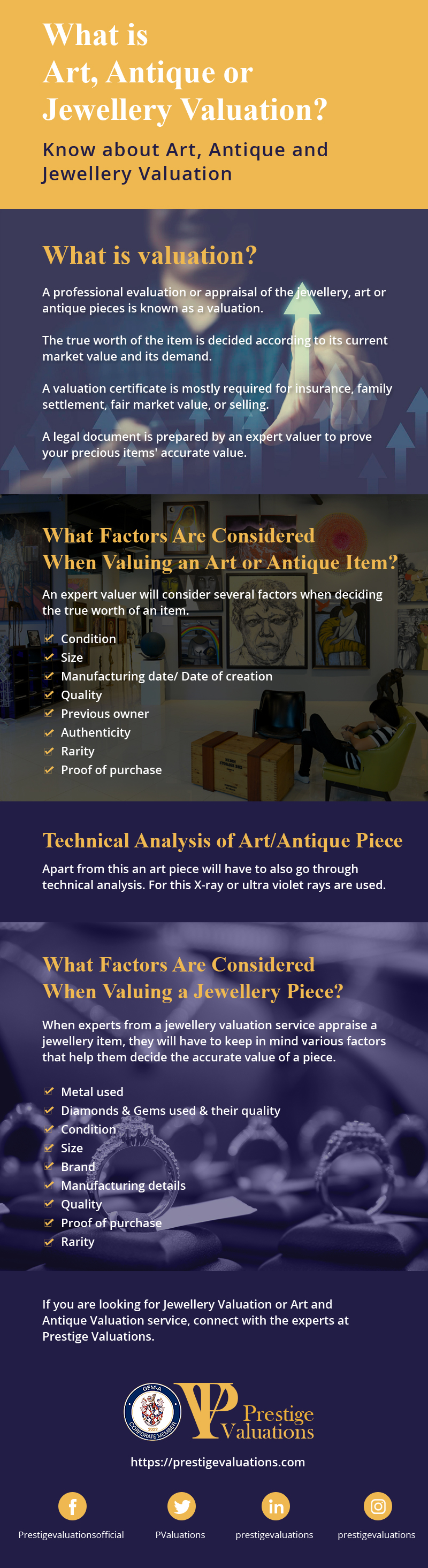
If you are someone interested in knowing more details about valuation and other factors into consideration, please refer to the infographic attached, and you will have a fair idea about it in detail.

Comments
Login to Comment