Managed Cybersecurity Services vs In-House Security Teams
22 Sep, 2026
12 Views 0 Like(s)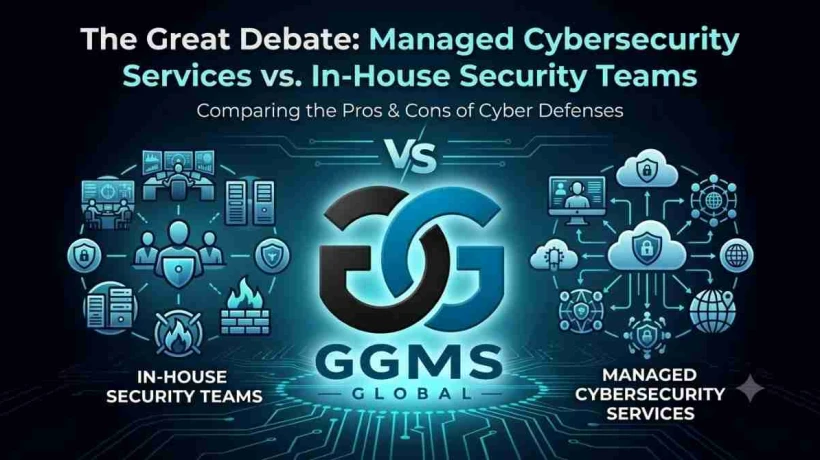
Compare managed cybersecurity services vs in-house security teams across staffing, monitoring, expertise, scalability, responsibilities, and maintenance for businesses in Oman.
Cybersecurity is now an essential part of protecting business systems, data, networks, and users. When planning a security strategy, many organizations must decide whether to build an internal security team or work with a cybersecurity service provider. For businesses looking for a cybersecurity service provider in Oman, the decision often depends on staffing requirements, security expertise, monitoring capabilities, scalability, and long-term operational costs.
Both approaches can provide effective protection, but they operate differently. Understanding these differences can help businesses choose an approach that fits their infrastructure, security requirements, and growth plans.
What Is an In-House Cybersecurity Team?
An in-house security team consists of employees who are responsible for protecting the organization's IT environment. Depending on the company's size, the team may include security analysts, network security specialists, system administrators, incident responders, and security managers.
The internal team has direct access to company systems and can develop security processes around the organization's specific environment. However, building a capable team requires recruiting qualified professionals, providing continuous training, implementing security technologies, and maintaining coverage for security events.
For smaller and growing organizations, maintaining all these capabilities internally can become challenging.
What Are Managed Cybersecurity Services?
Managed cybersecurity services are delivered by an external security provider that supports an organization's cybersecurity operations. Depending on the service agreement, the provider may handle security monitoring, threat detection, vulnerability management, incident response, security assessments, and other security responsibilities.
A cybersecurity service provider in Muscat Oman can also help businesses access specialized security expertise without having to build every cybersecurity function internally.
This approach can be particularly useful for organizations that need ongoing security monitoring but have limited internal cybersecurity resources.
Staffing and Security Expertise
Staffing is one of the biggest differences between the two approaches.
With an in-house team, the business is responsible for recruiting cybersecurity professionals and retaining them. Organizations may need multiple specialists to cover different areas of security. Employees also require regular training because cyber threats, technologies, and security practices continuously evolve.
Managed services provide access to a broader pool of cybersecurity professionals. Instead of relying entirely on internal employees, businesses can work with specialists who regularly handle different security environments and technologies.
This can help organizations access specialized expertise without expanding their internal headcount significantly.
Monitoring and Threat Detection
Continuous monitoring is an important part of modern cybersecurity.
An internal team can monitor company systems directly, but maintaining round-the-clock monitoring may require multiple employees and appropriate security tools. Coverage can become more difficult during nights, weekends, holidays, or periods of staff shortages.
Managed cybersecurity services can provide ongoing monitoring through dedicated security teams and technologies. Depending on the service, suspicious activity can be identified and investigated while security events are occurring.
For businesses that need consistent monitoring without establishing a large internal security operation, this model can provide additional operational flexibility.
Operational Responsibilities
An in-house team takes direct responsibility for security operations. This may include managing security tools, investigating alerts, responding to incidents, maintaining policies, conducting vulnerability assessments, and reporting security activities to management.
With managed cybersecurity services, some or most of these responsibilities can be handled by the external provider. The exact responsibilities depend on the service agreement.
This allows internal IT employees to focus on business technology and infrastructure while the cybersecurity provider manages agreed security functions.
Scalability and Business Growth
Cybersecurity requirements often change as businesses grow.
Adding employees, locations, cloud applications, devices, servers, and remote users can increase the organization's security requirements. Expanding an in-house team may require additional recruitment, training, technology, and management.
Managed services can provide greater flexibility when security requirements change. A business can adjust its services according to its environment and security needs instead of rebuilding its entire security operation.
For growing companies in Oman, this flexibility can be useful when expanding infrastructure or adopting new digital technologies.
Ongoing Maintenance and Technology
Cybersecurity isn't a one-time project. Security tools require configuration, updates, monitoring, maintenance, and periodic review.
An internal team must manage these responsibilities alongside other IT tasks. Organizations also need to stay informed about emerging threats and changes in security technologies.
A managed provider can take responsibility for maintaining agreed security systems and processes. This may include monitoring security tools, reviewing alerts, updating configurations, and supporting incident response.
The result is a more structured approach to ongoing security management.
Managed Services vs In-House: What Should Businesses Consider?
There isn't a single approach that suits every organization. Businesses should consider several factors before deciding.
An in-house team may be appropriate when an organization has sufficient resources, specialized cybersecurity requirements, and the ability to maintain a dedicated security operation.
Managed cybersecurity services may be suitable for organizations that need specialized expertise, continuous monitoring, scalability, or additional security support without significantly increasing internal staffing.
Some businesses can also use a hybrid cybersecurity model, combining internal IT and security employees with an external cybersecurity provider. In this arrangement, internal teams retain control over strategic decisions while the external provider supports monitoring, specialized security tasks, or incident response.
Why Choose GGMS Global for Cybersecurity in Oman?
For businesses seeking cybersecurity support in Oman, GGMS Global provides IT and cybersecurity solutions designed around business infrastructure and security requirements.
GGMS Global can support organizations with cybersecurity services, IT infrastructure, networking, managed IT services, and related technology solutions. Its local presence in Oman can also help businesses coordinate cybersecurity and broader IT requirements through one technology partner.
For organizations evaluating whether to expand an internal security team or work with a cybersecurity service provider in Oman, discussing the existing infrastructure, risks, monitoring requirements, and operational responsibilities can help determine the appropriate approach.
Final Thoughts
The choice between managed cybersecurity services and an in-house security team depends on an organization's resources, security requirements, infrastructure, and long-term plans. In-house teams provide direct internal control, while managed services can provide access to specialized expertise, continuous monitoring, and scalable support.
Businesses in Oman can also consider a hybrid approach that combines internal knowledge with external cybersecurity expertise. The key is to establish clear responsibilities and ensure that security monitoring, threat detection, incident response, and ongoing maintenance are consistently managed.
Frequently Asked Questions
1. Is managed cybersecurity better than having an in-house security team?
It depends on the organization's requirements. Managed services can provide access to specialized expertise and continuous monitoring, while an in-house team provides direct internal control. Businesses should evaluate staffing, budget, infrastructure, and security requirements before deciding.
2. What does a cybersecurity service provider do?
A cybersecurity service provider can deliver services such as security monitoring, threat detection, vulnerability management, security assessments, incident response, and security management, depending on the selected service package.
3. Why should an Oman business work with a cybersecurity service provider?
A local provider can offer cybersecurity expertise while understanding the operational needs of businesses in Oman. It can also help organizations access ongoing security support without building every cybersecurity capability internally.
4. Can a business use both an in-house IT team and managed cybersecurity services?
Yes. A hybrid approach allows an internal IT team to manage business technology while an external cybersecurity provider supports specialized security functions such as monitoring, threat detection, vulnerability management, or incident response.
Disclaimer: ThynkTales is a public blogging platform where content is contributed by individual users. While we encourage thoughtful and accurate sharing, we do not independently verify the information provided. Readers are advised to use their discretion and verify any information before relying on it.


Comments
Login to Comment