What Is an AI Legal Assistant? A Complete Guide
23 Oct, 2026
11 Views 0 Like(s)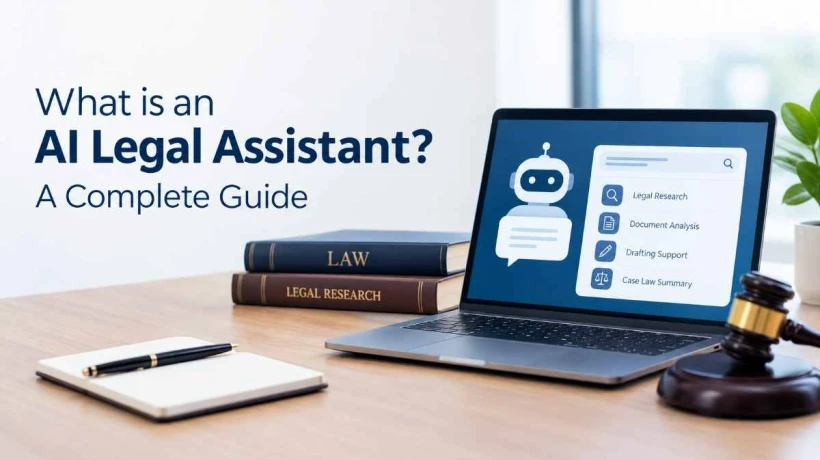
Learn what an AI legal assistant is, how it works, its benefits, key uses, and how LexisNexis Protégé supports AI-powered legal work.
Artificial intelligence is changing the way legal professionals work. Lawyers, advocates, law firms, and legal teams are using AI tools to make legal research easier, review documents, prepare drafts, and manage routine tasks. One of the most useful tools in this area is an AI legal assistant.
An AI legal assistant can help legal professionals find information, understand legal documents, summarise long texts, and complete daily legal tasks more efficiently. As legal work involves a large amount of reading, research, and writing, these tools can help save time and improve work processes.
What Is an AI Legal Assistant?
An AI legal assistant is a software tool that uses artificial intelligence to support legal work. It can help lawyers with legal research, document analysis, case summaries, legal drafting, and other tasks related to legal practice.
Unlike a basic digital assistant, a legal AI tool is designed to handle tasks that are common in the legal field. Depending on its features, it may help users search legal information, understand case law, review contracts, prepare first drafts, and organise legal documents.
For example, a lawyer researching a legal issue may use an AI legal assistant to find relevant information and summarise important points. The lawyer can then review the sources and use professional judgement to decide how the information applies to the case.
An AI legal assistant supports legal professionals but does not replace their legal knowledge, experience, or responsibility.
How Does an AI Legal Assistant Work?
AI legal assistants use technologies such as natural language processing and machine learning to understand user questions and provide relevant responses.
Users can often enter questions in simple language instead of relying only on complex search terms. The AI tool processes the request and generates an answer based on the information and features available to it.
The process usually involves the following steps:
-
Understanding the question: The tool identifies the legal issue or task described by the user.
-
Finding relevant information: Depending on the platform, it searches connected legal databases, supplied documents, or other available sources.
-
Preparing a response: The tool creates a summary, explanation, draft, or set of relevant findings.
-
Reviewing the results: The legal professional checks the information, verifies the sources, and makes any required changes.
The quality of the response depends on the tool, the information available to it, and how clearly the user explains the task.
Key Uses of an AI Legal Assistant
1. Legal Research
Legal research is an important part of a lawyer's daily work. An AI legal assistant can help users explore legal questions, identify relevant cases, understand legal principles, and find useful information.
Tools connected to reliable legal databases can also help users locate supporting authorities. Lawyers should verify the original judgments, statutory provisions, and citations before relying on research results.
2. Legal Drafting
AI legal assistants can help prepare first drafts of legal documents, letters, legal notices, research notes, and other written materials.
They can also help improve sentence structure, organise arguments, and rewrite text in a clear format. The final draft must be checked for legal accuracy, facts, applicable law, and the requirements of the intended document.
3. Case Law Analysis
Lawyers often need to review several judgments to understand how courts have interpreted a legal provision. AI tools can help summarise judgments, identify important legal issues, and compare key findings.
This can make it easier to review large amounts of legal information. However, lawyers should read the relevant portions of the original judgments and check whether the decisions remain good law.
4. Contract Review
An AI legal assistant may help review contracts and identify important clauses, missing information, inconsistent terms, or provisions that need further attention.
This can be useful when reviewing commercial agreements, employment contracts, and other legal documents. The lawyer must still assess the legal risks and confirm that the contract meets the client's requirements.
5. Document Summarisation
Legal professionals regularly work with lengthy judgments, case files, contracts, and research documents. AI can help create shorter summaries and highlight important points.
This allows lawyers to review information more quickly, although important details should always be checked against the original documents.
6. Legal Information and Explanations
AI legal assistants can explain legal concepts in simple language, helping lawyers, law students, and legal researchers understand unfamiliar topics.
They can also help organise research questions and identify areas that require further investigation.
Benefits of Using an AI Legal Assistant
AI legal assistants offer several benefits when used correctly.
-
Saves time: They can speed up research, summarisation, and first-draft preparation.
-
Improves work efficiency: Lawyers can spend less time on repetitive tasks and more time on legal analysis, client communication, and case strategy.
-
Supports better research: Tools with access to trusted legal content can help users explore relevant legal materials and identify useful sources.
-
Helps manage large documents: AI can make it easier to review long judgments, contracts, and case files.
-
Supports law students and researchers: Students can use these tools to understand legal concepts, organise notes, and explore legal topics.
-
Helps maintain consistent writing: AI can assist with grammar, structure, clarity, and document organisation.
The benefits depend on the quality of the tool and how it is used. AI-generated information should not be treated as automatically correct.
Limitations of AI Legal Assistants
Although AI legal assistants can be useful, they have limitations that legal professionals should understand.
AI tools may produce incorrect answers, unreliable citations, or information that does not reflect the latest legal position. Some tools may also lack access to particular legal databases or jurisdiction-specific material.
Legal professionals should verify every important legal claim against reliable sources. They should also protect confidential client information, follow applicable data protection rules, and review the terms governing the use of their chosen AI platform.
AI should be used as a support tool, not as a replacement for professional judgement or legal advice.
How to Choose the Best AI Legal Assistant
Choosing the right AI legal assistant depends on the type of work a lawyer or law firm performs. Before selecting a tool, consider the following factors:
-
Legal research quality: Check whether the tool provides access to reliable legal content and relevant case law.
-
Source references: Look for clear citations and links that help verify the information provided.
-
Drafting features: Consider whether the tool supports the documents and writing tasks required in your practice.
-
Ease of use: Choose a platform that is simple to use and fits your existing workflow.
-
Data security: Review privacy policies, data handling practices, and confidentiality protections.
-
Accuracy and reliability: Test the tool on practical legal tasks and verify its results before relying on them.
-
Jurisdictional coverage: Make sure the available legal content is suitable for the jurisdictions in which you work.
The best AI legal assistant is one that meets your specific needs and supports accurate, responsible legal work.
LexisNexis Protégé - AI Legal Assistant
LexisNexis Protégé is an AI Legal Assistant designed to support legal professionals with research, analysis, and other legal work. It brings AI capabilities into legal workflows and helps users work with legal information more efficiently.
For lawyers and law firms looking to use AI in their daily practice, LexisNexis Protégé is worth exploring as part of their legal technology options.
By combining AI assistance with legal work processes, Protégé aims to help legal professionals spend less time on routine tasks and more time on research, analysis, and decision-making. Depending on the features and services available to the user, AI-powered assistance can support tasks such as understanding legal questions, working with documents, and preparing written content.
Legal professionals should assess the available features, jurisdictional coverage, and subscription options to determine whether the platform meets their requirements.
Why consider LexisNexis Protégé?
-
Supports AI-assisted legal work.
-
Helps legal professionals work with legal information and documents.
-
Can support research, analysis, and drafting workflows, depending on the available features.
-
Offers an option for law firms and lawyers looking to adopt AI in their practice.
To learn more about the platform and its available features, visit the official LexisNexis website.
Is an AI Legal Assistant Useful for Lawyers in India?
Yes, an AI legal assistant can be useful for lawyers in India when it supports their specific legal work. Indian legal professionals may use AI tools to organise research, review judgments, understand statutory provisions, prepare first drafts, and summarise documents.
However, users should confirm that their chosen platform provides relevant Indian legal content and can support the legal issues they handle. They should also verify the latest amendments, applicable provisions, and judicial decisions before using AI-generated research in legal work.
For law firms and advocates, the most effective approach is to combine AI assistance with trusted legal sources, professional experience, and careful review.
Conclusion
An AI legal assistant is a useful tool for modern legal practice. It can support legal research, drafting, case law analysis, contract review, and document summarisation. These features can help lawyers and law firms manage their work more efficiently.
However, AI tools have limitations, and every important result must be checked for accuracy. Legal professionals should also pay attention to confidentiality, data security, and the reliability of the sources used.
For lawyers and law firms exploring AI-powered legal work, LexisNexis Protégé - AI Legal Assistant is one platform to consider. Choosing the right tool can help legal professionals improve their workflow while keeping legal knowledge, accuracy, and professional judgement at the centre of their work.



Comments
Login to Comment