What Happens to Your Business When Your POS System Goes Down
19 Jun, 2026
1282 Views 0 Like(s)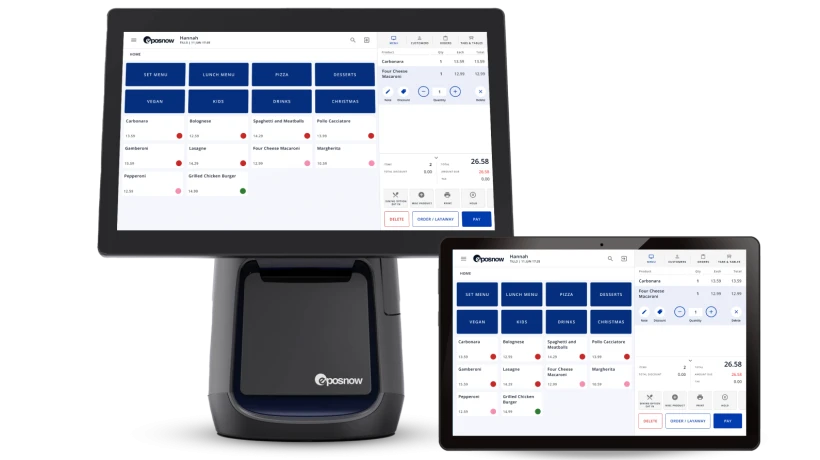
When your POS system goes down, revenue stops, and operations break down. Find out exactly what happens and why system reliability cannot wait.
Introduction
Picture this. It is a busy Friday evening. Your store is full. Customers are lined up, wallets out, ready to pay. Then your screen freezes. The card reader stops responding. Every person in that queue is now staring at you.
This is not rare. According to a 2023 NCR Retail Technology Journal study, 60% of retailers have experienced point of sale systems failing, which led directly to lost sales and frustrated customers. Most owners never think about this until it happens to them.
A POS outage is not just a payment problem. It hits your revenue, your staff, your customer data, and your reputation all at once.
Epos Now reports that businesses on outdated or poorly supported systems face significantly higher downtime risk than those on modern cloud-based platforms.
So, what does a POS failure actually do to your business from the very first minute? Let us explore.
Quick Answer Box
What happens when a POS system goes down?
When point of sale systems fail, businesses immediately lose the ability to process payments, track stock, manage staff activity, and collect customer data. Industry research shows 72% of retailers report direct sales loss during an outage, and 82% report negative customer experiences. Cloud-based systems with offline mode recover fastest and cause the least disruption.
1. Sales Stop, and Customers Walk Out
The first thing that happens when your POS goes down is simple. You cannot take money.
Over 80% of in-store transactions in the US are made by card or contactless payment, according to the Federal Reserve Payments Study 2024. Most customers do not carry cash. When your system fails, most people in your store cannot pay even if they want to.
Customers do not wait. Research from Accelerated Concepts shows that US shoppers become frustrated after just 2.5 minutes in a queue with no movement. A frozen POS during a busy period means:
-
Customers abandon their items and walk out
-
Queues build fast, and frustration rises visibly
-
Staff cannot process sales accurately without the system
-
Revenue stops for every minute the system stays down
A Retail Touchpoints study of 100 US store managers found businesses lose around $855 per hour when one POS device goes down. A Payline Data study found that almost half of retailers estimated losses of $13,000 or more per hour of downtime.
An Infrascale survey found 37% of small and medium businesses permanently lost customers after IT downtime. That is long-term damage, not just a one-day loss.
2. Your Entire Operation Loses Direction
A POS system is the brain of any retail or hospitality business. When it goes down, your team does not just stop taking payments. They lose access to everything the business runs on.
Retail business management flows through the POS in real time. Every product price, active promotion, stock level, and discount rule lives inside it. Without the system, staff are left guessing on every customer query.
This creates an immediate problem across your whole team:
-
Staff revert to pen and paper, which is slower and creates errors
-
Managers lose visibility over which registers are active and what is selling
-
Shift performance data stops recording entirely
-
Staff cannot answer basic questions about stock or pricing
This played out in April 2015 when Starbucks suffered a major POS outage after an internal failure during a daily system refresh. It hit 8,000 stores across the US and Canada. Managers had two choices: give away coffee for free or close stores. Most did both. The company lost tens of millions in a single day, according to FierceRetail and Restaurant Business Online. There was no fallback in place.
3. Payment Processing Fails Across Every Channel
When the system crashes, payment processing technology stops completely across every payment method at once.
|
Payment Method |
Status During Outage |
|
Credit and debit cards |
Cannot be processed |
|
Contactless and tap to pay |
Cannot be processed |
|
Mobile wallets like Apple Pay |
Cannot be processed |
|
Pay by link |
Disconnected |
|
Cash |
Only remaining option |
Cash becomes the only fallback. But most customers today do not carry it. Businesses that connect online orders, delivery platforms, and in-store sales through one system also lose that entire chain the moment the POS goes down.
4. Customer Data and Loyalty Records Breakdown
Every transaction your POS processes builds a picture of your customers. Purchase history, preferences, loyalty points, and contact details are all recorded in real time during normal trading.
During an outage, customer relationship management data collection stops entirely. Every sale outside the system during that window is a permanent gap in your records. Customers about to redeem loyalty points cannot do so. Purchases that should earn rewards go unrecorded. Email addresses that would have been captured at checkout are never collected.
These gaps create lasting problems:
-
Marketing campaigns built on incomplete data deliver poor results
-
Loyalty programs lose accuracy and customer trust
-
You cannot identify your best customers from the outage window
-
Staff spend hours fixing missing records instead of serving customers
5. App Integrations and Staff Visibility Both Break Down
Modern businesses run on an ecosystem of connected tools, not a POS alone.
App integrations for business systems such as accounting software, delivery platforms, stock tools, and marketing apps all depend on the POS feeding them live data. When the POS fails, every connected tool loses its data source at the same time.
According to Jumpmind industry data, the average retail location experiences 14 to 18 hours of unplanned network downtime per year. During every one of those hours, accounting software stops receiving sales figures, delivery platforms lose live order updates, and stock tools show incorrect inventory levels.
What Happens to Your Team at the Same Time
Managers lose all real-time visibility over their workforce. They cannot see which staff are active, how many transactions each register handled, or whether targets are being met.
For businesses that rely on POS data for staff scheduling and management decisions, this creates a serious blind spot. Labour decisions made during an outage are based on guesswork. Staff may be kept on unnecessarily or sent home too early. Either way, costs rise and performance drops.
After connectivity returns, teams spend hours correcting data gaps across every connected app. That is time taken directly away from serving customers.
When Reliability Becomes Non-Negotiable
When your POS goes down, the damage moves fast. Revenue stops, customers leave, staff lose direction, and every connected tool breaks at the same time. The businesses that suffer least are those that chose their system based on reliability, offline functionality, and strong support.
Epos Now is built for businesses that cannot afford to stop trading. Its cloud-based platform automatically switches to offline mode when the internet drops, storing all transactions securely and syncing them the moment connectivity returns. With 130-plus app integrations, 24-hour expert support, and over 80,000 business locations worldwide trusting it every day, Epos Now gives your business the reliable foundation it needs before a crisis, not after.



Comments
Login to Comment