Want Fuller Lips Without Looking Fake? How Women Are Getting Natural Lip Filler Results
30 Jul, 2026
623 Views 0 Like(s)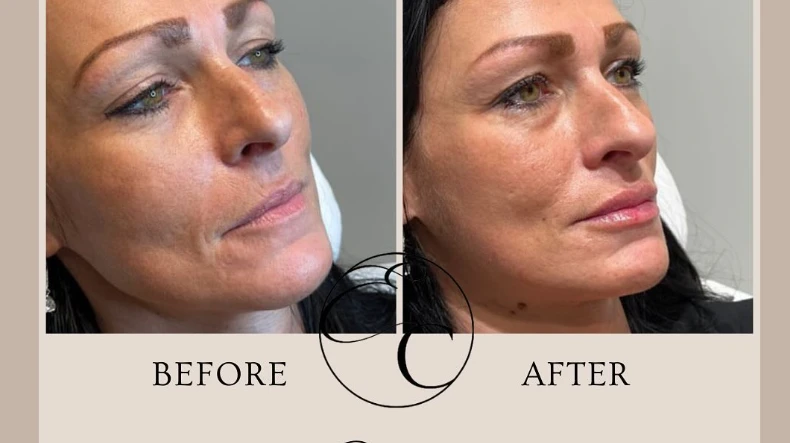
Want fuller lips without looking fake? What Belgian doctors, real cases and published research say about natural filler lip results.
A young Belgian woman called Bicetta said something on VRT that a lot of people recognised straight away. Talking about botox and fillers, she explained that after a while you stop seeing it on yourself. Then you want it done again, even though you do not really need it yet.
That is the whole problem in two sentences, and it came from a patient rather than a doctor.
Sitting in the same discussion was Jan Vermeylen, head of plastic and reconstructive surgery at AZ Turnhout, with around thirty years behind him. He is not against these treatments in the slightest. What he said was that he favours using these products but opposes overconsumption, and he wrote a book with a deliberately sharp title, "Fillers zijn killers", which he explained is meant psychologically as much as physically. His concern is the person who tops up too quickly, asks for a little more each time, and eventually cannot remember what they looked like at the start.
Almost nobody books an appointment hoping for that. Most women want their own mouth on a good day, a bit more shape and softness, and nothing that makes a colleague look twice. The fake result is not what the product does. It is what happens when volume quietly becomes the goal instead of balance.
Why Lips End Up Looking Obvious
People assume the fake look comes from a bad product. It rarely does. Hyaluronic acid is a sugar molecule your body already makes, and it has been used in medicine for decades.
Three things push a result in the wrong direction.
The first is too much product at once. Lips only stretch so far, and past that point the gel spreads sideways instead of forward. That is why overfilled mouths read as wide and flat rather than full.
The second is placement that ignores your own anatomy. Every mouth has a different border, a different Cupid's bow, and its own balance between the top and bottom lip. Treat both lips identically when they were never identical and you get that heavy, blocky shape people spot instantly.
The third is time, and it is the one nobody notices while it is happening. Someone tops up every six months for four or five years, each appointment reasonable on its own, and no one ever steps back to look at the whole face.
What Going Natural Actually Looks Like
The most useful example is a woman who went all the way through it and came out the other side.
Molly-Mae Hague, the former Love Island contestant, has said she first had lip filler at 17. Speaking on The Diary Of A CEO podcast in 2021, she described how by 21 she no longer looked like the same person, saying she "literally looked like a different person" and that old photographs now unsettled her. She also explained why she started, which is the part worth noticing. She felt she had to look like everyone else on Instagram, and she called that unhealthy herself.
The turning point was ordinary rather than dramatic. She filmed a YouTube video before the swelling had settled, a screenshot circulated for weeks, and she decided to have everything dissolved. She has since called it one of the best decisions she made.
Here is the part that matters if you are still deciding. By June 2024 she confirmed she had been filler free for well over four years, and she has not gone back.
Dr Christine Hall, an aesthetic doctor at the Taktouk Clinic in London, described the effect of that. She said Molly-Mae showed embracing a more natural look is acceptable, and that the positive reaction encouraged plenty of others to do the same.
The singer JoJo landed somewhere in between, which is probably where most women end up. She had her lip filler dissolved after it migrated, and afterwards said she was happy because her lips look natural and still her own. She does not regret trying it. She was curious, liked it for a while, and when she stopped liking it she could reverse it.
Three women, three endings, one shared thread. None of them were harmed by the idea of lip filler. All three ran into volume that kept climbing without anyone applying the brakes.
What Belgian Doctors Are Seeing
Belgium has an odd gap in its data. VRT reported in 2023 that Belgian figures for the number of cosmetic procedures do not exist, so the picture has to be assembled from what individual doctors report.
What they report is growth. In that same 2023 coverage, Vermeylen described a rise of roughly 30 percent in fillers and 17 percent in botox over the preceding year, together with a clear shift toward younger patients. He linked part of it to the pandemic and called it the Zoom boom, since people had spent months staring at their own face on a laptop screen.
He is also direct about age. Cosmetic procedures are legal from 18 in Belgium and he would raise that limit. His argument is practical rather than moral. The effect lasts around six months, so starting at eighteen means injecting twice a year for decades, on a face that has not finished changing.
Speaking to Het Laatste Nieuws, he summed up the culture better than any statistic. A new face, he said, is increasingly treated as a status symbol, a bit like buying a new handbag.
The Belgian Law That Decides Almost Everything
This matters more than any injection technique, and hardly anyone checks it.
The Wet van 23 mei 2013 sets out who is qualified to perform non surgical aesthetic medicine in Belgium, and injecting a filler falls squarely under it. In practice that means plastic surgeons, dermatologists, and doctors who have completed recognised additional training in aesthetic medicine. A beautician cannot legally inject you, nor can a nurse, nor a doctor from an unrelated specialty who took a short course.
Enforcement is the weak point. The VRT programme Pano went undercover in Belgian salons in 2019 and found a man who had been injecting botox and fillers here for 18 years without being a doctor, along with a beautician who posed on Instagram holding a syringe and taught courses to others. The public prosecutor opened investigations, and house searches at three locations recovered illegal products.
Things have not improved since. In January 2025, plastic surgeon Katrien Lagey of the Royal Belgian Society for Plastic Surgery told VRT that more than 100 complaints about illegal botox and filler practice had arrived in a short period, a record, with some files reaching the prosecutor. She described patients turning up with skin necrosis, meaning dead skin tissue, after treatment elsewhere, and confirmed a death in Brussels after a filler was injected into a lip.
Bruzz investigated the Brussels market the same week and found a centre in Molenbeek selling a course in the Russian lips technique for 1,200 euro, after which four teaching hours later the student leaves with a needle and a starter kit of fillers. That technique uses hyaluronic acid, so under Belgian law it belongs to doctors.
Both reports describe practitioners who arrive for a day, inject, then leave again. Lagey's response was a question rather than a warning. If they are already back in Paris, who treats you when there is a problem?
How To Check Who Is Injecting You
None of this takes much effort, which is what makes skipping it frustrating.
VRT reported in 2025 that a lip filler treatment in Belgium easily sits around 200 euro. Use that as a benchmark. Lagey's advice was that a very cheap treatment is telling you something, because product, sterile conditions, insurance, consultation time and emergency hyaluronidase all cost money. When the price drops far below the norm, one of those has usually been removed.
Her other suggestion takes a minute. Look up the practitioner's RIZIV number, since every recognised healthcare provider in Belgium has one and it can be verified. Then check whether the website states a qualification with a real name attached rather than a brand and a logo.
What The Research Says About Results And Risk
Belgium may not count its procedures, but the clinical evidence is solid.
In 2025, a team led by Y. Edward Wen at NYU published a systematic review and meta analysis in the Aesthetic Surgery Journal, pooling 16 randomised controlled trials on hyaluronic acid lip fillers. It is currently the strongest set of numbers available on this treatment.
About 60 percent of patients showed a measurable improvement in lip fullness. Yet 82 percent showed improvement in overall appearance, and 68 percent reported satisfaction.
Set those figures side by side and something useful appears. The improvement people actually noticed was larger than the volume added, which means shape, proportion and balance were doing more work than millilitres were. For anyone worried about looking overdone, that is the most reassuring finding in the paper.
On safety, the same analysis found around 50 percent of patients experienced some side effect and roughly 1.5 percent a serious one that needed treatment or lasted beyond a month. The routine complaints were swelling in 78 percent of cases, firmness in 48 percent, bruising in 34 percent and tenderness in 33 percent. Mild swelling and bruising are normal rather than a warning sign, and serious complications stay rare, particularly with someone qualified who spots a problem early.
Why Less Product Gives A Better Mouth
Injectors have a nickname for the approach that has taken over. Some call it baby filler, a term FASHION Magazine used when reporting on the move away from obviously filled lips. One injector quoted there said that if a patient walks out and friends immediately ask what she has done, the job has failed. The aim is that people notice she looks well.
In practical terms it means starting with around half a millilitre rather than a full one, especially for a first treatment. It means the microdroplet method, where tiny quantities go into specific points rather than one large deposit. And it means treating hydration and a cleaner border as genuine results rather than a consolation prize for not going bigger.
Going slowly is part of the technique, not a lack of ambition. Lip tissue needs time to expand, and pushing product in quickly is a main reason filler ends up above the lip line instead of inside it. Building across two or three appointments, months apart, tends to give a softer and more stable outcome than one large sitting. A well planned filler lip treatment starts with a proper assessment of your own lip shape, not with a syringe already drawn up.
Bicetta described the last habit without knowing the term for it. Injectors call it filler blindness. You adjust to the new version of your face, start noticing things nobody else can see, and ask for more. Molly-Mae not recognising herself at 21 is the same thing, simply further along.
How Long A Result Really Lasts
Lip filler generally looks its best for 9 to 12 months. Lips move constantly and have a rich blood supply, so product clears faster there than in the cheeks, and smoking, sun exposure, heavy training and regular sauna visits shorten it further. Vermeylen puts the reliably good phase closer to six months, which reflects how quickly a very active area settles.
Then there is the part most people have never heard. In July 2024, Michael Master and colleagues published a review of 33 MRI studies in Plastic and Reconstructive Surgery Global Open. Every patient scanned still had filler visible. Twelve had last been injected more than five years earlier, and one still showed product 15 years later.
Those scans examined the cheek area, where filler lingers far longer than in the lips, so this is not evidence that lip filler is permanent. What it does mean is that a clean slate every twelve months is too simple an idea. If you have had several rounds, some older product may still be sitting there, and a careful doctor accounts for that before adding more.
When Filler Moves Out Of Place
Migration explains most of the results people call fake. Product drifts out of the coloured part of the lip into the skin above it, the border blurs, a soft shelf appears, and the mouth reads as spread rather than full. It is what both Molly-Mae and JoJo eventually had reversed.
Reassuringly, hyaluronic acid can be dissolved using an enzyme called hyaluronidase. No other filler category offers that, which is exactly why it became the standard for lips.
There is a catch, and Pano caught it years ago. A young woman at a filler party told the programme that knowing you can always have it dissolved makes you take the step faster. She was right, and that is also how a medical decision starts being made casually. Reversibility is a safety net for mistakes rather than a reason to skip the thinking.
Worth asking too whether hyaluronidase is kept on site. In a genuine emergency such as a blocked blood vessel, having it in the building matters far more than having it in theory.
What A Careful Appointment Looks Like
The injection is short. The conversation before it decides your result.
A doctor should look at your lips at rest and while you smile, assess the top and bottom separately, and map any asymmetry before anything goes in. Almost every mouth is slightly uneven, and the aim is to work with that rather than pretend otherwise. Volume gets agreed in millilitres in advance, not decided halfway through.
Numbing cream needs at least ten minutes, then the injection is done with a fine needle or a cannula in a series of small placements. Fifteen minutes is realistic for that part.
You will see a change immediately, though not the final one. Swelling peaks in the first two days and settles over roughly two weeks, so judging your lips on day one is the most common mistake patients make. Book at least three weeks before a wedding or a holiday.
Aftercare exists because fresh filler can shift before the tissue settles around it. Leave your lips alone for eight hours and keep pressure off them for two days, which includes sleeping face down. Skip the sauna, the sunbed and chlorinated pools for a week. Avoid ibuprofen and aspirin for a few days since both thin the blood, and use paracetamol instead. Mention cold sores beforehand so antiviral cover can be arranged.
What Natural Really Comes Down To
Most women spend hours of research on Instagram before booking, comparing before and after photos and saving the results they like. Almost none of that covers the two things that actually decide the outcome, which are who holds the needle and how much they put in.
The Belgian reporting and the international evidence point the same way. Vermeylen is not warning people away from fillers, he is warning them away from too many. Lagey is not saying the treatment is dangerous, she is saying the wrong hands make it dangerous. The published trials show appearance improving more than volume did, which is a polite way of saying the amount was never the important part. And Molly-Mae, nearly five years filler free, is proof the road back exists if you want it.
So ask which product is being used and why it suits your lips. Ask how much and why that amount. Ask what happens if something goes wrong and whether hyaluronidase is kept in the building. Check the RIZIV number and the qualification.
Then start smaller than you think you want. You can add a little more in a few months if you still want it, and plenty of women find they do not. Taking it back out is far more effort than never putting it in, and the ones whose lips look untouched are almost always the ones who went slowly and stopped early.


Comments
Login to Comment