India Olive Oil Market Size, Growth Opportunities and Research Report 2026–2034
21 Sep, 2026
9 Views 0 Like(s)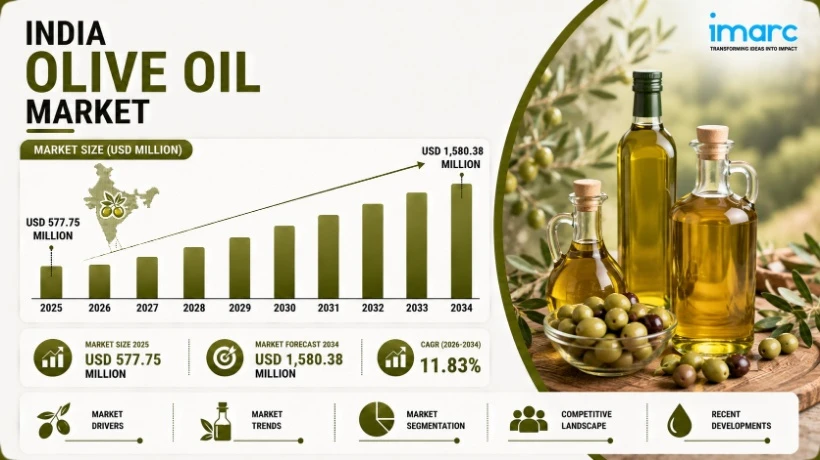
The India olive oil market size was valued at USD 577.75 Million in 2025 and is projected to reach USD 1,580.38 Million by 2034, exhibiting a CAGR of 11.83% during the forecast period 2026-2034.
Market Overview & Summary
The India olive oil market size reached USD 577.75 Million in 2025 and increased to an estimated USD 646.13 Million in 2026. Looking forward, the market is projected to reach an impressive USD 1,580.38 Million by 2034, exhibiting a robust compound annual growth rate (CAGR) of 11.83% during the 2026–2034 forecast period.
The industry is navigating a highly lucrative, health-driven premiumization cycle. Historically viewed as an exclusive, niche ingredient for continental dining, olive oil is rapidly mainstreaming into everyday Indian kitchens. Driven by surging urban health consciousness, rising disposable incomes, and the strategic positioning of Pomace oil for high-heat traditional Indian cooking, the market is experiencing explosive volume growth. As domestic FMCG giants enter the fray against legacy European brands, the sector is characterized by aggressive retail expansion, omnichannel distribution, and the democratization of premium healthy edible oils.
Market Size & Forecast
- Market Size (2025): USD 577.75 Million
- Market Size (2026): USD 646.13 Million
- Projected Market Size (2034): USD 1,580.38 Million
- CAGR (2026 - 2034): 11.83%
- Leading Type: Olive Pomace Oil (38.6% Share in 2025)
- Leading Distribution Channel: Supermarkets and Hypermarkets (41.3% Share in 2025)
- Leading Region: North India (34.2% Share in 2025)
Key Market Trends
- Pomace Oil Driving Mass Adoption:
Olive pomace oil is fundamentally anchoring the volume market due to its high smoke point and affordable pricing (INR 600-900 per liter). It perfectly accommodates traditional deep-fried Indian cooking without altering authentic flavors, enabling middle-class households to transition toward healthier dietary choices without compromising their ingrained culinary habits.
- Premiumization via Extra Virgin Variants:
As urban health consciousness surges, the Extra Virgin Olive Oil (EVOO) segment is experiencing aggressive premiumization. Affluent consumers increasingly utilize EVOO for raw consumption, salads, and light sautéing. Brands are leveraging this shift by emphasizing cold-pressed extraction, single-origin sourcing, and robust antioxidant profiles to command significant retail price premiums.
- Aggressive Modern Trade Expansion:
Supermarkets and hypermarkets are aggressively expanding their premium edible oil aisles. Retailers like Reliance Smart and DMart serve as the primary discovery channels for Indian consumers. This physical visibility, combined with frequent promotional bundling, dramatically lowers the trial barrier and drives strong volume off-take for both mass-market and premium brands.
- Surge in Quick-Commerce and E-commerce:
The rapid expansion of quick-commerce and digital grocery platforms is completely restructuring olive oil distribution. Platforms like Amazon, Blinkit, and BigBasket provide unprecedented access to a vast array of niche, flavored, and premium olive oils, easily reaching time-pressed urban millennials who prioritize convenience, doorstep delivery, and digital brand discovery.
- Infused and Specialty Flavor Innovations:
To cater specifically to modern Indian palates, brands are actively experimenting with flavored and infused olive oils featuring garlic, chili, and regional herbs. This direct-to-consumer (D2C) innovation bridges Mediterranean health benefits with Indian taste preferences, capturing a lucrative niche of culinary enthusiasts seeking ready-to-use, versatile gourmet cooking oils for everyday meals.
Request Sample Report – TOC, Charts & Key Insights: https://www.imarcgroup.com/india-olive-oil-market/requestsample
Strategic Market Dynamics
Growth Drivers
- Rising Urban Health Consciousness:
A significant surge in lifestyle diseases has triggered a massive dietary pivot among urban Indian professionals. Consumers are actively migrating away from traditional refined seed oils toward olive oil, highly valuing its heart-healthy monounsaturated fats and cholesterol-lowering properties, which guarantees a sustained, long-term volumetric shift in daily household consumption.
- Booming Mediterranean and HoReCa Demand:
The explosive growth of premium Mediterranean, Italian, and continental dining across major metropolitan cities acts as a powerful institutional volume anchor. Hotels, restaurants, and catering (HoReCa) sectors require immense, continuous supplies of high-quality olive oil for authentic food preparation, ensuring highly predictable and large-scale bulk procurement pipelines for major distributors.
- Affluence and Rising Disposable Incomes:
Steady economic growth and the rapid expansion of India's upper-middle class have significantly elevated per-capita disposable incomes. This rising affluence empowers consumers in Tier-1 and Tier-2 cities to easily absorb the premium pricing of imported olive oils, successfully transforming the product from an occasional luxury into an everyday essential pantry staple.
- Cosmetic and Ayurvedic Applications:
Beyond culinary usage, olive oil is experiencing robust demand in the personal care sector, particularly in South India. Driven by traditional Ayurvedic practices and modern organic beauty trends, consumers heavily utilize pure olive oil for premium skin and hair care, creating a highly lucrative secondary revenue stream for specialized oil manufacturers.
- Entry of Trusted FMCG Conglomerates:
The strategic entry of massive domestic FMCG giants, such as Tata Consumer Products, is fundamentally accelerating market penetration. By leveraging decades of established brand trust and unmatched pan-India distribution networks, these conglomerates are rapidly demystifying olive oil, making premium cold-pressed variants highly accessible and acceptable to traditional Indian family households.
Market Restraints
- High Price Premium over Traditional Oils: Olive oil remains significantly more expensive than traditional Indian cooking oils like mustard, sunflower, or groundnut oil. This extreme price elasticity restricts rapid mass-market penetration, largely confining high-volume consumption to affluent urban demographics and preventing total market dominance.
- Extreme Import Dependency and Supply Shocks: India relies almost entirely on olive oil imports from Spain, Italy, and Greece. Severe European climate challenges (such as sustained droughts) and volatile currency exchange rates continuously threaten supply chain stability, aggressively squeezing importer profit margins and causing sudden retail price spikes.
Explore the Full Report with Charts, Table of Contents, and List of Figures: https://www.imarcgroup.com/india-olive-oil-market
Competitive Landscape & Key Company Insights
The competitive landscape of the India olive oil market combines established global legacy brands with robust domestic FMCG majors entering the segment. Competition revolves heavily around securing premium retail shelf space, optimizing supply chain costs amidst global raw material shortages, and educating consumers on the distinct uses of Pomace versus EVOO.
Key players actively defining the organized domestic ecosystem include:
- Borges India
- Cargill, Incorporated (Leonardo)
- Figaro Olive Oil
- Del Monte Foods Private Limited
Key Insight: Legacy international brands like Figaro and Borges dominate through iconic, multi-generational brand recognition. However, the market is facing massive disruption from domestic titans like Tata Consumer Products (with Tata Simply Better). By leveraging unparalleled FMCG distribution networks, domestic players are successfully democratizing cold-pressed Extra Virgin Olive Oil for the Indian mass-premium market.
Deep-Dive Segment Insights
Type Insights
- Olive Pomace Oil (Leading Segment)
- Extra Virgin Olive Oil
- Refined Olive Oil
- Virgin Olive Oil
- Others (Flavored, Infused)
Key Insight: Olive Pomace Oil commands the market with a 38.6% share in 2025. Because it offers a high smoke point and a relatively neutral flavor profile at an accessible price (INR 600-900 per liter), Pomace is the ultimate volume engine, perfectly suited for heavy, high-heat Indian cooking (frying and tempering). Extra Virgin Olive Oil (24.8%) is the fastest-growing segment by value, heavily driven by raw consumption and premiumization.
Distribution Channel Insights
- Supermarkets and Hypermarkets (Leading Segment)
- Convenience Stores
- Online Stores
- Others (Gourmet, HoReCa)
Key Insight: Supermarkets and Hypermarkets represent the leading distribution channel with a 41.3% share in 2025, driven by the expansion of modern trade giants like Reliance Retail and DMart. However, Online Stores (21.4%) are capturing explosive growth, as quick-commerce platforms make premium and niche olive oils instantly accessible to urban millennials.
Regional Insights
- North India (Leading Segment)
- West and Central India
- South India
- East and Northeast India
Key Insight: North India holds the largest regional share at 34.2% in 2025. This dominance is anchored by the dense concentration of affluent households in the Delhi-NCR corridor, a sophisticated premium grocery infrastructure, and a highly vibrant continental restaurant scene that generates immense HoReCa demand. West and Central India follow closely (29.5%), propelled by health-conscious consumers in Mumbai and Gujarat.
Recent News and Developments (2025–2026)
- Tata Consumer Products Launches Cold-Pressed EVOO (April 2025): Disrupting the premium segment, Tata Consumer Products successfully launched the Tata Simply Better Extra Virgin Olive Oil. Backed by extensive marketing campaigns emphasizing cold-pressed extraction and profound FMCG trust, the launch aggressively targeted affluent consumers seeking verifiable quality in the crowded premium oil aisle.
- Quick-Commerce Partnerships Accelerate Edible Oil Delivery (Early 2026): Leading olive oil brands executed deep strategic partnerships with major quick-commerce platforms like Blinkit and Swiggy Instamart. This integration specifically targeted metropolitan consumers, ensuring that premium EVOO and bulk Pomace oil are consistently available for sub-10-minute delivery, driving a massive spike in spontaneous household purchases.
- Brands Navigate European Supply Chain Shocks (2025-2026): In response to severe Mediterranean droughts impacting global olive yields, major Indian importers like Borges and Leonardo dynamically restructured their pricing and sourcing strategies. Brands heavily emphasized value-tier Pomace and blended oils to protect their market share against sudden price elasticity shocks in the domestic retail market.
Customization Note: If you require any specific information not covered within this report’s scope, we will provide it as part of the customization.
Request Report Customization: https://www.imarcgroup.com/request?type=report&id=21525&flag=E
Frequently Asked Questions (FAQs)
Q1. What is the India olive oil market size in 2025 and 2026?
Ans. The India olive oil market was valued at USD 577.75 Million in 2025 and expanded to an estimated USD 646.13 Million in 2026.
Q2. What is the projected market size and growth rate by 2034?
Ans. The market is projected to reach a massive USD 1,580.38 Million by 2034, registering a robust compound annual growth rate (CAGR) of 11.83% during the 2026–2034 forecast period.
Q3. Which type of olive oil is most popular in India?
Ans. Olive Pomace Oil leads the market with a 38.6% share. Its affordability and high heat tolerance make it the preferred choice for traditional, deep-fried Indian cooking without altering authentic food flavors.
Q4. Where do consumers primarily purchase olive oil?
Ans. Supermarkets and hypermarkets lead the distribution channel (41.3%), as modern trade allows consumers to physically compare premium brands. However, online and quick-commerce channels are the fastest-growing sector.
Q5. Why is North India the leading regional market?
Ans. North India captures 34.2% of the market due to the high density of affluent households in Delhi-NCR, a robust premium grocery retail infrastructure, and massive institutional demand from the Mediterranean restaurant and HoReCa sectors.


Comments
Login to Comment