Understanding Acoustic Surveys: The Science of Sound Mapping
21 Feb, 2026
6903 Views 0 Like(s)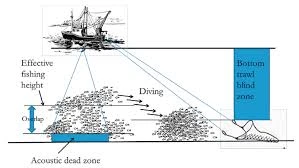
Acoustic surveys are a sophisticated method used to study, measure, and analyze sound in various environments. They are essential tools in environmental monitoring, marine research.
Acoustic surveys are a sophisticated method used to study, measure, and analyze sound in various environments. They are essential tools in environmental monitoring, marine research, urban planning, and even architectural design. Unlike simple sound measurements, acoustic surveys provide a detailed understanding of how sound behaves in a specific setting, its propagation patterns, intensity, and its potential impact on humans, wildlife, and structures. By collecting precise data, acoustic surveys allow scientists, engineers, and policymakers to make informed decisions about noise management, wildlife protection, and environmental preservation.
At the heart of acoustic surveys is the principle that sound, whether in air or water, interacts with its surroundings. Obstacles, surfaces, and atmospheric conditions all influence how sound travels. For example, in urban areas, sound waves can reflect off buildings, creating complex interference patterns, while in marine environments, water temperature, salinity, and depth affect how sound propagates over long distances. Conducting an acoustic survey requires not only measuring the intensity of sound but also understanding the intricate interplay between sound waves and their environment.
The Types of Acoustic Surveys
Acoustic surveys can be broadly classified into two categories: terrestrial and marine. Terrestrial surveys are conducted on land and are commonly used to monitor environmental noise, assess urban soundscapes, or evaluate the acoustic design of buildings. These surveys often utilize sound level meters, directional microphones, and data loggers to record noise levels over time. By mapping the intensity and distribution of sound, researchers can identify noise hotspots, understand patterns of urban noise pollution, and recommend strategies for noise mitigation.
Marine acoustic surveys, on the other hand, focus on underwater environments. They are crucial for studying marine life, mapping seafloor topography, and monitoring underwater noise from human activities such as shipping, offshore construction, and naval exercises. Marine acoustic surveys use specialized equipment like hydrophones, multibeam echosounders, and autonomous underwater vehicles (AUVs) to detect and record underwater sounds. These surveys can reveal the presence of marine mammals, fish populations, and even hidden geological features, providing a wealth of information about the underwater ecosystem.
Equipment and Techniques in Acoustic Surveys
The accuracy of an acoustic survey depends heavily on the equipment used and the methodologies employed. Standard tools include sound level meters, microphone arrays, hydrophones, and signal processing software. Sound level meters are used to measure the intensity of sound in decibels (dB), providing a snapshot of the noise level at a specific location. For more detailed studies, microphone arrays allow for the triangulation of sound sources, enabling researchers to pinpoint where sounds originate and how they propagate through space.
In marine surveys, hydrophones are deployed to capture underwater sounds. These devices are extremely sensitive and can detect faint noises over great distances, such as the calls of whales or the hum of distant ships. Modern acoustic surveys often integrate digital signal processing techniques to filter out background noise, enhance target sounds, and analyze the frequency and temporal patterns of sound. Additionally, GIS (Geographic Information Systems) mapping tools are increasingly used to visualize acoustic data, creating comprehensive sound maps that reveal trends and patterns that would be invisible to the naked ear.
Applications of Acoustic Surveys
The applications of acoustic surveys are vast and diverse. In urban planning, acoustic surveys help authorities understand noise pollution patterns in cities. High traffic areas, construction sites, and entertainment districts are often subject to noise assessments to ensure compliance with regulatory standards and to design noise reduction strategies. By understanding how sound travels in urban spaces, planners can implement noise barriers, adjust traffic flow, or modify building materials to minimize acoustic impact.
In environmental conservation, acoustic surveys are invaluable for monitoring wildlife. Many species rely on sound for communication, navigation, and hunting. For instance, birdsong surveys can indicate the presence of specific avian species, while underwater acoustic monitoring can track marine mammal populations. In addition, acoustic surveys are critical for assessing the impact of human activities on natural habitats. For example, underwater noise from shipping lanes can disrupt whale communication, and surveys help identify areas where noise mitigation measures are necessary.
Acoustic surveys are also essential in industrial applications. Factories, power plants, and transportation hubs conduct regular noise assessments to ensure compliance with occupational health regulations. Excessive noise can lead to hearing damage, stress, and reduced productivity, making acoustic surveys a key component of workplace safety programs. In the aerospace and automotive industries, acoustic testing ensures that vehicles meet noise emission standards, contributing to both environmental sustainability and public health.
Acoustic Surveys in Research and Innovation
Beyond practical applications, acoustic surveys play a pivotal role in research and technological innovation. In marine science, long-term acoustic monitoring helps researchers study migration patterns, breeding behaviors, and population dynamics of marine animals. For instance, researchers have used hydrophone networks to track whale songs across entire ocean basins, revealing previously unknown migration routes and social behaviors. Similarly, acoustic surveys in forests have provided insights into biodiversity, allowing scientists to detect elusive species without disturbing their natural habitat.
Innovation in acoustic survey technology has also transformed how we collect and analyze data. Autonomous drones and underwater vehicles now perform surveys in remote or hazardous environments, collecting high-resolution acoustic data with minimal human intervention. Advanced machine learning algorithms can process massive datasets, identifying specific species, noise sources, or environmental changes with remarkable accuracy. This combination of advanced technology and ecological research has opened new avenues for conservation, urban planning, and scientific discovery.
Challenges in Acoustic Surveys
Despite their numerous benefits, acoustic surveys face several challenges. Environmental variability, such as wind, temperature, and water currents, can affect the accuracy of measurements. Background noise, whether from human activity or natural sources like waves and rainfall, can interfere with the detection of target sounds. Calibration BNG Assessment Reports and maintenance of sensitive equipment are critical to ensure reliable data, and the sheer volume of data collected during large-scale surveys can be daunting to process and interpret.
Moreover, interpreting acoustic data requires specialized expertise. Understanding frequency patterns, sound attenuation, and wave propagation is not intuitive, and misinterpretation can lead to incorrect conclusions. For example, a sudden drop in detected marine mammal calls might indicate a migration event or simply a temporary change in water conditions. Therefore, acoustic surveys demand careful planning, rigorous methodology, and expert analysis to yield meaningful results.
The Future of Acoustic Surveys
The future of acoustic surveys is incredibly promising, driven by technological advancements and increasing awareness of environmental and public health issues. Miniaturized sensors, wireless data transmission, and AI-powered analysis are making acoustic surveys faster, more accurate, and more cost-effective. In urban environments, real-time acoustic monitoring networks can provide continuous feedback on noise pollution, allowing cities to respond proactively rather than reactively.
In marine environments, the combination of acoustic surveys with satellite data, oceanographic sensors, and AI models will enable unprecedented insights into ocean ecosystems. Researchers can track species in near real-time, study the impact of climate change on acoustic habitats, and implement targeted conservation measures. Additionally, interdisciplinary collaboration between acousticians, ecologists, engineers, and urban planners will continue to expand the applications of acoustic surveys, making them an indispensable tool for sustainable development and environmental stewardship.
The Vital Role of Acoustic Surveys
Acoustic surveys represent a fusion of science, technology, and environmental stewardship. By capturing the complex patterns of sound in natural and built environments, they provide critical insights that inform urban planning, wildlife conservation, industrial compliance, and scientific research. From mapping city noise to tracking whale migrations, acoustic surveys help us understand the world in ways that are otherwise invisible.
As technology continues to advance, the reach and precision of acoustic surveys will only grow. Miniaturized sensors, autonomous vehicles, and AI analysis will make it possible to monitor soundscapes in real time and at unprecedented scales. For policymakers, scientists, and planners, acoustic surveys are not just tools—they are lenses through which we can observe, interpret, and respond to the sonic dimension of our world. In an age where noise pollution, environmental change, and urbanization are accelerating, the importance of acoustic surveys cannot be overstated. They allow us to hear, understand, and ultimately protect the intricate symphony of sounds that surround us.



Comments
Login to Comment