The Smartest Driver Monitoring Systems Will Know When an Alert Matters Most
29 Oct, 2026
10 Views 0 Like(s)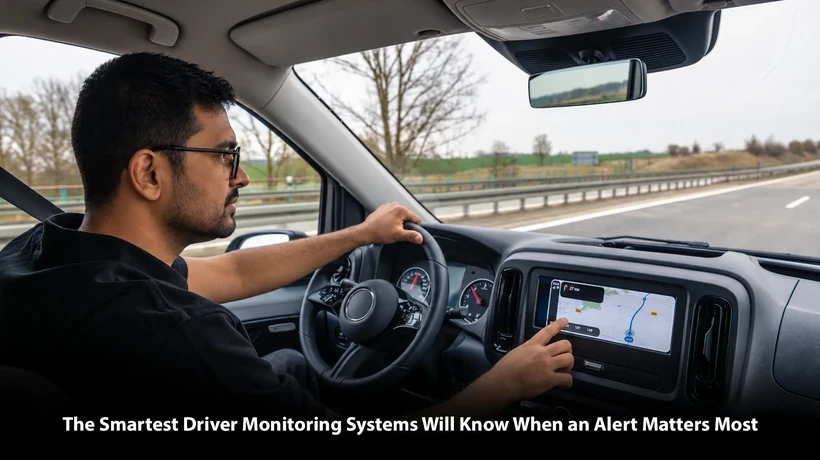
Smart driver monitoring devices cut alert fatigue by ranking risks, so fleets act on the warnings that matter.
Picture a truck driver who hears his fifth beep in ten minutes. He glances at the mirror, sips some tea and keeps going. Beep number six arrives, and he ignores it. Then a real hazard appears, and the same sound means nothing. This hidden issue persists in many driver monitoring devices today.
Fleets install these systems to enhance fleet safety, but excessive warnings without proper context teach drivers to ignore alerts. Fleet managers face similar challenges as dashboards become cluttered with red flags, making genuine risks harder to identify. India's roads show the stakes. The Ministry of Road Transport and Highways reported 1,77,175 road deaths in 2024, which is roughly 20 every hour. Missing one real warning costs lives, money and trust.
This guide explores how intelligent systems determine which alerts require the most attention. You will discover how they distinguish fatigue from distraction, prioritize events based on risk levels, and transform raw data into actionable insights.
Why Alert Fatigue Weakens Fleet Safety?
Alert fatigue occurs when someone receives so many warnings that the brain gradually stops recognizing them as urgent. Pilots, nurses, and drivers all experience this issue. Inside a truck cab, repeated alerts can blend into the background, much like the constant hum of a refrigerator at home. What is alert fatigue in driver monitoring? It is a decline in driver responsiveness caused by too many low-value notifications.
The evidence is strong. A 2026 IIHS study on Subaru’s DriverFocus system revealed that excessive alerts and annoyance were the leading reasons drivers disabled the system. Although only 4% turned it off, they were often the ones receiving the highest number of alerts. The same study showed that 97% of users received a distraction alert in the previous 30 days, against 37% for drowsiness. Those numbers show how quickly notifications pile up.
Now add the road reality. India recorded 4,87,707 road accidents in 2024. Fleet managers feel the strain as well. A control room that receives hundreds of identical flags cannot spot the one driver who is nodding off at night. More notifications do not create more safety. Better notifications do.
How Driver Monitoring Devices Tell Different Behaviours Apart?
Smart driver monitoring devices never treat every glance the same way. An infrared camera tracks the face, eyes and head. Software then classifies what it sees. This classification process serves as the first line of defence against unnecessary alerts, distinguishing a helpful system from an irritating one.
Reading Fatigue Signals
Driver fatigue detection looks for slow patterns. Prolonged eye closures, frequent blinks, repeated yawning, and a drooping head are all indicators of drowsiness. Head tracking can detect a tilt or nod, which often signals early tiredness. Fatigue builds gradually, so the system can watch a trend instead of reacting to one blink. A single yawn means little. Three yawns plus slow eyelid movement within forty minutes means a great deal.
Reading Distraction Signals
Distraction monitoring follows a different approach. It identifies sudden behaviours, such as holding a phone, looking away from the road for several seconds, or turning the head in another direction. Context plays a crucial role in these situations. The IIHS findings indicate that Subaru's system avoids issuing alerts when the turn signal is active, as glancing sideways during a lane change is a normal driving behaviour. Some drivers considered alerts for unsignalled lane changes to be false alarms, although the system had identified an actual driving habit. Effective systems distinguish harmless glances from potentially dangerous ones, while poorly designed systems fail to recognise the difference.
How Smart Systems Rank Events by Risk
Detection is only half the job. Ranking comes next. A smart platform combines driver state with vehicle data, including speed, lane position, braking force and distance to the vehicle ahead. A drowsy driver in a parked depot truck poses little danger. A driver showing signs of drowsiness while travelling at highway speeds presents a critical safety risk. How do driver monitoring systems prioritize alerts? They evaluate each event by considering three key questions. How severe is the behaviour? How fast is the vehicle moving? Does the pattern repeat?

This prioritization approach reserves the most urgent alerts for situations that genuinely require immediate attention. ADAS functions, including forward collision and lane departure warnings, provide additional context that helps refine risk assessments. When a lane departure warning coincides with signs of closing eyelids, the combined signals reveal a much clearer picture of the potential danger than either indicator would on its own.
Why Alert Timing Determines Warning Effectiveness?
Even an accurate alert can be ineffective if it arrives at the wrong time. What is the best time to warn a drowsy driver? The warning should come early, as signs of fatigue begin to emerge, rather than at the last moment. Since fatigue develops gradually, monitoring systems have an opportunity to detect its progression. A microsleep, however, may last just a few seconds. At 80 km/h, a truck travels approximately 22 metres every second, leaving virtually no margin for a warning that comes too late.
Smart systems therefore use tiers. An initial sign of drowsiness triggers a gentle chime, followed by a spoken warning if the symptoms persist. A call from the control room closes the loop when the driver ignores both. Each step carries more urgency than the last, so drivers learn that louder means more serious.
Relevance also builds trust. According to the IIHS study, 70% of drivers wanted to use the system again, 64% felt it improved their safety, and 63% believed it helped them stay focused. Drivers are more receptive to alerts they consider justified but become frustrated when warnings seem unpredictable. Delivering alerts at the right moment can transform an irritating device into a trusted driving companion.
How Fleet Managers Can Convert Alerts into Meaningful Actions?
Technology alone cannot eliminate alert fatigue. Fleet managers must also manage how warnings are delivered. How can fleet managers reduce false alerts? They can adjust alert thresholds, verify camera positioning, and consider feedback from drivers. Industry recommendations also highlight the importance of driver training, adjustable alert settings, and consent options to establish trust. This approach can encourage greater driver acceptance. An IIHS survey revealed that 87% of nearly 3,500 vehicle owners used their monitoring systems all or most of the time.
Try these practical steps:
- Set different thresholds for city lanes, highways and night shifts.
- Examine a small batch of alerts with drivers each week.
- Ensure every critical alert is followed by a personal check-in.
- Use saved video clips for coaching instead of blame.
- Help drivers understand the purpose of each alert and the safety risks it helps prevent.
Do drivers embrace camera-based monitoring? Most do when they understand its purpose. Fleet managers achieve better outcomes when they use alerts to guide and educate drivers rather than penalize them. Accurate data also plays an important role. Reducing duplicate alerts allows managers to focus their attention on drivers who genuinely need guidance and support.
How eTrans Solutions Builds Alerts That Matter?
Headquartered in Kolkata, eTrans Solutions brings more than 25 years of industry experience to address this challenge. The company caters to over 600 clients and is certified under ISO 9001 and ISO 27001 standards. Its Network Video Recorder accommodates up to six HD cameras, with optional integration of Advanced Driver Assistance Systems (ADAS) and Driver Monitoring Systems (DMS). The device captures events such as sudden acceleration, hard braking, excessive speed, sharp cornering, and panic button activation. A configurable accelerometer and gyroscope module provides additional motion data, while 4G LTE GNSS technology transmits location information.
Infrared cameras enable continuous recording even in low-light conditions at night. Fleet managers can access live video streams and retrieve clips associated with alerts from the backend server. Recorded footage includes timestamps, vehicle speed, latitude, and longitude, providing essential context for each incident. In 2018, eTrans introduced its indigenously developed NVR equipped with a fatigue monitoring feature. Its connected telematics platform further supports GPS-based vehicle tracking and round-the-clock assistance.
The goal is simple. Reduce unnecessary alerts, improve their accuracy, and enable managers to respond quickly. Visit eTrans Solutions to explore the product range or schedule a demonstration.
Conclusion
The smartest driver monitoring systems do not shout more. They think better. Alert fatigue compromises fleet safety when drivers and managers lose confidence in a constant stream of warnings. The fix starts with accurate detection. Fatigue signals build slowly, while distraction signals appear in sudden bursts. Smart platforms read both, then add vehicle context such as speed, lane position and braking force.
Prioritizing events according to their risk levels ensures that the most urgent alarms are reserved for critical situations. A tiered alert system gives drivers sufficient time to respond before a hazard escalates. Fleet managers can further improve effectiveness by adjusting alert thresholds, examining sample events, and using video footage to guide driver training. The IIHS findings indicate that drivers are more willing to accept monitoring systems when alerts are relevant to their driving behaviour.
India's road fatality figures for 2024 highlight the importance of this acceptance. By delivering fewer, more precise warnings, fleets can better protect drivers, cargo, and their reputation. Choose driver monitoring devices that prioritize contextual accuracy over alert volume, because a timely, relevant warning could ultimately save a life.
Frequently Asked Questions (FAQs)
1. What are driver monitoring devices?
They are in cab camera and sensor systems that watch driver attention. They detect fatigue, distraction and risky behaviour, then send alerts to the driver and the fleet manager.
2. Why do too many alerts reduce safety?
Repeated low value warnings train drivers to ignore sounds. A genuine emergency then gets the same weak response, and managers also miss critical events inside the flood of notifications.
3. How does a system tell fatigue from distraction?
It tracks eye closure, blinking, yawning and head position for fatigue trends. It tracks phone use and gaze direction for distraction, then checks driving context before it triggers a warning.
4. Can driver monitoring reduce false alerts?
Yes. Custom thresholds, correct camera placement, turn signal awareness and regular alert reviews all reduce false positives. Driver feedback helps managers refine settings over time.
5. What should fleets check before buying a system?
Check detection accuracy, alert prioritization, video evidence, ADAS and DMS options, night recording, data security and local support. Ask for a live demo on real routes.


Comments
Login to Comment