The Future of Transport Efficiency Driven by Vehicle Performance Monitoring
25 May, 2026
1637 Views 0 Like(s)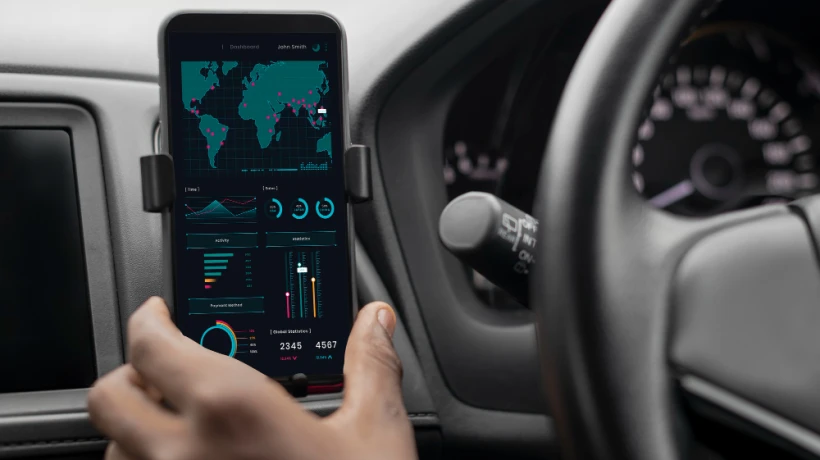
Explore how connected mobility and real-time vehicle intelligence are transforming India’s transport ecosystem through smarter driving behavior monitoring, predictive maintenance, and data-driven insights that improve safety, efficiency, and operational performance.
Over the past few years, India’s roads have quietly become a testing ground for a new kind of mobility—one that doesn’t rely only on engines and infrastructure, but on data. Whether it’s delivery vehicles navigating dense city traffic or long-distance transport moving across states, the way performance and safety are managed is changing faster than most people realize. What used to depend heavily on manual observation is now increasingly guided by real-time intelligence coming directly from vehicles themselves.
Understanding Driver Awareness in a Connected Ecosystem
One of the most noticeable changes in this shift is the growing focus on driving behavior monitoring. Instead of looking only at where a vehicle is going, modern systems now pay attention to how it is being driven. Sudden braking, aggressive acceleration, and inconsistent speed patterns are all being captured and analyzed to understand driving styles more clearly.
This change is having a real impact on road awareness. Drivers are becoming more conscious of their habits because feedback is no longer delayed—it is continuous. Over time, this helps build a more disciplined driving culture without the need for constant external supervision.
I’ve noticed that many transport operators now view this not as surveillance, but as guidance. When drivers understand their behavior is being observed constructively, it often leads to more careful and responsible driving decisions on the road.
From Mechanical Checks to Real-Time Intelligence
Another major transformation is happening in how vehicles are maintained and evaluated. Earlier, performance issues were typically identified only during service visits or after a breakdown occurred. Today, vehicle performance monitoring is changing that completely by offering continuous visibility into how a vehicle is functioning.
This approach helps identify early signs of wear and inefficiency before they turn into costly problems. For businesses managing multiple vehicles, this shift reduces downtime and improves planning. It also creates a more predictable operational flow, which is critical in a country where delivery timelines and road conditions can vary significantly.
The ability to understand performance in real time is helping operators move from reactive maintenance to proactive decision-making.
How Data Is Shaping Smarter Transport Decisions
As connected mobility continues to evolve, vehicle data insights are becoming one of the most valuable tools for decision-making. Instead of relying on assumptions or delayed reports, businesses can now analyze actual usage patterns, driving trends, and performance behavior in real time.
This level of visibility is changing how transport strategies are built. Route optimization, fuel efficiency planning, and maintenance scheduling are now guided by actual data rather than estimates. It also helps identify inefficiencies that might otherwise go unnoticed, such as repeated delays on specific routes or unnecessary idling patterns.
In practical terms, organizations using these insights often experience:
-
Better control over fuel consumption and operational costs
-
Early detection of performance issues before breakdowns occur
-
Improved route planning based on real usage patterns
-
Higher consistency in delivery timelines and operations
Why Connected Mobility Is Becoming the New Standard
Companies like Varroc Connect are contributing to this transformation by developing connected mobility platforms that bring tracking, analytics, and performance intelligence together in one ecosystem. Instead of treating vehicles as isolated units, these systems turn them into connected sources of continuous information.
This shift is particularly important in India, where transportation environments are highly dynamic. From congested city routes to long highway journeys, conditions can change quickly, making real-time awareness essential for smooth operations.
As adoption increases, businesses are beginning to realize that visibility is not just an operational advantage—it is becoming a necessity for efficiency and safety.
The Road Ahead for Data-Driven Transportation
Looking forward, the role of connected systems in mobility will only grow stronger. Vehicles will no longer be viewed just as transport tools, but as intelligent systems capable of generating meaningful insights every second they are in motion.
This evolution is already reshaping how decisions are made across the transport sector. The focus is shifting from reacting to problems toward predicting and preventing them before they occur.
In many ways, India’s mobility landscape is moving toward a future where every journey is informed by data, every decision is supported by insights, and every vehicle contributes to a smarter, more efficient transport ecosystem.
FAQs
1. What is driving behavior monitoring used for?
It is used to analyze driving patterns such as acceleration, braking, and speed to improve safety and encourage responsible driving habits.
2. How does vehicle performance monitoring help businesses?
It provides real-time insights into vehicle condition, helping reduce breakdowns, improve efficiency, and support better maintenance planning.
3. Why are vehicle data insights important in modern transport?
They help businesses make informed decisions based on real usage patterns, improving efficiency, cost control, and operational reliability.

Comments
Login to Comment