Smart Styling Tips for Modern Women's Clothing
06 Aug, 2026
535 Views 0 Like(s)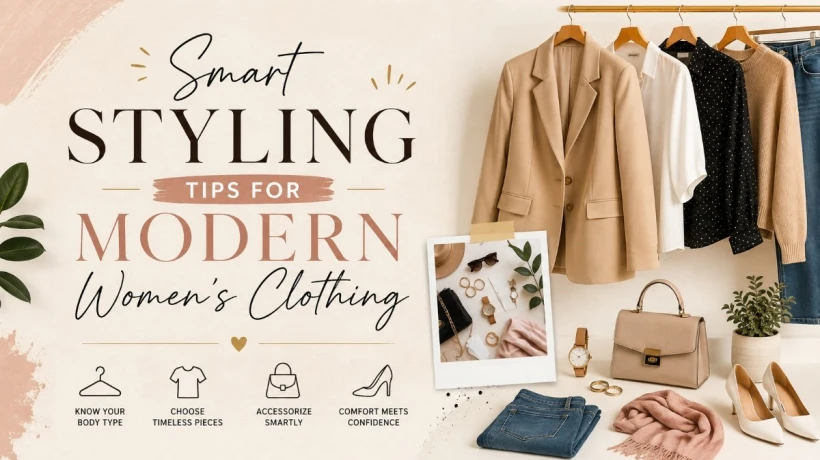
Good style is not about additional clothes. It’s understanding how to mix the correct ones. Once you master a few key stylistic rules, dressing becomes second nature, instead of a daily challenge.
Quick Summary: The secret to modern women’s style: a handful of recurring habits: establish a capsule wardrobe of versatile basics, layer with intention, deliberately combine high-street with casual, and allow accessories do the hard lifting. Know these basics and you’ll look good when you’re rushed, not only when you’ve planned everything out.
Getting ready should never be a problem to be solved every single morning. But for many women it becomes that, staring at a wardrobe full of clothes, but nothing seems appropriate to wear. The problem is rarely a paucity of options. What we don’t have is a system.
Good style is not about additional clothes. It’s understanding how to mix the correct ones. Once you master a few key stylistic rules, dressing becomes second nature, instead of a daily challenge.
That’s the theory behind Jesse Keyes take on modern womenswear: fewer, better pieces that effortlessly translate from casual days to high street occasions so that assembling an outfit takes minutes, not an internal argument. So having said that, here’s the styling habits that matter.
Start With a Capsule Wardrobe, Not a Full Closet
A capsule wardrobe is a limited, carefully chosen collection of clothes, in which almost everything goes with almost everything else. A few tops, a couple of well-fitting trousers, a beautiful coat, an adaptable dress and shoes that don’t mind the weather.
Simple maths. With twenty coordinating pieces you get more outfit options than with fifty things that only go with one or two other pieces. Fewer decisions. Greater outcomes.
When building yours, prioritize:
-
Neutral bases (black, white, camel, navy, grey) that anchor an outfit
-
One or two statement pieces in color or pattern to break up the neutrals
-
Fabrics that hold their shape and travel well
-
Fits that match your actual lifestyle, not an aspirational one
Once the base is solid, everything you add on top becomes easier to style, not harder.
Layering Is a Skill, Not an Accident
Layering is usually thought of as a cold weather task, yet it is one of the most potent styling techniques at your disposal all year round. Done effectively it adds texture, form and visual intrigue and it doesn't even require new clothes.
The idea is to change the lengths and weights of each layer. Open large shirt over straight-legged pants with fitted tank below makes for three separate layers without the bulk. The easiest way to take a summer garment into the winter months is to layer a slip dress over a long sleeve tee.
A few rules that keep layering from looking messy:
-
Keep at least one layer fitted so the silhouette doesn't disappear
-
Let hemlines peek out intentionally instead of hiding them
-
Stick to two or three layers max - past that, it starts to look accidental
-
Use color to connect the layers, even if the fabrics differ
Layering is also the fastest way to make a small wardrobe feel twice as large, since the same five pieces can be combined in dozens of different ways.
Blend Casual and High Street Fashion on Purpose
One of the most significant changes in fashion of modern ladies is the lack of rigorous clothing regulations. Casual and high street pieces now sit comfortably in the same outfit and to be honest that mix is where a lot of the best looks come from.
Tee plain with blazer on jeans. Sneakers with Structured Midi Skirt. Silk cami with casual cargo pants. They work because they play with contrast: polished vs. casual, structured vs. soft.
The trick is to pick one “elevated” piece per ensemble and keep the rest simple.” When the blazer is doing all the work, the rest of the outfit doesn’t have to compete with it. Often, the need to make every single thing a statement is what makes an outfit look busy and not planned.
Let Accessories Do the Heavy Lifting
Accessories are the quickest and cheapest method to change the look of an outfit. That same black dress can be workplace wear, date-night wear or weekend wear, all depending on what you put around it.
It’s dressed up with a structured bag and stiletto boots. A canvas tote and simple shoes keep it casual. Layer upon layer of gold jewellery provides warmth; one silver cuff keeps it modest. Belts, especially, are misused – a belt can constrict an oversize shirt or dress at the waist and alter the whole silhouette in seconds.
The practice to develop here is restraint. Pick one statement piece, whether it’s a striking earring, a statement purse or a vibrant belt, and keep everything else understated. It's all noisy and nothing rises above the noise.
Understand What Actually Flatters Your Shape
Styling advice that ignores body shape isn't very useful in practice. The goal isn't to follow trends blindly, it's to adapt them so they work for you.
A few general (not absolute) principles worth knowing:
-
High-waisted bottoms tend to lengthen the legs and define the waist for most body types.
-
Structured shoulders (blazers, structured tops) balance a fuller hip line if that's a proportion you want to soften.
-
V-necks and open collars elongate the neckline and work well for shorter frames.
-
Monochrome dressing - wearing one color head to toe - creates a longer, uninterrupted line.
-
Wrap styles naturally define the waist without needing a belt.
None of these are rules you have to follow. They're starting points. The real skill is trying things on with curiosity instead of judgment and noticing what actually feels good to move in.
Master the Day-to-Night Transition
Not every outfit needs to be built from scratch for evening plans. Smart styling means having a system to transition daytime looks into something that works after hours, without a full outfit change.
A few reliable moves:
-
Swap flats for heels or boots
-
Add a blazer or leather jacket over the same top
-
Trade a tote bag for a smaller structured bag or clutch
-
Add one bolder accessory - a statement earring or a bright lip
-
Undo one button, roll the sleeves, or untuck a shirt for a more relaxed evening feel
This isn't about having twice the wardrobe. It's about knowing which two or three changes shift the entire mood of an outfit.
Pay Attention to Fabric, Not Just Fit
Style is about fit, but the fabric is just as important behind the scenes. A identical silhouette in rigid polyester vs soft crepe or brushed cotton would move, sit and shoot totally differently.
Natural and natural blend textiles – cotton, linen, viscose, wool blends – hang better and endure longer than their hefty synthetic counterparts. They also tend to improve with age, which is a good thing if you’re developing a wardrobe designed to last seasons, not weeks.
If you’re shopping, it’s worth touching the cloth before you check the price tag. A well-made cloth, however plain its weave, will always look better than a badly-made cloth, however beautifully it is cut.
Common Questions About Modern Women's Styling
What are the basics every modern woman's wardrobe needs?
A well-fitted blazer, straight-leg or wide-leg trousers, a versatile midi dress, quality denim, a plain white shirt, and neutral footwear that works for both casual and slightly dressed-up occasions.
How can I make my outfits look more put-together without buying new clothes?
Focus on fit adjustments (tucking, cuffing, belting), intentional layering, and swapping accessories. Most outfits look "unfinished" not because of the clothes, but because of missing finishing touches.
Is it okay to mix casual and formal pieces in one outfit?
Yes - this is one of the defining traits of modern fashion. The key is balance: pair one elevated piece with otherwise simple, relaxed items rather than combining several formal pieces at once.
How many pieces should be in a capsule wardrobe?
There's no fixed number, but most functional capsules land between 25 and 35 pieces, including tops, bottoms, outerwear, and shoes, chosen so most items can be worn with several others.
What's the easiest way to update a wardrobe on a budget?
Add accessories and one or two versatile statement pieces rather than replacing the whole wardrobe. A new blazer, bag, or pair of shoes can refresh dozens of existing outfits.
Final Thoughts
Smart dressing isn’t about following every trend, or stuffing your wardrobe full. It’s about learning a few fundamentals – fit, layering, contrast and finishing touches – and applying them consistently. When those habits are in place, getting dressed is no longer a daily decision but more like muscle memory.
Begin small. Pick one of these sections from our guide and apply it to your existing closet this week and see how much easier it is to put your clothes together. The objective was not to get a bigger wardrobe. Always it was a smarter one.
Comments
Login to Comment