Rupee Fall: This Happened for the First Time... Rupee Crosses 96, How Much More Will It Fall?
15 May, 2026
1729 Views 0 Like(s)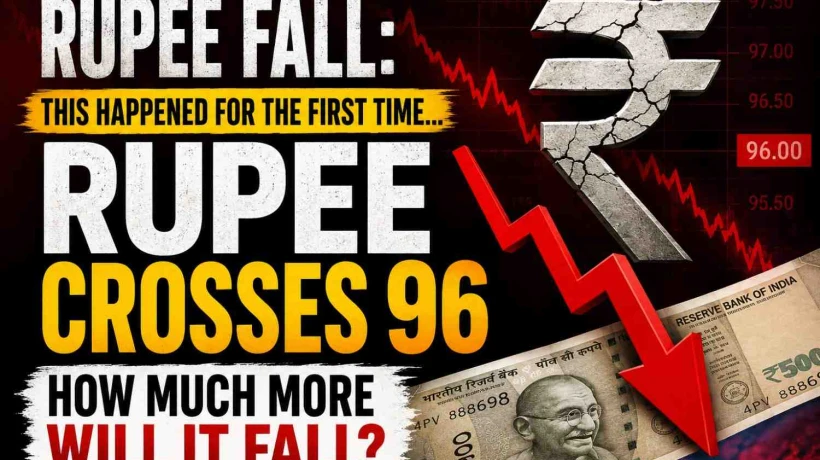
Rupee Fall: This Happened for the First Time... Rupee Crosses 96, How Much More Will It Fall?
The Indian rupee has entered a historic phase of weakness as it crossed the psychological mark of 96 against the US dollar for the first time. The sudden fall has sparked concern among investors, businesses, importers, and ordinary citizens alike. A weaker rupee not only affects the economy but also directly impacts fuel prices, foreign travel, education abroad, and inflation in daily life.
Experts believe the current decline is not just a temporary fluctuation but the result of several global and domestic factors working together. The biggest reason behind the rupee’s weakness is the continuous strengthening of the US dollar. The American economy has remained relatively stable compared to many other countries, encouraging global investors to move their money into dollar-based assets. Whenever demand for the dollar rises globally, currencies like the rupee automatically come under pressure.
Another major reason is rising crude oil prices. India imports nearly 85% of its crude oil requirements, and payments for oil are made in US dollars. When oil prices rise, India needs more dollars to pay import bills. This increases demand for the dollar in the domestic market and weakens the rupee further. Analysts say that if crude prices continue climbing, the rupee could face even more pressure in the coming months.
Foreign investors pulling money out of Indian markets is also contributing to the fall. Global uncertainty, high interest rates in the United States, and geopolitical tensions have made investors cautious. Many foreign institutional investors are shifting their funds from emerging markets like India to safer US investments. This outflow reduces dollar inflows into India and weakens the rupee.
The widening trade deficit is another concern. India imports far more goods than it exports. Electronics, crude oil, gold, and industrial products account for massive imports. When imports rise faster than exports, the country needs more foreign currency, especially dollars, leading to depreciation of the rupee.
For common people, the effects of a weak rupee are significant. Imported goods become more expensive, increasing the prices of electronics, fuel, luxury items, and even certain food products. Air travel and overseas education costs also rise sharply because students and travelers need more rupees to buy the same amount of dollars. Businesses dependent on imported raw materials may also raise product prices, adding to inflationary pressure.
However, there is another side to the story. A weaker rupee can benefit exporters because Indian goods become cheaper in international markets. Sectors like IT services, pharmaceuticals, textiles, and manufacturing may gain from higher export competitiveness. Companies earning revenue in dollars can also see improved profits when converted into rupees.
The Reserve Bank of India (RBI) is closely monitoring the situation. The central bank usually intervenes by selling dollars from its foreign exchange reserves to stabilize the rupee. India currently holds substantial forex reserves, which provide some protection against extreme volatility. Still, experts warn that prolonged pressure from global markets can make it difficult for the RBI to fully control the decline.
So, how much more can the rupee fall?
Economists are divided on this question. Some believe the rupee could stabilize around current levels if oil prices cool down and foreign investment returns to emerging markets. Others warn that if global uncertainties continue and the US Federal Reserve keeps interest rates high, the rupee may weaken further toward 97 or even 98 against the dollar.
Much will depend on international developments. Geopolitical tensions, global recession fears, crude oil prices, and US economic policies will play a key role in determining the rupee’s future direction. Domestic economic growth and government policy responses will also influence investor confidence.
Despite the concerns, many analysts say India’s economic fundamentals remain relatively strong compared to several other emerging economies. India continues to be one of the world’s fastest-growing major economies, and long-term investors still view the country as an attractive market. This may help limit excessive depreciation over time.
For now, businesses and consumers are preparing for higher costs and market volatility. The crossing of the 96 mark is being seen as a symbolic moment in India’s financial history, highlighting the growing challenges facing the global economy. Whether the rupee stabilizes or falls further will depend on how global markets behave in the weeks ahead.
One thing is certain — the rupee’s movement will remain one of the most closely watched economic indicators in the coming months.



Comments
Login to Comment