Real Estate Social Media Marketing Guide for Agents
25 Aug, 2026
505 Views 0 Like(s)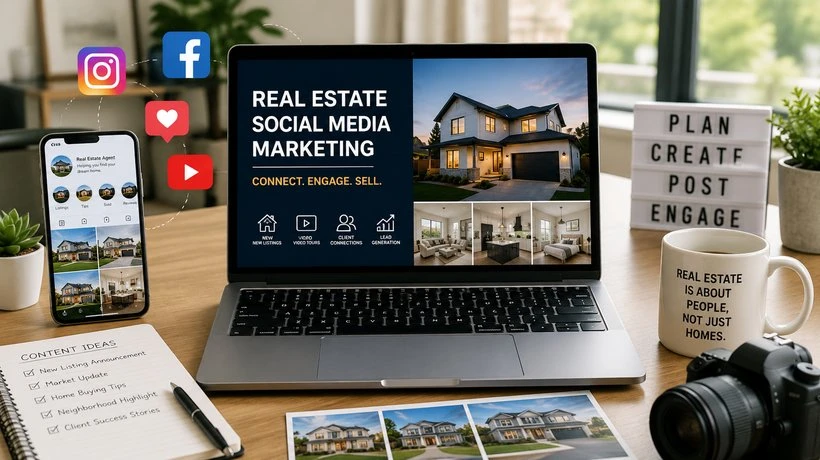
Discover effective Real Estate Social Media Marketing strategies to attract buyers, promote listings, build your brand, and generate more qualified leads.
Real estate buyers are no longer relying only on property portals and traditional advertising to discover homes. Social media has become an important part of the home-buying journey, giving real estate agents an opportunity to showcase properties, build trust, attract local buyers, and generate leads before a potential client ever schedules a showing.
A strong Real Estate Social Media Marketing strategy can help agents turn property photos, videos, market insights, and local knowledge into content that attracts attention and keeps their brand visible.
However, simply posting a property photo is not enough. Successful real estate social media marketing requires the right content, consistent publishing, engaging visuals, and a clear understanding of what potential buyers and sellers want to see.
Why Real Estate Social Media Marketing Matters
Social media gives real estate agents a direct way to reach people where they already spend time online. Platforms such as Instagram, Facebook, TikTok, YouTube, and LinkedIn can help agents build awareness around properties while establishing themselves as knowledgeable professionals in their local market.
A property listing may only appear on a real estate portal for a limited period, but social media content can continue attracting views, shares, comments, and profile visits long after the original post is published.
Social media is also valuable because it allows agents to show more than properties. You can share neighborhood information, home-buying advice, market updates, renovation ideas, property tours, client success stories, and behind-the-scenes content.
This creates a more complete personal brand rather than making every post feel like an advertisement.
Create Content That Buyers Actually Want to See
One of the biggest mistakes agents make is turning their social media profile into a constant stream of property advertisements.
While listings are important, buyers generally want useful or interesting content rather than repeated sales messages.
Consider creating content around the questions buyers frequently ask. Explain what buyers should look for during a home tour, how to prepare for a mortgage application, what makes a neighborhood attractive, or how to evaluate a property's potential.
You can also create educational content around common real estate terms, home maintenance, moving preparation, and market trends.
When your content consistently answers questions, potential clients have more reasons to follow your account and remember your name when they are ready to buy or sell.
Make Property Photos Social-Media Ready
Visual content is at the center of real estate marketing. Before someone reads your caption, they are likely to notice the image or video.
High-quality property photography can make a significant difference in how quickly users stop scrolling.
Use bright, realistic images that show rooms clearly and represent the property accurately. Avoid clutter, excessive editing, dark interiors, and inconsistent image quality.
You should also consider how each image works on different platforms. A property image designed for a website may need to be adapted for Instagram, Facebook, Pinterest, or other social channels.
The goal is to make every property look professional while maintaining an authentic representation of the home.
Use Short-Form Video to Increase Engagement
Short-form video has become an important format for real estate social media marketing.
Instead of uploading only static listing photos, agents can create short walkthroughs showing the property's most attractive features. A 20- to 60-second video can introduce the exterior, living room, kitchen, bedrooms, backyard, and standout features in a way that feels more immersive.
Video can also be used for neighborhood tours, market updates, quick home-buying tips, before-and-after transformations, and answers to common buyer questions.
The first few seconds matter. Start with something that gives viewers a reason to continue watching, such as an impressive room, unique feature, desirable location, or useful piece of information.
You do not need expensive production equipment for every video. A clear smartphone recording, good lighting, steady camera movement, and useful information can produce effective content.
Use Instagram to Showcase Properties and Your Brand
Instagram is particularly useful for visually presenting real estate.
Agents can use posts, carousels, Stories, and Reels to create different experiences for potential buyers.
A carousel can showcase multiple rooms from the same property. A Reel can provide a quick walkthrough. Stories can highlight new listings, open houses, market updates, polls, and questions.
Your Instagram profile should also make it easy for visitors to understand who you are, where you work, and how they can contact you.
Instead of treating Instagram as a collection of property advertisements, use it as a visual portfolio that demonstrates your expertise and local market knowledge.
Build a Local Audience
Real estate is inherently local, which makes location-based content especially valuable.
Instead of focusing exclusively on individual properties, create content about the communities you serve.
Highlight local restaurants, parks, schools where appropriate, shopping areas, attractions, commuting considerations, seasonal events, and neighborhood characteristics.
For example, an agent working in a particular city could create content such as “What $500,000 Buys in [City],” “Best Neighborhoods for First-Time Buyers,” or “Things to Know Before Moving to [City].”
This type of content can attract people who are researching an area before they are ready to contact an agent.
Turn One Listing Into Multiple Social Posts
You do not need to create completely new content every time you publish.
One property can generate multiple pieces of social media content.
A professional exterior image can become a listing announcement. Interior photos can become a carousel. A walkthrough can become a Reel. A floor plan can become an educational post explaining the property's layout. A unique feature can become its own short video.
This approach makes your content strategy more efficient while allowing the same property to reach different audiences and formats.
The key is to avoid simply copying and pasting the same post across every platform. Adapt the content to match how people use each social network.
Write Captions That Encourage Action
A strong image can attract attention, but the caption should give people a reason to engage.
Instead of writing only “New listing available,” explain what makes the property interesting.
Mention the most valuable features, location advantages, recent improvements, or lifestyle benefits. Keep the information easy to scan and make the next step clear.
Depending on the purpose of the post, your call to action could encourage users to visit the listing, send a message, save the post, share it with someone searching for a home, or contact you for additional information.
The call to action should feel natural rather than overly promotional.
Use Social Media to Generate Seller Leads
Real estate social media marketing is not only about finding buyers.
It can also help agents attract homeowners who may be considering selling.
Educational posts about preparing a home for sale, improving curb appeal, understanding market conditions, choosing listing photography, or determining what buyers notice first can position you as a valuable resource.
Seller-focused content can be especially effective when it demonstrates your process.
Show how you prepare properties, create marketing materials, promote listings, and communicate with clients. This gives potential sellers a clearer understanding of the experience they could receive from working with you.
Stay Consistent With Your Posting Strategy
Consistency is more important than trying to publish dozens of posts in a short period.
Create a realistic schedule that you can maintain. For example, you might combine property content with educational posts, local content, market insights, and personal branding.
A consistent presence makes your account appear active and gives followers more opportunities to interact with your content.
You should also monitor which posts perform best. Look at views, saves, shares, comments, profile visits, website traffic, and inquiries.
Over time, these insights can show you which topics and formats are most useful to your audience.
Use Technology to Make Real Estate Marketing Faster
Creating social media content for every listing can become time-consuming, particularly for agents managing multiple properties.
Preparing photos, editing visuals, creating videos, designing floor plans, writing descriptions, and producing social media assets can require several different tools and workflows.
Real estate-focused technology can help simplify parts of this process. Tools such as Walktru can help agents create marketing-ready property visuals and content more efficiently, giving them more opportunities to promote listings across their digital channels.
The goal is not to replace the agent's expertise. Instead, better technology can reduce repetitive production work and allow agents to spend more time on clients, relationships, and sales.
Measure What Actually Generates Leads
High views do not automatically mean successful marketing.
A post with thousands of views but no inquiries may be less valuable than a smaller post that generates several qualified leads.
Track the metrics that connect social media activity with your real estate goals. Website visits, listing clicks, direct messages, inquiries, appointment requests, and leads can provide more meaningful insights than follower count alone.
Use this information to improve your strategy. If property walkthrough videos generate more inquiries than static images, create more video content. If local neighborhood posts attract strong engagement, expand that content category.
Your social media strategy should evolve based on actual audience behavior.
FAQs
What is Real Estate Social Media Marketing?
Real Estate Social Media Marketing is the use of platforms such as Instagram, Facebook, TikTok, YouTube, and LinkedIn to promote properties, attract buyers and sellers, build an agent's brand, and generate real estate leads.
Which social media platform is best for real estate agents?
The best platform depends on your target audience and content style. Instagram and Facebook are useful for property marketing, while TikTok and YouTube can be effective for video content. LinkedIn can be valuable for professional networking and industry-focused content.
How often should real estate agents post on social media?
Consistency matters more than a specific number of posts. Choose a schedule you can maintain while balancing property listings, educational content, local information, and market updates.
What type of content works best for real estate social media?
Property walkthroughs, high-quality listing photos, market updates, neighborhood content, home-buying tips, seller advice, educational posts, and behind-the-scenes content can all contribute to an effective strategy.
Can social media help real estate agents get more leads?
Yes. Consistent social media marketing can increase visibility, build trust, drive website traffic, encourage direct messages, and create opportunities to connect with potential buyers and sellers.
Final Thoughts
Real Estate Social Media Marketing gives agents an opportunity to build visibility, showcase properties, establish expertise, and create relationships with potential buyers and sellers.
The strongest strategy is not based on posting as frequently as possible. It is based on consistently publishing useful, visually appealing, locally relevant content that gives people a reason to follow and remember you.
Combine high-quality property visuals with short-form video, educational content, neighborhood insights, seller-focused advice, and strong calls to action. Then measure the results and continue improving the content that generates meaningful engagement and leads.
When social media becomes part of your overall real estate marketing strategy rather than an afterthought, every listing can become an opportunity to reach a larger audience and build your long-term brand.



Comments
Login to Comment