Payroll Processing: A Complete Guide for Modern Businesses
09 Jul, 2026
1090 Views 0 Like(s)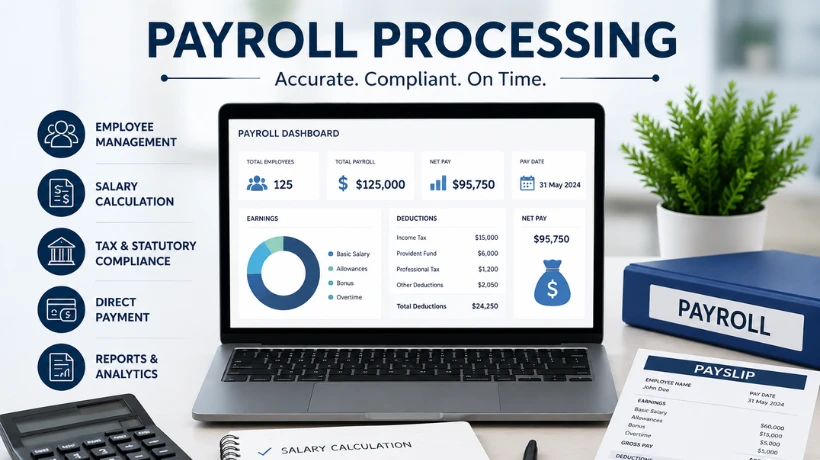
Simplify Payroll Processing with automated salary calculations, tax compliance, accurate payroll management, and timely employee payments.
Managing employee salaries is one of the most important responsibilities for every business. Whether you have a small startup or a large enterprise, paying employees accurately and on time helps build trust, improve productivity, and ensure legal compliance. This is where Payroll Processing becomes an essential part of business operations.
An organized payroll system not only calculates salaries but also manages taxes, deductions, bonuses, reimbursements, and statutory compliance. By using modern payroll software, businesses can reduce manual work, eliminate costly errors, and create a smooth payroll experience for both HR teams and employees.
What Is Payroll Processing?
Payroll Processing is the complete process of calculating employee salaries, deducting taxes and other statutory contributions, generating payslips, and transferring salaries to employees. It also includes maintaining payroll records, ensuring compliance with labor laws, and filing tax-related reports.
Every payroll cycle involves collecting employee attendance, calculating earnings, deducting applicable taxes and contributions, processing payments, and maintaining accurate documentation. Businesses that follow a structured payroll process can avoid payroll disputes, improve transparency, and remain compliant with government regulations.
Why Is Payroll Processing Important?
Payroll is much more than salary calculation. It directly impacts employee satisfaction, financial planning, and regulatory compliance.
Here are some of the key benefits:
-
Ensures employees receive accurate salaries on time.
-
Reduces payroll errors and manual calculations.
-
Maintains compliance with tax and labor regulations.
-
Simplifies statutory deductions such as EPF, ESI, and TDS.
-
Improves employee trust and workplace satisfaction.
-
Saves valuable time for HR and finance teams.
-
Creates organized payroll records for audits and reporting.
An efficient payroll system allows businesses to focus on growth instead of spending hours on repetitive administrative tasks.
Steps Involved in Payroll Processing
Every organization follows a structured payroll workflow. Although the exact process may vary, the key steps generally remain the same.
1. Collect Employee Information
The first step is gathering employee data, including attendance, working hours, overtime, leave records, incentives, reimbursements, and salary revisions. Accurate information ensures correct salary calculations.
2. Calculate Gross Salary
Gross salary includes the employee's basic salary along with allowances, bonuses, commissions, overtime payments, and other earnings.
3. Apply Deductions
The next step is deducting statutory and company-specific contributions. These may include:
-
Income Tax (TDS)
-
Employee Provident Fund (EPF)
-
Employee State Insurance (ESI)
-
Professional Tax
-
Loan repayments
-
Other voluntary deductions
Accurate deductions help businesses remain compliant while preventing payroll discrepancies.
4. Process Salary Payments
After salary calculations are verified, the company transfers employee salaries through bank transfers or digital payment methods. Many organizations automate this process to eliminate delays.
5. Generate Payslips and Reports
Employees receive digital payslips showing earnings, deductions, and net salary. HR teams also generate payroll reports for finance, audits, tax filing, and business analysis.
Common Challenges in Payroll Management:
Many businesses still rely on spreadsheets or manual calculations, which often lead to payroll issues.
Some common challenges include:
-
Incorrect salary calculations
-
Delayed salary payments
-
Compliance mistakes
-
Data entry errors
-
Changing tax regulations
-
Managing multiple employee locations
-
Handling leave and attendance accurately
These challenges can result in employee dissatisfaction, financial penalties, and increased administrative workload.
How Does Payroll Software Simplify Payroll Processing?
Modern payroll software automates every stage of Payroll Processing, making payroll faster, more accurate, and easier to manage.
Some valuable features include:
-
Automatic salary calculations
-
Attendance and leave integration
-
Tax calculation and filing support
-
Statutory compliance management
-
Direct bank transfers
-
Employee self-service portal
-
Automated payslip generation
-
Payroll analytics and reporting
Automation significantly reduces manual effort while improving payroll accuracy and transparency.
Best Practices for Effective Payroll Management
Organizations can improve payroll efficiency by following these proven practices:
-
Keep employee records updated.
-
Automate repetitive payroll tasks.
-
Verify attendance before salary calculations.
-
Stay informed about changing tax laws.
-
Conduct regular payroll audits.
-
Maintain secure payroll records.
-
Use cloud-based payroll software for better accessibility.
These practices help minimize payroll errors and improve operational efficiency.
Choosing the Right Payroll Solution
Selecting the right payroll software depends on your organization's size and business requirements. A reliable solution should be easy to use, secure, scalable, and compliant with local regulations.
Look for features such as:
-
Automated salary calculations
-
Compliance updates
-
Leave and attendance integration
-
Custom salary structures
-
Direct bank integration
-
Employee self-service access
-
Data security
-
Detailed payroll reports
-
Mobile accessibility
The right payroll solution saves time while supporting business growth.
Why Do Businesses Prefer Automated Payroll Systems?
Businesses are increasingly moving toward automated payroll because it delivers greater accuracy, faster processing, and improved compliance. HR teams spend less time on manual calculations and more time focusing on strategic initiatives such as employee engagement and workforce planning.
Automated systems also reduce the risk of penalties caused by incorrect tax filings or delayed salary payments. Employees benefit from timely salaries, digital payslips, and greater transparency, creating a positive workplace experience.
Conclusion:
Efficient Payroll Processing is the backbone of successful workforce management. It ensures employees are paid accurately, statutory obligations are fulfilled, and payroll records remain organized for future reference. As businesses grow, manual payroll methods become increasingly difficult to manage, making automation the smarter choice.
Investing in reliable payroll software helps organizations improve efficiency, reduce errors, maintain compliance, and deliver a better employee experience. Whether you operate a startup, SME, or large enterprise, streamlining your payroll process is an investment that supports long-term business success.


Comments
Login to Comment