Is Chemical Peeling Safe for Sensitive Skin?
27 Feb, 2026
6340 Views 0 Like(s)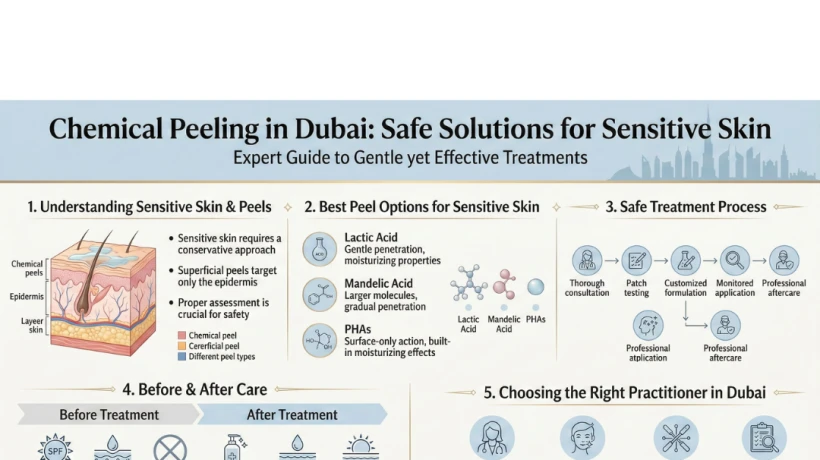
Chemical peeling can be safe for sensitive skin when gentle acids like lactic or mandelic acid are used at the right strength by an experienced practitioner. With proper assessment, patch testing, and aftercare, it improves tone and texture without triggering excess irritation.
Yes, chemical peeling can be safe for sensitive skin, but only when the right type of peel is used at the right concentration, applied by someone who understands how reactive skin behaves. The key distinction is that sensitive skin requires a more conservative approach. Superficial peels with gentle acids like lactic acid or mandelic acid, applied at lower concentrations and with shorter contact times, can improve tone, texture, and mild pigmentation without triggering the kind of inflammatory response that sensitive skin is prone to. The procedure becomes unsafe when the wrong peel is chosen, when concentrations are too aggressive, or when the practitioner does not account for the patient's skin reactivity before starting.
Many people with sensitive skin assume they cannot have any form of professional exfoliation. That is not accurate. The issue is not whether a peel can work for them, but whether the person applying it knows how to adjust the treatment for their skin type. A peel that works perfectly for someone with resilient, oily skin can cause lasting damage on someone whose skin flushes at the slightest irritation. The distinction between a safe and unsafe outcome almost always comes down to practitioner judgment and proper skin assessment.
What Makes Skin "Sensitive" in Clinical Terms
Sensitive skin is not a single diagnosis. It is a broad term that covers several different conditions, and understanding which type you have matters for treatment decisions.
Some people have inherently thin, reactive skin that flushes easily and responds to environmental triggers like wind, heat, or certain ingredients. Others have sensitized skin, meaning their barrier has been compromised by overuse of harsh products, retinoids, or previous treatments done too aggressively. These are different situations that require different approaches.
Conditions like rosacea, eczema, and contact dermatitis also fall under the sensitive skin umbrella, but each has specific clinical considerations. A person with rosacea, for instance, may tolerate a mild lactic acid peel but react badly to glycolic acid at the same concentration. Someone with a compromised skin barrier from over-exfoliation might need weeks of barrier repair before any peel is appropriate.
A competent skin specialist will assess your specific type of sensitivity before recommending any acid-based treatment. If someone suggests a chemical peel without first asking about your skin history, product routine, and known triggers, that is a red flag.
How Chemical Peels Actually Work
A chemical peel involves applying an acid solution to the skin's surface. The acid dissolves the bonds between dead and damaged skin cells, causing controlled exfoliation. Depending on the depth of the peel, this can affect just the outermost layer of skin or penetrate deeper into the dermis.
Peels are categorized into three depths: superficial, medium, and deep. For sensitive skin, the conversation should almost always stay within the superficial category, at least initially. These peels work on the epidermis only and cause minimal disruption to the skin's deeper structures.
The acids used in superficial peels include glycolic acid, lactic acid, mandelic acid, salicylic acid, and combinations of these at varying concentrations. Each acid has different molecular properties that affect how deeply it penetrates and how much irritation it causes. This is where practitioner knowledge becomes critical, because choosing the wrong acid or the wrong percentage for a reactive skin type can turn a simple treatment into weeks of inflammation.
Which Peels Work Best for Sensitive Skin
Not all acids are created equal when it comes to how they interact with reactive skin. Some are inherently gentler due to their molecular size, pH level, and mechanism of action.
Lactic acid is often the first choice for sensitive skin. It has a larger molecular size than glycolic acid, which means it penetrates more slowly and causes less irritation. It also has humectant properties, meaning it draws moisture into the skin rather than stripping it. Concentrations between 20 and 40 percent are typically well tolerated as a starting point.
Mandelic acid is another strong option. Derived from almonds, it has an even larger molecular weight than lactic acid and penetrates very gradually. It is particularly useful for sensitive skin with pigmentation concerns because it addresses discoloration without the aggressive irritation that comes with stronger acids. It also has antibacterial properties, making it suitable for those with mild acne alongside sensitivity.
PHAs, or polyhydroxy acids, like gluconolactone and lactobionic acid, are the gentlest category available for professional peels. They work exclusively on the skin's surface and have built in moisturizing effects. These are often used for patients who have reacted poorly to AHAs in the past or whose skin is too compromised for anything stronger.
Glycolic acid, while extremely effective for many skin concerns, requires more caution with sensitive skin due to its small molecular size and fast penetration. It can be used, but typically at lower concentrations with shorter application times, and only after a patch test confirms tolerance.
What a Safe Treatment Protocol Looks Like
A responsible approach to peeling sensitive skin follows a specific process that minimizes risk and allows the practitioner to gauge your skin's tolerance before committing to anything aggressive.
The first step is a thorough consultation where the practitioner evaluates your skin condition, asks about previous reactions to products or treatments, reviews your current skincare routine, and identifies any contraindications. This should happen before any acid touches your face.
A patch test is strongly recommended for sensitive skin patients. This involves applying a small amount of the chosen acid to a discreet area, usually behind the ear or on the jawline, and monitoring the response over 24 to 48 hours. If the patch test causes excessive redness, burning, or swelling, the peel formulation needs to be adjusted.
During the actual treatment, the acid is applied for a shorter duration than it would be on non-sensitive skin. The practitioner monitors your skin's response in real time, looking for signs of excessive reaction. With sensitive patients, starting with a lower concentration and shorter contact time is standard practice. Subsequent sessions can be gradually increased if the skin tolerates it well.
Post treatment, a neutralizing solution is applied (for peels that require it), followed by a soothing mask or calming serum. The aftercare instructions given at this point are as important as the treatment itself.
The Risks When It Goes Wrong
When chemical peeling is done incorrectly on sensitive skin, the consequences can range from uncomfortable to genuinely damaging.
Mild negative reactions include prolonged redness lasting more than a few days, excessive peeling beyond what was expected, and a burning or stinging sensation that does not resolve with soothing products. These usually heal on their own within a week, but indicate the peel was too strong for your skin.
More serious complications include post inflammatory hyperpigmentation, where the skin responds to the chemical irritation by producing excess melanin. This is particularly common in darker skin tones and can take months to resolve. It is one of the main reasons why acid type, concentration, and contact time must be carefully selected for each patient.
In worst case scenarios, an overly aggressive peel on sensitive or compromised skin can cause chemical burns, scarring, or persistent skin barrier damage. These outcomes are rare with superficial peels but do occur, almost always due to practitioner error or the use of inappropriate peel formulations.
The point is not to scare you away from treatment. It is to emphasize that the safety of the procedure depends almost entirely on who is performing it and how well they understand reactive skin.
Preparing Your Skin Before a Peel
If you have sensitive skin and plan to get a professional peel, the preparation phase matters more for you than for the average patient.
Most practitioners will recommend a pre-treatment skincare routine to begin two to four weeks before the scheduled peel. This typically involves introducing a mild acid at home, like a low-concentration lactic acid serum used a few times per week, to start conditioning the skin for professional-grade exfoliation.
Barrier strengthening is equally important. Using a ceramide-based moisturizer and ensuring your skin is well hydrated going into the treatment reduces the likelihood of an exaggerated inflammatory response. If your skin barrier is already compromised from harsh products or environmental stress, the peel should be postponed until it has been restored.
You should discontinue retinoids, prescription-strength vitamin C, and any other active exfoliants at least five to seven days before your appointment. These products thin the outer skin layer and increase penetration of the peel acid, which amplifies the risk of irritation on already reactive skin.
Here is a practical checklist for the pre-treatment period:
-
Start a gentle lactic or PHA acid product at home two to three weeks before the peel.
-
Use a ceramide or barrier repair moisturizer twice daily.
-
Apply SPF 50 sunscreen every day without exception.
-
Stop retinoids and exfoliating acids five to seven days before the session.
-
Avoid waxing, threading, or laser hair removal on the face for at least one week prior.
-
Do not use any new skincare products in the two weeks leading up to your appointment.
What Recovery Looks Like for Sensitive Skin
Recovery from a superficial peel on sensitive skin is typically manageable, but it may take slightly longer than it would for someone with a more resilient complexion.
Expect redness for the first 24 to 48 hours. On sensitive skin, this can sometimes extend to 72 hours. The skin may feel tight, warm, and slightly swollen, similar to a mild sunburn. These are normal signs of the controlled exfoliation process.
Light flaking or peeling usually begins around day two or three and can continue for up to a week. The temptation to pick or peel the flaking skin is strong, but it must be avoided. Forcing the exfoliation before the skin is ready can cause raw spots, pigmentation, and scarring.
Your post treatment routine should be stripped back to basics during the healing period. A gentle cleanser, a hydrating and soothing moisturizer, and SPF 50 sunscreen are the only products your skin needs for the first five to seven days. Avoid makeup for at least 24 hours, and when you do resume it, use mineral-based formulas that are less likely to irritate healing skin.
Active ingredients like retinol, AHAs, BHAs, and vitamin C should not be reintroduced until the peeling has fully resolved and your skin no longer feels sensitive to the touch. For most people with reactive skin, this means waiting at least seven to ten days.
How Many Sessions Are Needed
For sensitive skin, a conservative series of peels is more effective and safer than trying to get dramatic results in a single session.
A typical course involves three to six sessions, spaced three to four weeks apart. This interval allows the skin to fully recover and rebuild its barrier between treatments. Rushing the schedule or shortening the gap between sessions is one of the most common mistakes made with sensitive skin patients.
Each session can be incrementally adjusted based on how the skin responded to the previous one. If the first session at 20 percent lactic acid went well with minimal reaction, the practitioner might increase to 30 percent or extend the contact time slightly for the second session. This gradual escalation approach produces cumulative improvement without overwhelming the skin.
After completing the initial course, maintenance peels every two to three months can help sustain the results. Some patients find that their skin becomes more tolerant over time, allowing for slightly stronger formulations in future sessions.
Choosing the Right Practitioner
The single biggest factor in whether a chemical peel on sensitive skin is safe and effective is the person performing it. This is not a treatment where you want to prioritize price over qualifications.
For anyone considering chemical peeling in Dubai, the number of clinics and aesthetic centers offering this service is enormous. But the range in practitioner quality is equally wide. Some providers are board-certified dermatologists with years of experience tailoring peels to different skin types. Others are aestheticians working from a standardized protocol with limited ability to adjust on the fly when a patient's skin reacts unexpectedly.
If you have sensitive skin, seek a practitioner who specifically asks about your skin history, performs a patch test, and explains why they are recommending a particular acid and concentration. Someone who applies the same peel to every patient regardless of skin type is not the right fit for you.
Ask whether they have experience treating reactive skin types and what their protocol is if the skin responds more aggressively than expected. A practitioner who is prepared with a neutralizing plan and who monitors your skin throughout the application is demonstrating the level of care that sensitive skin requires.
Common Mistakes People with Sensitive Skin Make
Several patterns repeatedly lead to poor outcomes for people with reactive skin who undergo peeling treatments.
Using at-home peels purchased online without professional guidance is one of the most frequent issues. Products marketed as gentle or suitable for sensitive skin can still cause significant irritation if the acid type, concentration, or pH is wrong for your particular condition. At home peels lack the practitioner oversight that makes professional treatments safer.
Skipping sunscreen after a peel is another critical error. Freshly peeled skin is significantly more vulnerable to UV damage, and sun exposure during the healing phase is one of the leading causes of post treatment hyperpigmentation. In climates with strong year-round sun exposure, as you would experience with chemical peeling in Dubai, this is a non-negotiable part of aftercare.
Layering multiple active products back onto healing skin too quickly is also common. The impulse to resume your full skincare routine the moment the peeling stops is understandable, but your barrier needs more time to fully recover than the visible peeling suggests. Jumping back to retinoids or strong vitamin C formulations too early can reignite irritation and undo the progress from the treatment.
Finally, expecting one session to resolve deep concerns leads to frustration and sometimes pushes patients to request stronger peels than their skin can handle. Patience and a gradual approach consistently produce better outcomes for sensitive skin than aggressive one-time treatments.
When You Should Not Get a Chemical Peel
There are clear situations where chemical peeling is not appropriate, regardless of how mild the formulation is.
-
Active eczema or dermatitis flare-ups on or near the treatment area.
-
Rosacea with active papules and pustules. Peeling during a flare will worsen inflammation.
-
Open wounds, cuts, or abrasions on the face.
-
Active cold sore outbreaks. Peeling can trigger herpes simplex virus reactivation in susceptible individuals.
-
Recent use of isotretinoin (Accutane) within the past six months.
-
Current use of photosensitizing medications without proper medical clearance.
-
Pregnancy or breastfeeding, as some acids are not considered safe during this period.
-
Sunburned skin. Peeling already damaged skin compounds the injury.
If any of these apply to you, postpone the treatment and address the underlying issue first. A responsible practitioner will decline to treat you and reschedule rather than proceed and risk complications.
The Difference Between Professional and At-Home Peels
At home, peels have become widely available and are often marketed toward sensitive skin. While some are genuinely mild and can provide a slight improvement in surface texture, they are fundamentally different from what a professional treatment delivers.
Professional peels use higher concentrations of acid that are not available in retail products. They are applied in a controlled environment where the practitioner can adjust or neutralize the solution in real time based on how your skin responds. This level of control is what makes professional peels both more effective and, when done properly, safer for sensitive skin than guessing with an at-home product.
At home peels can be a useful part of a maintenance routine between professional sessions, but they should not be used as a substitute for proper treatment, especially if you have reactive skin. If you do use them, choose products with PHA or low-concentration lactic acid formulations, and always patch test first.
Conclusion
Chemical peeling is safe for sensitive skin when the treatment is tailored correctly. That means choosing gentle acids like lactic acid, mandelic acid, or PHAs at conservative concentrations, working with a practitioner who assesses your skin thoroughly before starting, and following a disciplined aftercare routine that prioritizes barrier repair and sun protection. The procedure becomes risky only when the wrong peel is applied, the skin is not properly prepared, or the practitioner does not adjust for reactivity. Start conservatively, build tolerance gradually over a series of sessions, and do not let impatience push you toward more aggressive options than your skin can handle. The results from a well-planned peel series on sensitive skin are real, but they come from consistency and careful management, not from a single aggressive session.
Frequently Asked Questions
Which chemical peel is safest for sensitive skin?
Lactic acid and mandelic acid peels at low concentrations are generally the safest starting options. PHA peels are even gentler and work well for highly reactive skin that cannot tolerate standard AHAs.
How do I know if my skin is too sensitive for a peel?
If your skin is currently inflamed, flaking, or reacting to basic moisturizers, it is not ready for a peel. Get the barrier stabilized first, then reassess with a qualified skin specialist.
Can a chemical peel make sensitive skin worse?
Yes, if the wrong type or strength is used. An overly aggressive peel can damage the skin barrier further, increase sensitivity, and trigger prolonged redness or pigmentation. Proper practitioner selection minimizes this risk significantly.
How long after a peel will my sensitive skin feel normal again?
Most superficial peels on sensitive skin resolve within five to ten days. Redness typically fades within 48 to 72 hours, and any peeling or flaking finishes within a week. Full barrier recovery may take up to two weeks.
Is there an age limit for getting a chemical peel on sensitive skin?
There is no strict age limit. Peels can be appropriate for adults of various ages, depending on the concern being treated. However, adolescents and older adults with thinning skin may require extra caution with acid selection and concentration.
Can I wear makeup after a chemical peel?
It is best to avoid makeup for at least 24 hours. After that, use mineral-based makeup that is free of fragrance and harsh chemicals until your skin has fully healed.

Comments
Login to Comment