Inside India’s Growing Demand for Pneumatic Automation
08 May, 2026
1738 Views 0 Like(s)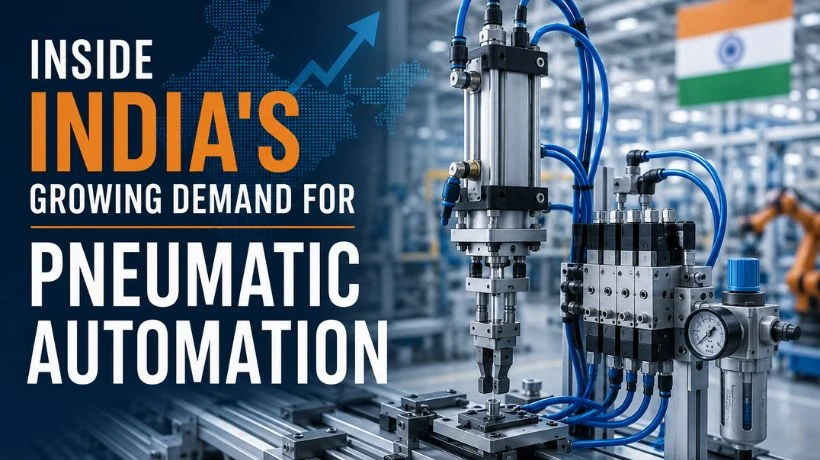
Explore how pneumatic products, Special Valves, and Air Blow Guns are driving India’s automation growth. Source smarter industrial solutions today.
A procurement manager in Gujarat recently rejected an entire shipment of pneumatic products because the valve response timing varied by less than 0.4 seconds between batches. Sounds minor. It wasn’t. Their PET moulding line was losing close to 11% production efficiency every shift because inconsistent air pressure timing was affecting bottle quality. That’s where India’s growing demand for pneumatic automation is coming from now — not trends, not buzzwords, but production losses buyers are tired of absorbing.
Regardless of whether automotive factories, food processing plants, packaging operations, or PET molding plants are involved, there is a tendency to trade up from less efficient mechanical equipment to more efficient pneumatic solutions which increase efficiency and lower maintenance issues. Unfortunately, the problem remains that customers will continue to evaluate suppliers purely on the cost per unit basis, without regard to other factors.
Why Pneumatic Products Are Expanding Across Indian Manufacturing
India’s factory automation market is projected to cross USD 25 billion before 2030, driven heavily by packaging, automotive, and FMCG production growth. Pneumatic systems sit right in the middle of that shift because they remain faster to maintain and cheaper to scale than many hydraulic alternatives.
Which means demand for Special Valves, Air Blow Guns FRL units, actuators, and customised pneumatic assemblies is no longer limited to large industrial clusters like Pune or Chennai.
Smaller Tier-2 manufacturing cities are catching up fast.
The Spec Detail Most Buyers Skip During Pneumatic Selection
Most buyers ask about pressure ratings first. Fair enough. But very few ask about moisture tolerance inside compressed air systems.
That’s expensive ignorance.
A pneumatic line operating with untreated moisture can damage seals, reduce actuator life, and create inconsistent valve timing within months. In PET moulding operations especially, even slight pressure variation changes bottle wall consistency during production cycles.
Good pneumatic manufacturers in India will discuss:
Air Pressure Compatibility
-
Operating range: 2–10 bar for most industrial pneumatic products
-
High-cycle valves often tested beyond 1 million cycles
-
Aluminium and stainless-steel body options depending on humidity exposure
Valve Response Timing
Specialised valves for PET moulding Manufacturer in India facilities usually target millisecond-level switching speeds because production lines cannot afford delays during blowing stages.
And here’s the difficult part buyers underestimate: faster response timing increases sensitivity to poor-quality compressed air.
Material Compatibility Matters More Than Catalogues Suggest
An Air Blow Gun Manufacturer supplying automotive plants may recommend entirely different nozzle materials compared to pharmaceutical packaging clients. Static discharge, oil resistance, and heat exposure all change product selection.
Nobody tells you how often catalogues oversimplify this.
Why Cheap Threading Creates Long-Term Leakage
Thread accuracy problems rarely show up during inspection day. They show up three months later when operators begin over-tightening fittings to stop air leakage.
That turns a low-cost purchase into continuous maintenance waste.
Five Supplier Evaluation Criteria Buyers Should Use
1. Ask for Failure Data, Not Just Product Photos
A serious Pneumatic supplier will discuss rejection rates, warranty claims, and seal failure history openly.
A bad answer sounds like:
“We’ve never had complaints.”
That usually means they don’t track defects properly.
2. Check Dispatch Consistency Across Multiple Orders
One successful shipment proves almost nothing.
Procurement teams should verify whether the supplier maintained delivery timelines across at least 6–8 consecutive orders. Indian factories running three shifts cannot pause production because a valve supplier missed dispatch by five days.
3. Audit Technical Support Response Time
Many Pneumatic manufacturers in India sell aggressively before purchase and disappear after installation.
That behaviour costs buyers real money.
Ask how quickly they respond to operational failures. If support conversations start moving toward WhatsApp excuses instead of documented troubleshooting, walk away.
4. Verify Seal and Coil Source Information
Several Specialised valves for PET moulding Supplier businesses import low-grade internal components while marketing the final assembly as industrial-grade.
Which means the external body looks excellent while internal durability collapses early.
Ask where coils, seals, and springs originate.
5. Evaluate Inventory Depth, Not Just Factory Size
Large workshops impress visitors. Inventory depth matters more.
A supplier with ready stock of Air Blow Gun Supplier in India inventory can rescue delayed production schedules faster than a larger competitor waiting for imported fittings.
How Pneumatic Automation Protects Margins in Real Factories
Reduced Downtime During Shift Operations
Modern pneumatic products simplify maintenance compared to hydraulic systems because fewer moving parts reduce breakdown frequency.
That matters during continuous manufacturing cycles running 20–22 hours daily.
Faster PET Moulding Production
Special Valves used in PET moulding systems improve response speed during air blowing cycles, helping maintain bottle consistency during high-volume production.
Even a 2% rejection reduction becomes meaningful at scale.
Lower Energy Waste From Air Leakage
Compressed air leakage quietly destroys operating margins.
A poorly fitted pneumatic line can waste 20–30% of compressor output according to industrial maintenance audits. Better-quality fittings and calibrated valves reduce that loss significantly.
Cleaner Operations for Food and Pharma Facilities
Unlike oil-heavy hydraulic systems, pneumatic automation supports cleaner operating environments. That’s one reason food packaging plants increasingly prefer pneumatic products for handling and motion control systems.
Easier Spare Replacement Cycles
Maintenance teams prefer systems where replacement parts are easily available locally.
That’s another reason Pneumatic suppliers with stable inventory networks across India are gaining long-term contracts faster than import-only distributors.
One delayed imported seal kit can stop an entire production line.
Where India’s Pneumatic Demand Is Growing Fastest
Western India continues dominating industrial pneumatic demand because Gujarat and Maharashtra still lead in packaging, automotive, and plastics manufacturing clusters.
But growth is spreading.
Tamil Nadu’s automotive suppliers are expanding automation investments aggressively, while North Indian packaging units increasingly source from specialised valves for PET moulding Manufacturer in India companies to reduce import dependency.
Here’s the supply-chain reality many overseas buyers miss: suppliers located near major freight corridors usually maintain shorter dispatch windows during monsoon disruptions.
That matters more than brochure design.
Secondary demand is also increasing from:
-
Beverage bottling plants
-
Textile automation units
-
Pharmaceutical packaging factories
-
Electronics assembly lines
-
Industrial cleaning equipment manufacturers
About V.S Enterprises
At V.S Enterprises, we’ve spent years working directly with industrial buyers who care less about flashy presentations and more about whether shipments arrive correctly packed, correctly threaded, and production-ready.
We manufacture and Supply Pneumatic Products ,Special Valves, Air Blow Guns, and customised automation components for Indian and export markets. Collaboration is key for our team, since we work together with wholesalers, buyers, procurement managers, and OEM buyers that require a reliable ordering cycle.
We have learned from our mistakes, and they happened during 2021. A batch of fittings passed dimensional checks but failed after extended vibration testing inside a PET moulding setup. We changed the machining tolerance standards after that shipment review. Experienced suppliers adjust processes after field feedback. Weak suppliers argue.
And yes, we understand how frustrating emergency procurement can become during plant shutdowns.
Send Technical Requirements Before Asking for Pricing
If you’re sourcing pneumatic products for manufacturing, send actual operating specifications first.
We usually respond within one business day with:
-
Pressure compatibility confirmation
-
MOQ details
-
Lead time estimates
-
Material recommendations
-
Application suitability feedback
For faster quotations, send:
-
Product drawings or images
-
Thread size details
-
Operating pressure range
-
Required quantity
-
Industry application
Visit V.S Enterprises to discuss sourcing requirements directly with our team.
Conclusion
India’s manufacturing sector is pushing pneumatic automation forward because factories can no longer afford slow maintenance cycles, inconsistent production quality, or rising downtime costs. Demand for reliable pneumatic products, Special Valves, and industrial Air Blow Guns will continue increasing as more production lines automate over the next decade. Buyers who evaluate suppliers only on price will keep facing the same avoidable failures. The smarter manufacturers already moved past that stage.
Here is another blog you might be interested in.
Why Indian Factories Are Switching to Modern Pneumatic Nailers
FAQs
Which industries commonly buy specialised valves for PET moulding Manufacturer in India products?
The manufacture of PET bottles, beverages packing, the pharmaceutical industry, edible oil industries, and cosmetics packing are some of the significant buyers. Time accuracy is critical to these industries since their production rates are exceptionally fast.
How do I evaluate a reliable specialised valves for PET moulding Supplier?
Check repeat-order consistency, material traceability, and spare availability first. Some suppliers outsource critical machining work during demand spikes, which can create dimensional inconsistencies between batches.
What should buyers ask an Air Blow Gun Manufacturer before placing bulk orders?
Ask about nozzle material, operating pressure limits, trigger durability testing, and spare part availability. Many buyers skip ergonomic testing entirely and later discover operator fatigue problems during long production shifts.
Why are Indian factories shifting toward pneumatic products?
Simplicity of maintenance is one of the key features. Pneumatic devices are much easier to maintain than many hydraulic counterparts, particularly those in continuous production plants.
Are Pneumatic manufacturers in India competitive with imported suppliers?
Many are. But buyers should compare machining quality and consistency carefully instead of assuming all imported products are automatically better. Some imported low-cost assemblies fail surprisingly early under Indian operating conditions.
How quickly can Air Blow Gun Supplier in India companies deliver bulk orders?
That depends on stock depth and machining capacity. Standard products may dispatch quickly, but customised nozzle configurations or branded OEM batches often require additional lead time.
Why do procurement managers prefer working with established Pneumatic suppliers?
Reliable Pneumatic suppliers reduce operational uncertainty. Buyers care about consistent threading accuracy, predictable lead times, and repeat-order reliability more than marketing claims once production lines become dependent on automation systems.


Comments
Login to Comment